Market outlook
Rising Outlook 8/10
Seaver remains one of the most respected pitchers in baseball history, and true rookie cards of inner-circle Hall of Famers tend to appreciate over time. Supply of top-graded copies is limited, while collector awareness remains strong. Certified examples should continue to outperform raw copies because of authentication concerns.
Next months. Likely stable to modestly rising, with strongest gains in graded/graded/graded-authenticated mid-to-high grades.
Long term. Likely continued appreciation over 1-3 years, especially for graded 7+ copies and pristine eye-appeal examples.
History
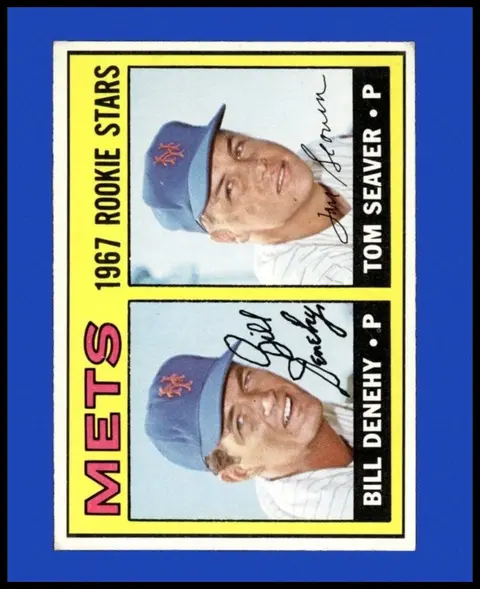
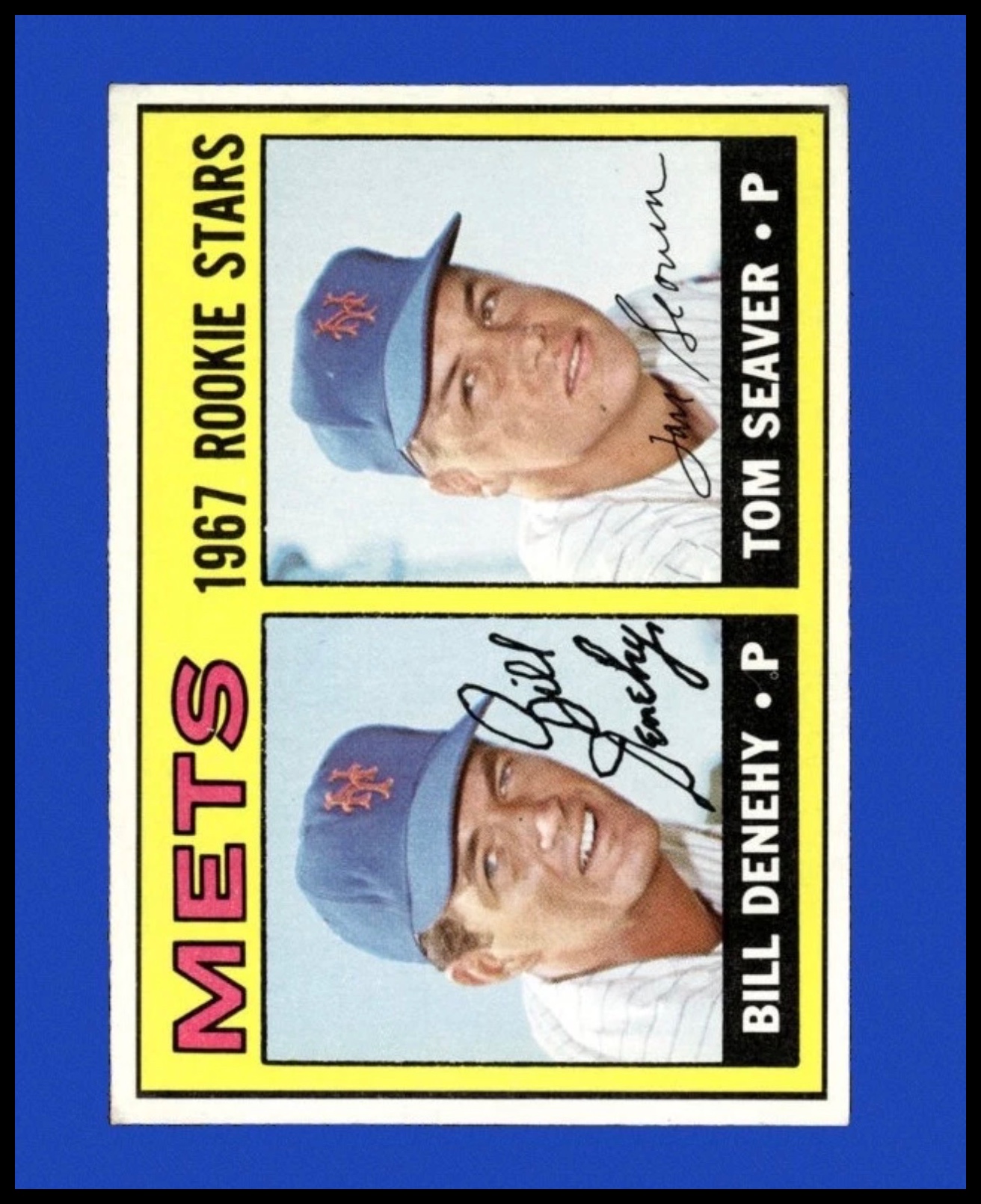
Tom Seaver (George Thomas Seaver, 1944–2020) was one of baseball’s greatest pitchers, nicknamed 'Tom Terrific.' He became the cornerstone of the New York Mets franchise after debuting in 1967, winning the NL Rookie of the Year Award that season and later earning three Cy Young Awards and Hall of Fame induction. Bill Denehy was a right-handed pitcher whose career was far less prominent, but his inclusion on this rookie card reflects Topps’ common 1960s practice of pairing a headline rookie with a lesser-known teammate or prospect.
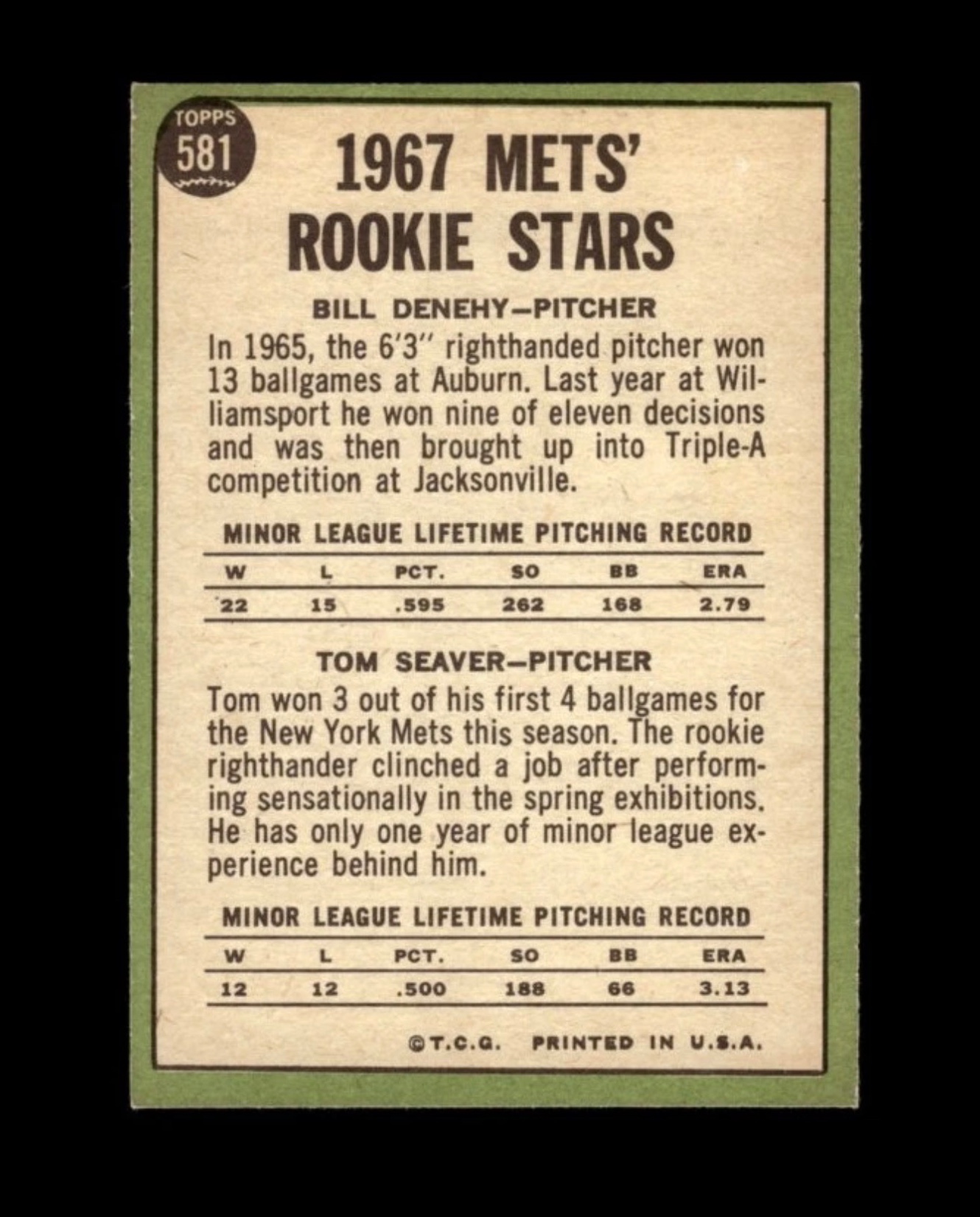
First released in 1967 as part of Topps Baseball Series 5 / high-number series, card #581 from the 1967 Topps Baseball set, distributed in wax packs and boxes across the United States during the 1967 season.
- This is Tom Seaver’s true rookie card and one of the key cards of the entire 1967 Topps set.
- The card is part of the high-number series (534–609), which was typically printed in smaller quantities than earlier series.
- Authentic copies are widely counterfeited and reprinted because of Seaver’s Hall of Fame status and strong market value.
Rarity and print run
- Tier
- Uncommon
- Print run
- Low
- First printed in
- 1967 Topps Baseball
- Demand
- Very High
- Supply
- Medium
- High-number series placement usually means lower print distribution than early-series cards.
- High-grade copies are difficult to find due to centering and edge wear.
- Counterfeits are common, which reduces confidence in raw-card supply and pushes demand toward certified examples.
Collector notes
Condition. Look closely at centering, as this card is notoriously difficult to find well-centered due to narrow borders. Common issues include corner wear, edge chipping, surface wear, print defects, and reverse border wear along the green-backed reverse. Registration and clean image focus matter a lot for higher grades.
Storage. Store in an acid-free penny sleeve and a rigid top loader or semi-rigid holder for raw copies. For higher-value graded or raw examples, keep in a cool, dry environment away from light and humidity. Avoid handling by edges and avoid PVC holders.
Authenticity. Counterfeits and reprints are common. Verify card stock, print quality, font details, and the reverse design. Genuine cards should have period-correct paper stock and sharp but not digitally perfect print. Compare the signature text and image sharpness to certified examples; suspiciously glossy surfaces, incorrect weight/stock, or overly crisp modern printing are red flags. For valuable copies, third-party grading/authentication is strongly recommended.
Sources: psacard.com, cgccards.com, cardladder.com, steinersports.com, sportscardinvestor.com