Market outlook
Rising Outlook 8/10
The card combines a fan-favorite character, premium variant status, and limited supply, which typically supports price appreciation once initial market discovery stabilizes. Interest in trophy or prize-style One Piece cards also tends to remain strong among serious collectors.
Next months. Expect volatility but a generally firm market, with the strongest copies likely holding value or drifting upward if supply remains thin.
Long term. Over 1-3 years, the card is likely to appreciate if it remains recognized as a premium limited-print Hancock variant, especially in high grade.
History
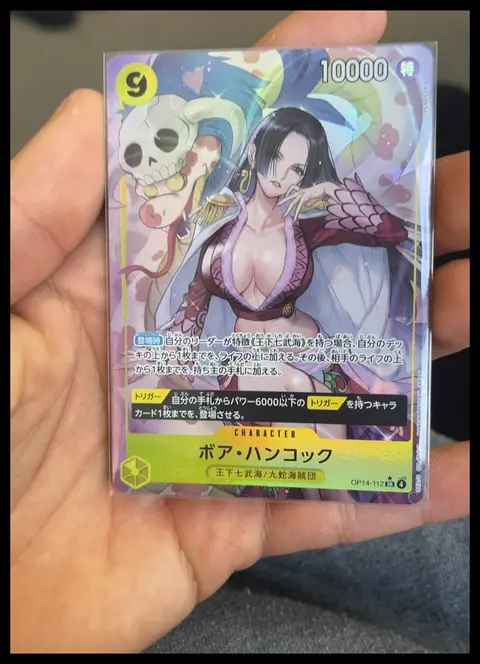
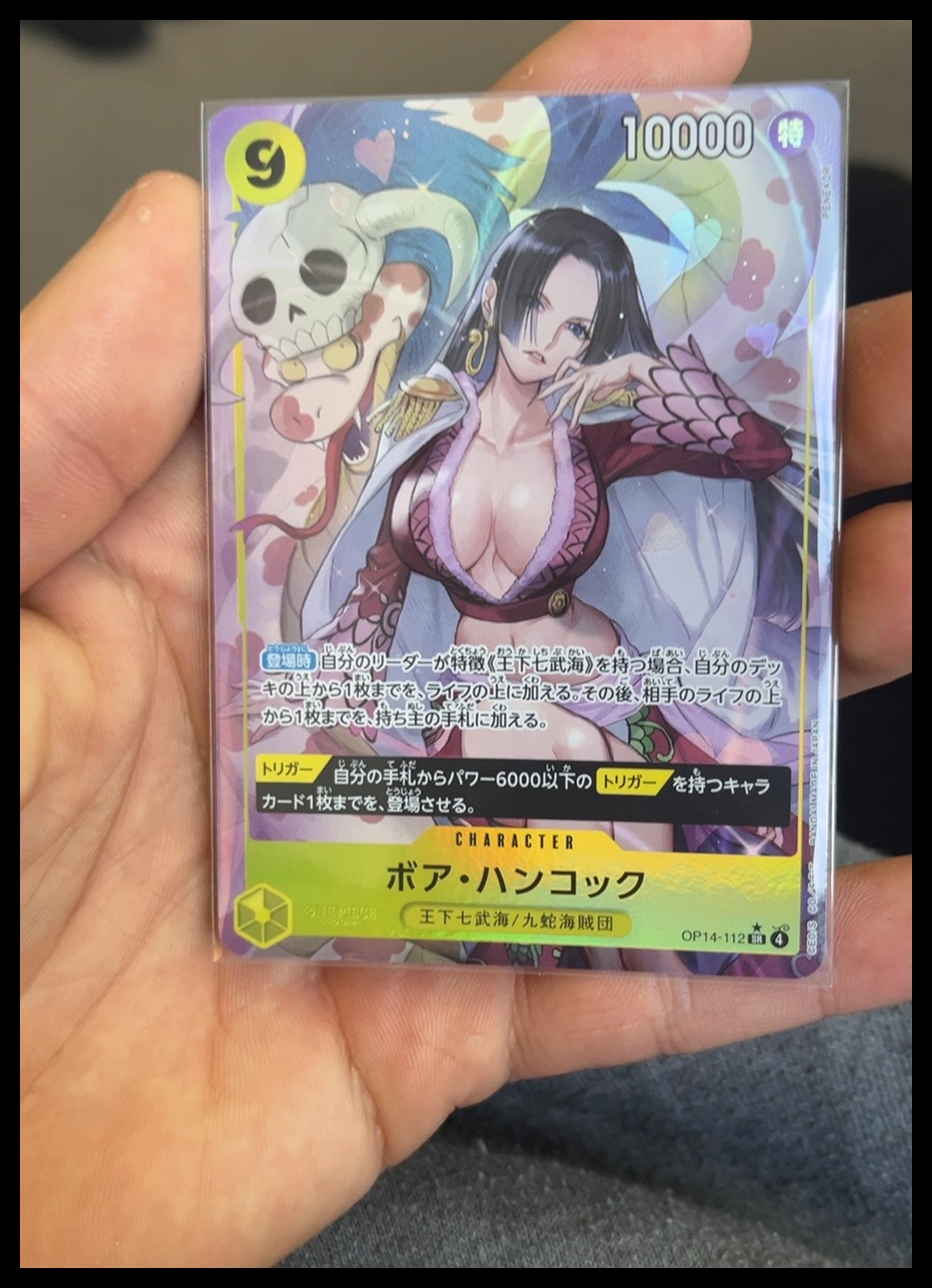
Boa Hancock is a major character from Eiichiro Oda's One Piece, known as the empress of Amazon Lily and leader of the Kuja Pirates. She is one of the Seven Warlords of the Sea in the series, which directly matches the card's synergy requirement and theme in this set. In the One Piece card game, Hancock is typically printed as a high-impact yellow character that reflects her status, power, and life-manipulation style.
This card first appeared in the Japanese release of The Azure Sea's Seven (OP14), with a release date of 2026-01-16 from Bandai product listings and retailers. The standard OP14-112 Boa Hancock printing is a regular-set character card, while the Special Alternate Art / prize-style variant is a separate premium version associated with the same card number and set identity.
- The standard OP14-112 card is a Yellow Character with 9 cost and 10000 power, and its On Play effect interacts with Life cards when your Leader has the Seven Warlords of the Sea trait.
- Multiple price trackers distinguish a premium SP / special alternate-art version of OP14-112 from the normal retail printing, with values far above the base card.
- The set The Azure Sea's Seven is the OP14 release and is centered thematically on the Seven Warlords of the Sea, making Boa Hancock one of the set's marquee cards.
Collector notes
Condition. Check centering, corner sharpness, edge whitening, foil scratching, and surface print lines, especially on the Special Alternate Art foil treatment. Japanese cards often show wear quickly on glossy surfaces, so look closely for back scuffs, corner fraying, and tiny dents that can reduce grade. Premium variants can also show binder indentation or display wear even when front presentation looks clean.
Storage. Store the card immediately in a perfect-fit sleeve, then a rigid top loader or semi-rigid holder, and keep it away from humidity and direct sunlight. For higher-value copies, use archival-safe materials and avoid repeated handling, because foil scratching and edge wear materially affect resale value. If graded, keep the slab protected from abrasion and pressure.
Authenticity. Verify the exact card number OP14-112, Japanese text quality, foil pattern consistency, and print sharpness. Authentic prize or special alternate-art cards should have clean official Bandai print characteristics, not blurry text or incorrect coloration. Compare the card's foil and layout against known authenticated examples, because counterfeits often have washed-out colors, inconsistent font weight, or poor cut quality.