Market outlook
Stable Outlook 6/10
Gengar maintains consistent demand due to nostalgia and popularity, but the regular Ultra Rare shows price volatility. Full Art versions are more stable due to scarcity and collector preference for premium variants [1][3]
Next months. Next 3–6 months: Slight upward pressure on Full Art graded 9–10; regular version may remain volatile with limited gains [1]
Long term. 1–3 years: Full Art versions expected to appreciate steadily as Sun & Moon Japanese Full Arts become more collectible; regular Ultra Rare may stagnate unless Gengar gets a major re-release or anime spotlight
History
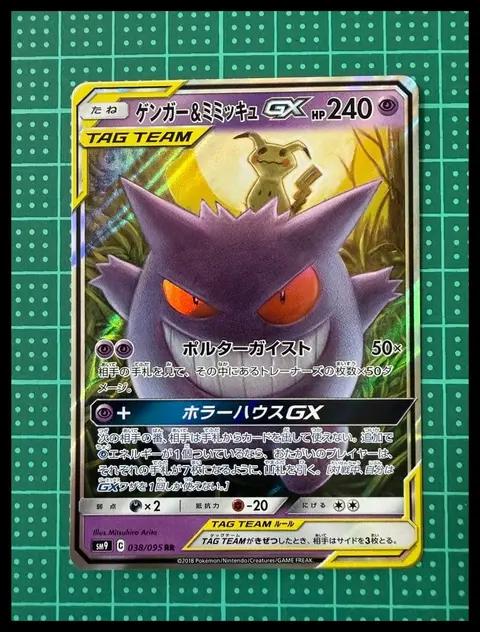
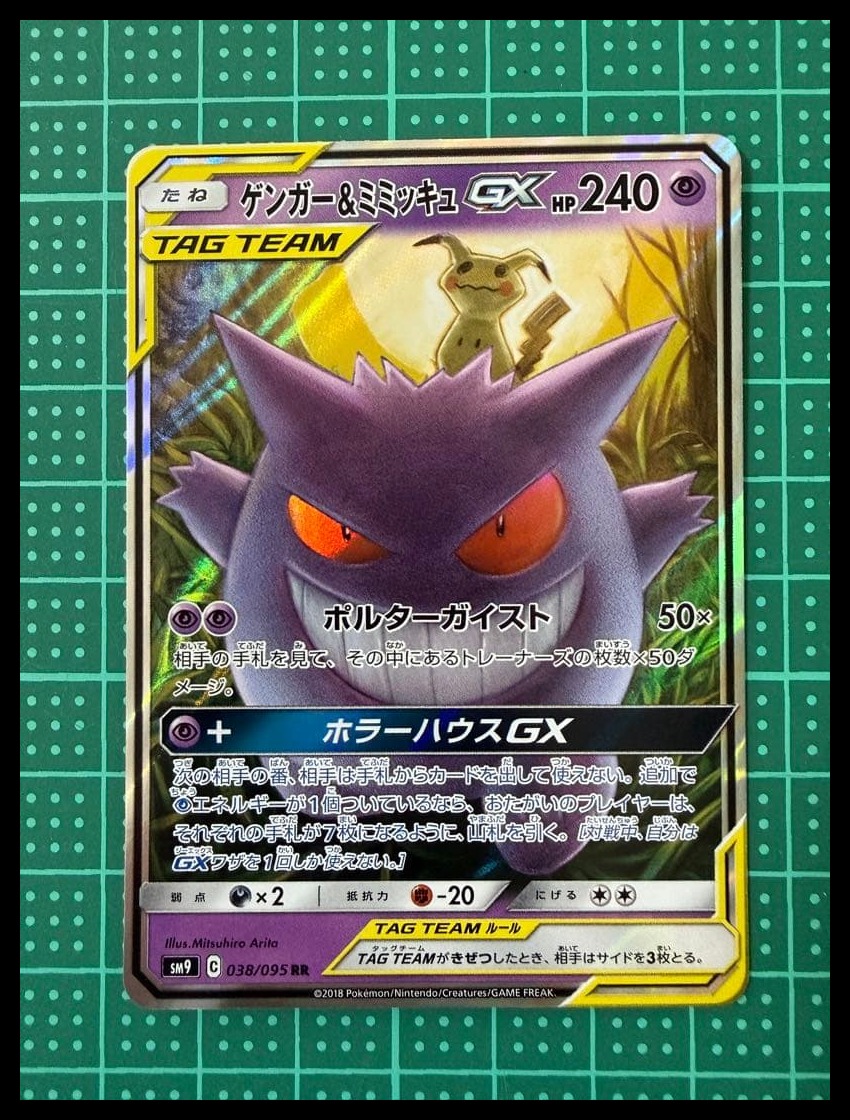
Gengar is the final form of Haunter, a Ghost/Poison-type Pokémon introduced in Gen 1, known for its sinister grin and shadow-based abilities; Mimikyu (actually Mimikkyu) is a Fairy-type Pokémon from Gen 7 that mimics Pikachu but is independent, not a Pikachu clone, and known for its playful, curious nature. This card pairs them as a Tag Team GX, reflecting the Tag Team mechanic introduced in the Sun & Moon series where two Pokémon fight together.
First released in 2018 in the Japanese Sun & Moon: Tag Bolt (SM9) set as card #038/095 (regular Ultra Rare) and #102/095 or #103/095 (Full Art Ultra Rare) [1][2][3][4]
- Artist is Mitsuhiro Arita, a legendary Pokémon card illustrator known for iconic designs [4]
- The card features the Tag Team GX attack 'Darkness Illusion,' which deals 50 damage for each Trainer card in the opponent's hand [4]
- Full Art variant (#102/095 or #103/095) is significantly more valuable than the regular Ultra Rare (#038/095) due to extended artwork and no stat box [1][3]
Rarity and print run
- Tier
- Ultra Rare
- Print run
- Medium
- First printed in
- Japanese Sun & Moon: Tag Bolt (SM9)
- Demand
- High
- Supply
- Low
- Full Art variant is harder to pull than regular Ultra Rare
- Gengar is a top-tier nostalgic Pokémon with high fan demand
- Japanese Full Arts from Sun & Moon series are increasingly sought by collectors
Collector notes
Condition. Check for centering (especially critical for Full Art), edge wear, corner dings, surface scratches, and printing defects. Full Art cards are prone to micro-scratches on the glossy surface and hinge marks if stored improperly [1][3]
Storage. Store in a rigid top-loader with a penny sleeve, keep in a cool, dry place away from direct sunlight, and avoid bending or pressure. For long-term value, consider graded or graded grading in a sealed case [3][6]
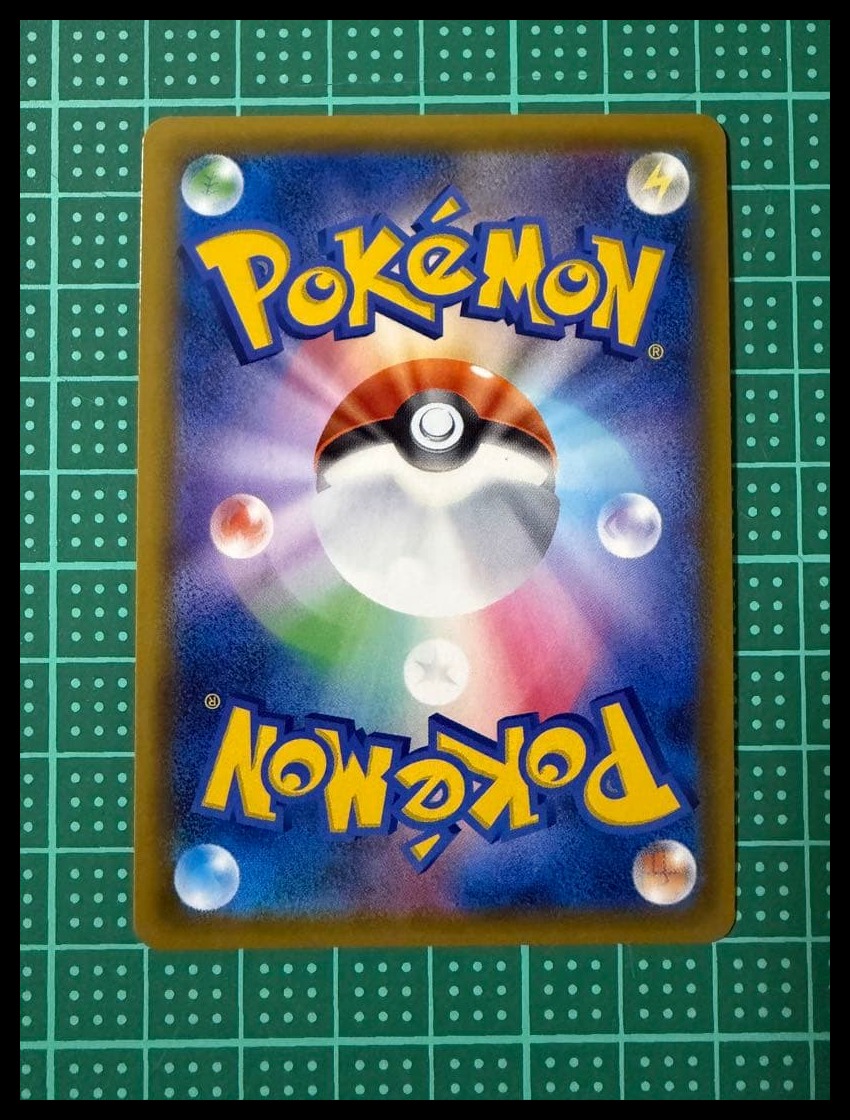
Authenticity. Fakes often have blurry text, incorrect font, off-center printing, or lack the holographic pattern. Authentic Japanese cards have sharp, crisp text and a distinct 'holographic shimmer' on the card face. Verify the set symbol (SM9) and card number. graded/graded authentication is highly recommended for high-value copies [6][8][10]
Sources: sportscardinvestor.com, pricecharting.com, tcgplayer.com, ebay.com, dacardworld.com