Market outlook
Stable Outlook 3/10
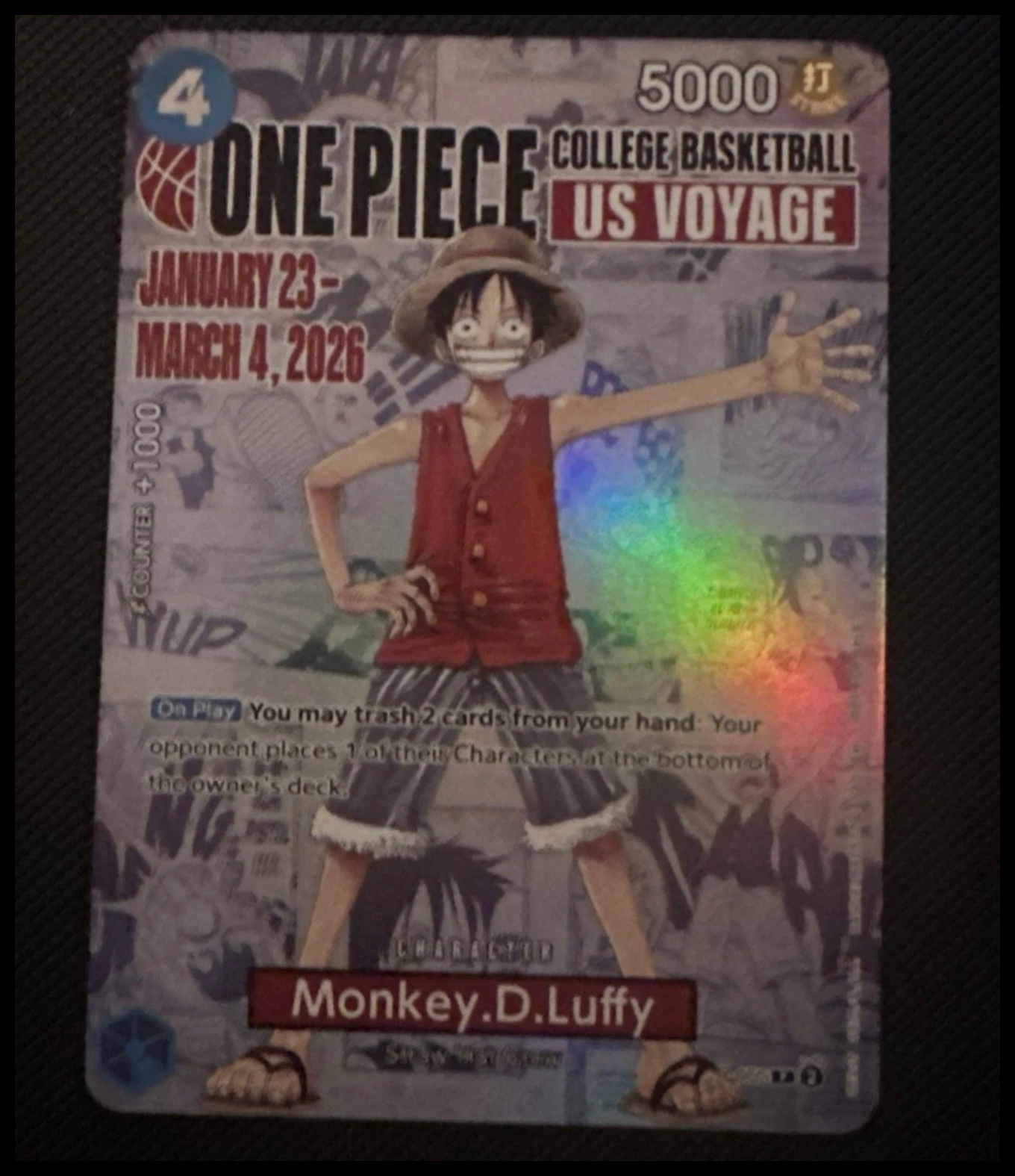
Commons from a current modern set generally stabilize at very low prices after release. Luffy supports steady casual demand, but the card does not have enough scarcity to drive strong momentum.
Next months. Likely to remain near bulk/common pricing with small premiums for pristine raw copies or top-graded examples.
Long term. Over 1-3 years, value should remain mostly flat unless sealed supply dries up sharply or unusually high-grade population scarcity creates a niche premium.
History
Monkey D. Luffy is the protagonist of Eiichiro Oda's One Piece, one of the best-selling manga/anime franchises of all time. In the One Piece Card Game, Luffy is one of the most collected and recognizable characters, and cards featuring him often anchor a set’s desirability even at lower rarities. This specific card is an English-language copy from the Adventure on KAMI's Island era, which is themed around the Skypiea arc and related story elements.
First released in English in the Adventure on KAMI's Island booster set (OP15/EB04 English release) on April 3, 2026.
- This is a low-rarity common version of Monkey D. Luffy, not one of the premium alternate-art or secret rare chase cards.
- Adventure on KAMI's Island is the 15th booster product in the One Piece Card Game line and centers on the Skypiea arc.
- Luffy cards generally retain collector interest because the character is the franchise mascot, but common copies usually have modest individual value unless graded gem mint or part of a sealed/near-complete set.
Collector notes
Condition. For commons, centering, corner whitening, edge wear, surface scratches, and print lines are the main issues. Because these are pack-fresh but mass-produced cards, even small dings or roller marks can noticeably affect grade potential. Check for factory cut quality, especially on the top and bottom edges, and look for surface scuffs under direct light.
Storage. Store immediately in a penny sleeve and a standard rigid top-loader or semi-rigid holder. Keep away from moisture, UV light, and heat. If collecting a master set, keep commons in labeled binders with acid-free pages and maintain low humidity to reduce warping and edge wear.
Authenticity. Authentic One Piece cards should have crisp printing, correct color saturation, accurate font shapes, and consistent card stock texture. Fakes often show blurry text, incorrect holographic behavior on foils, poor edge trimming, or off-color backs. For a common non-foil card, compare the back color, card thickness, and feel against known authentic cards; English cards should also match official numbering and set symbol placement.