Market outlook
Stable Outlook 7/10
The market for this card is stable due to high supply of lower-grade copies, but top grades remain valuable. Demand for Hall of Fame players like Kaline is consistent, though not rapidly increasing. Recent 30-day data shows a slight decline (-9.2%) in graded 7 prices, indicating short-term volatility but no long-term trend reversal[2].
Next months. Next 3–6 months: Prices for graded 7–8 may fluctuate slightly due to short-term market softness, but overall remain stable with no major declines expected[2].
Long term. 1–3 years: Steady growth likely for high-grade copies as vintage baseball demand grows; lower grades may remain flat due to abundant supply[1]
History
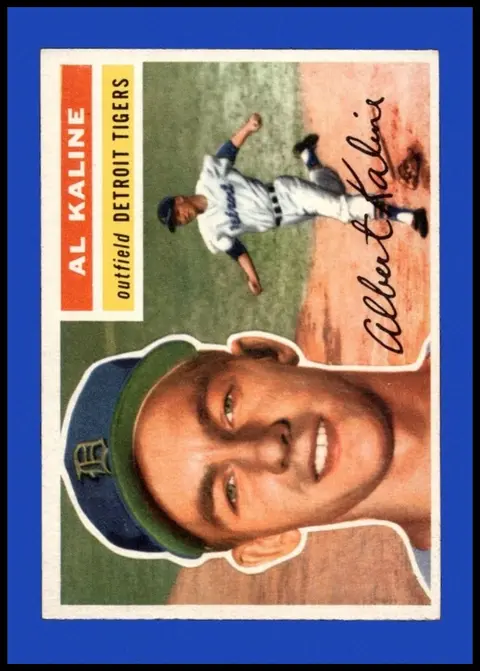
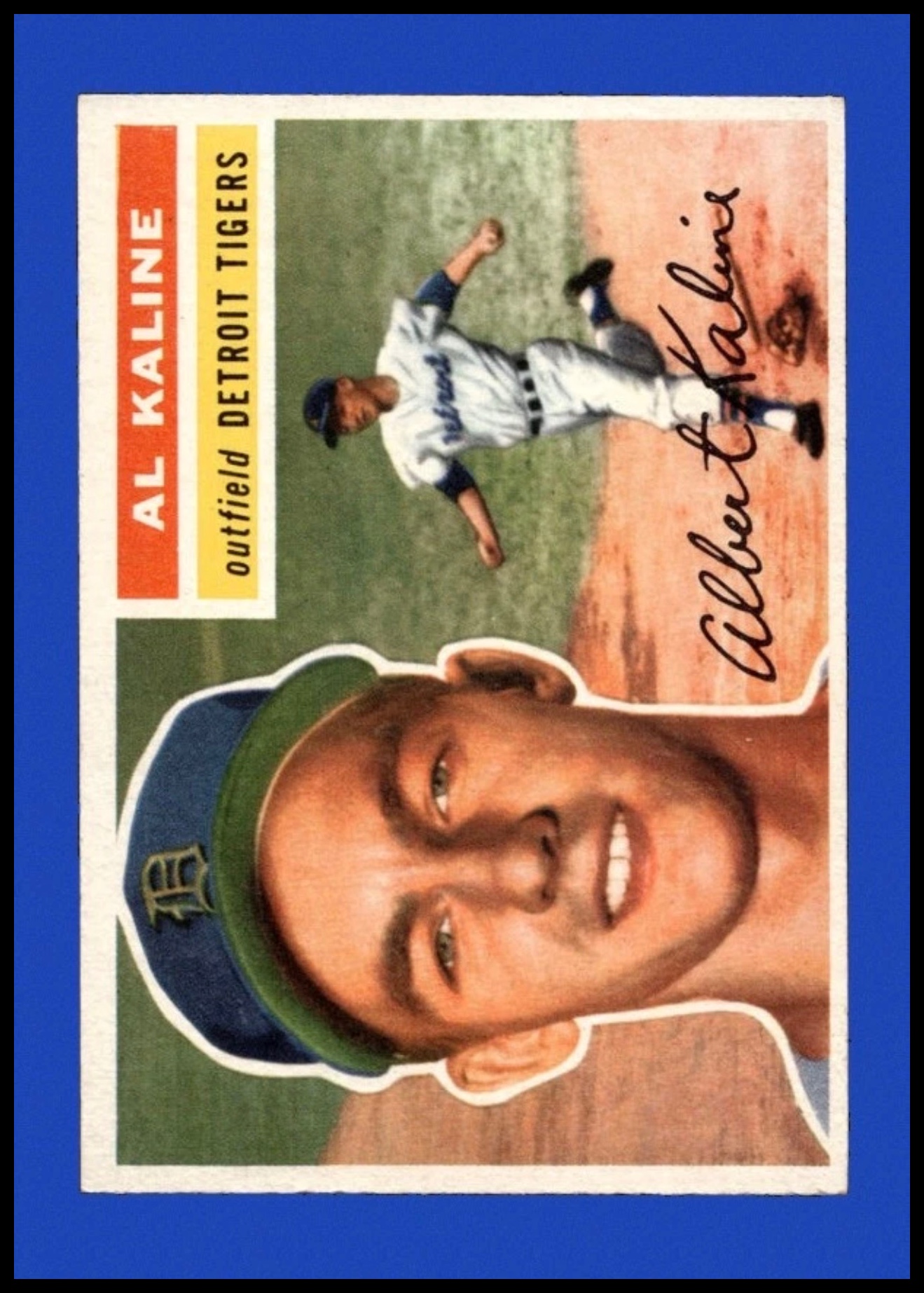
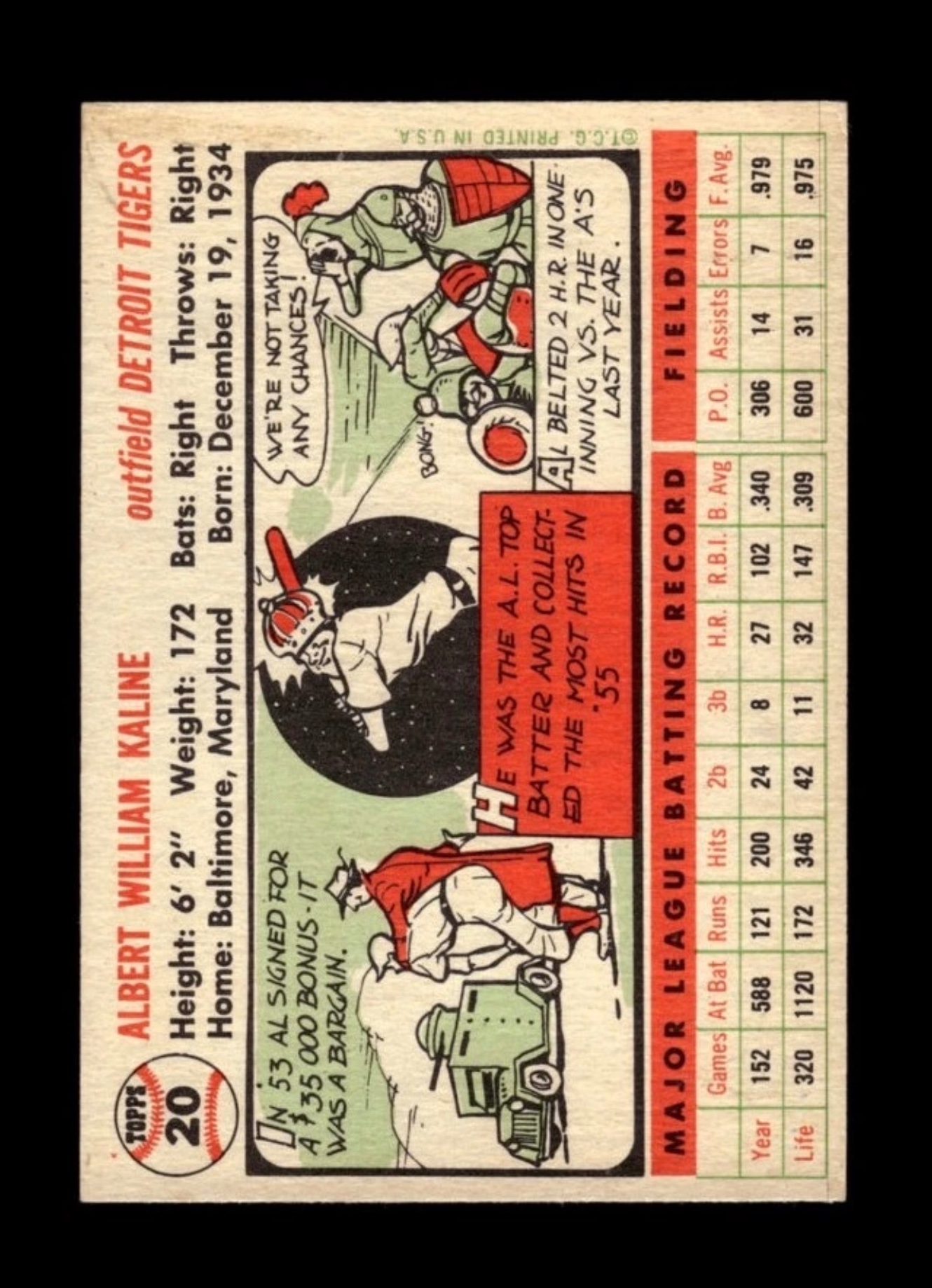
Al Kaline was a legendary American baseball player who played his entire 22-year career (1953–1974) with the Detroit Tigers. He was an 18-time AL All-Star, won 10 Gold Gloves as a defensive standout, and was known for his powerful hitting, particularly against the St. Louis Cardinals where he hit .379. At age 20 in 1955, he won his first batting title with a .340 average, marking the beginning of his elite status in the league[1][5].
This card was first released in 1955 as part of the inaugural Topps Baseball set, manufactured in the United States. It is cataloged as #4 in the 1955 Topps set, not #20 as sometimes misstated[1][2].
- Kaline won his first batting title in 1955 at age 20 with a .340 average[5]
- He accumulated 10 Gold Gloves and 18 All-Star selections over his career[1]
- His 1955 Topps card is his second-year card, following his 1954 Topps rookie card[8]
Rarity and print run
- Tier
- Common
- Print run
- Very High
- First printed in
- 1955 Topps Baseball
- Demand
- High
- Supply
- Abundant
- Mass-produced in 1955 as part of the first Topps set, leading to very high original print run
- Many copies survive in lower grades due to poor handling and storage over decades
- High-grade (graded 8+) copies are rare due to the fragility of glossy surfaces and white borders[1]
Collector notes
Condition. Key flaws include centering issues, soft corners from handling, and surface wear on the glossy finish. The card's white borders are prone to chipping, and the front image may show slight creasing or scuffing. Check for original gloss and ensure no restoration or reprinting has occurred[1][4].
Storage. Store in a rigid, non-acidic plastic sleeve (toploader) and keep in a cool, dry environment away from direct sunlight. Avoid stacking cards directly on top of each other without protective dividers to prevent edge wear and bending[1].
Authenticity. Fakes or reprints often have sharper edges, overly bright colors, or lack the original glossy texture. Authentic cards show slight age-related toning and may have minor printing imperfections. Use graded or graded for professional authentication; compare against known genuine examples for color and border consistency[1].
Sources: psacard.com, sportscardinvestor.com, sportscardspro.com, deanscards.com, reddit.com