Market outlook
Stable Outlook 7/10
The card has strong long-term collector demand because it is a Hall of Fame rookie card, but the print run is large enough that supply is not constrained at the base level. Market movement is therefore usually driven more by grade, eye appeal, and broader vintage-card demand than by scarcity alone.
Next months. Prices are likely to remain range-bound with occasional spikes for exceptionally well-centered or high-grade examples.
Long term. Over 1-3 years, the card should remain a steady blue-chip vintage rookie in the hobby, with the best-condition copies likely outperforming raw examples.
History
Kirby Puckett (1960-2006) was one of the defining Minnesota Twins stars of the 1980s and 1990s, known for his contact hitting, elite defense in center field, and high-energy style of play. He became a 10-time All-Star, 6-time Gold Glove winner, 6-time Silver Slugger, and a key leader on the Twins’ 1987 and 1991 World Series championship teams, which made his rookie-era cards especially important to baseball collectors.
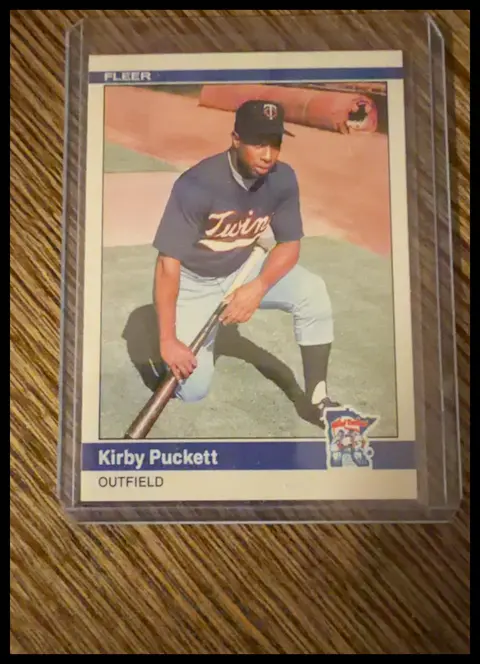
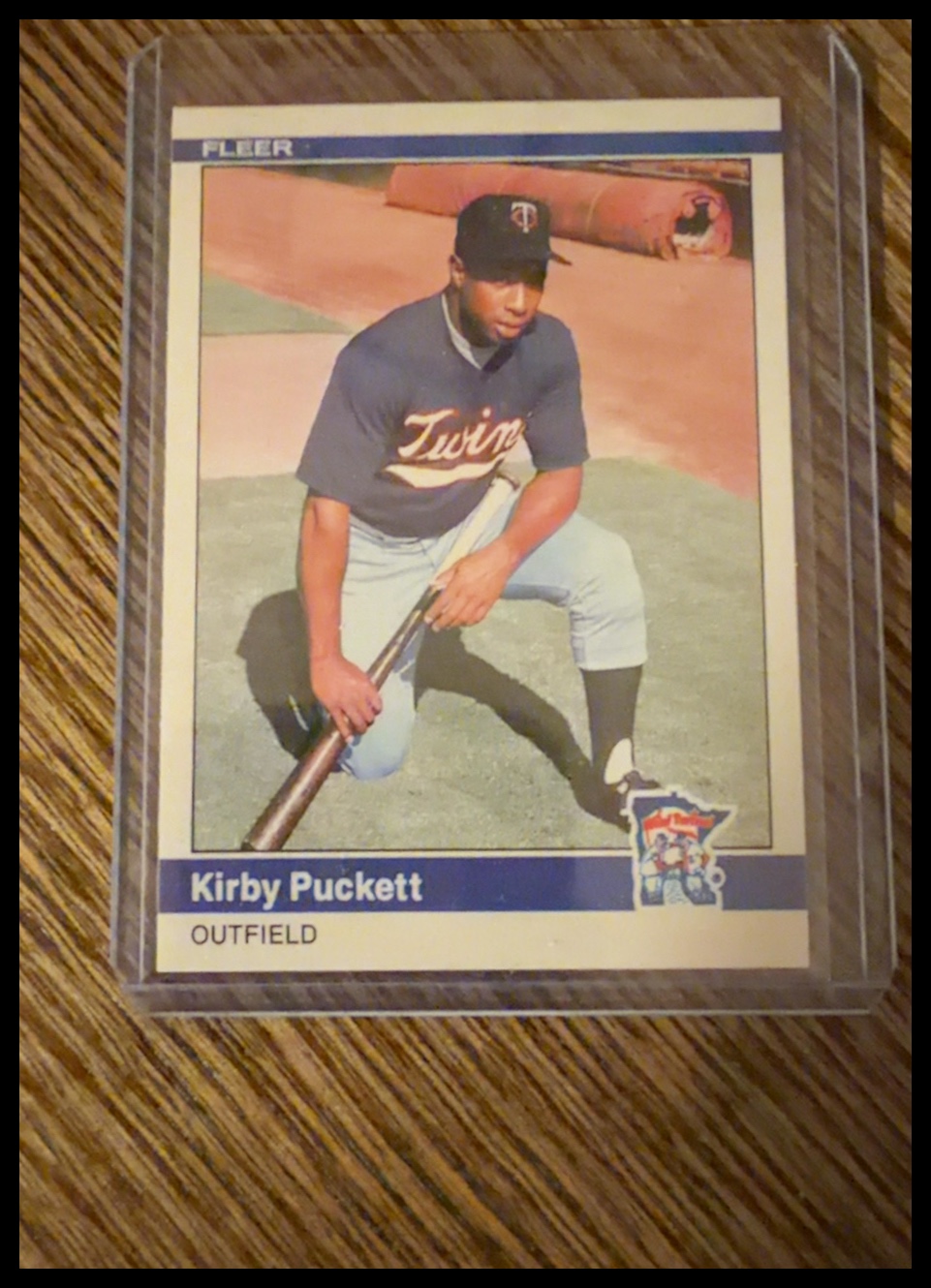
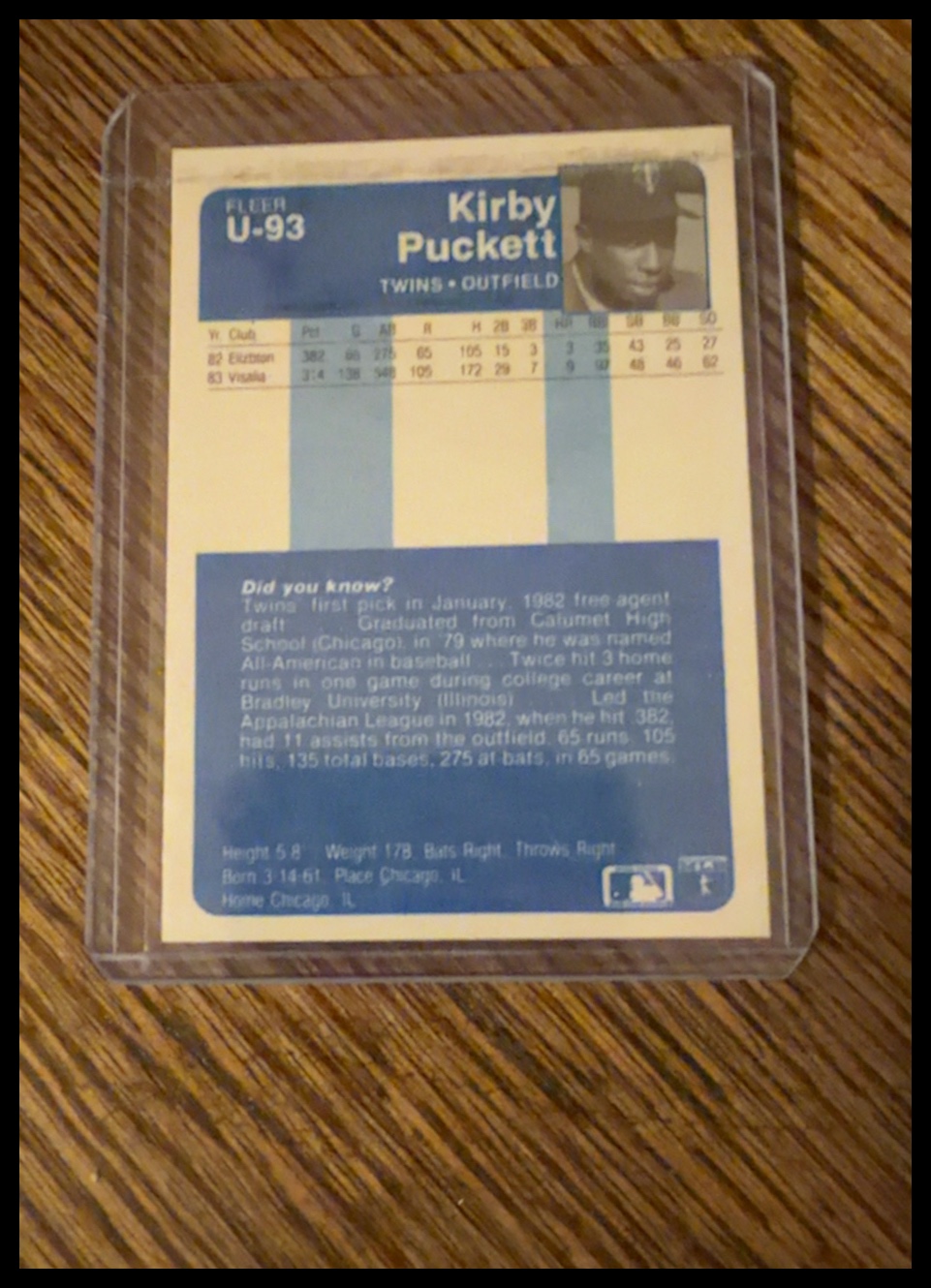
This card was first released in 1984 as part of Fleer Update, a late-season update set issued by Fleer in the United States. The card is number U-93 and is widely recognized as Kirby Puckett’s rookie card in that update format.
- This is Kirby Puckett’s recognized rookie card in the 1984 Fleer Update set.
- The card is part of a late-season update release rather than the main 1984 Fleer baseball set.
- Raw and graded examples show wide price separation, with high-grade copies bringing substantially more than ungraded copies.
Rarity and print run
- Tier
- Common
- Print run
- Very High
- First printed in
- 1984 Fleer Update
- Demand
- High
- Supply
- High
- It was printed in a widely collected 1984 update set, so the card is not scarce in raw form.
- High-grade examples are harder to find because centering, corners, and surface condition reduce the population of top slabs.
- The rookie-card designation increases demand even though the base card itself is common.
Collector notes
Condition. Check centering carefully, since 1980s baseball cards often show noticeable left-right and top-bottom shifts. Also inspect corners for whitening, edges for chipping, surface for print defects or scratches, and the back for staining, paper loss, or writing. The update-card format can also show handling wear from sets that were opened and stored loosely.
Storage. Store in a penny sleeve and rigid top loader or semi-rigid holder, and keep the card in a cool, dry environment away from sunlight. For higher-grade copies, use archival-safe materials and avoid repeated handling, as surface wear and corner wear quickly reduce value.
Authenticity. Compare print quality, color saturation, font sharpness, and card stock consistency against known authentic examples. Reprints from the era or modern reproductions often show different paper texture, overly sharp image reproduction, or inconsistent aging. For valuable copies, third-party grading and encapsulation are the most reliable authentication tools.
Sources: millcreeksports.com, sportscardspro.com, sportscardinvestor.com, psacard.com, instagram.com