Market outlook
Rising Outlook 8/10
Clemente remains one of the most collected vintage stars, and historically important early Topps cards continue to attract strong registry and type-card demand. High-grade population pressure and sustained Hall of Fame demand support gradual appreciation over time.
Next months. Stable to slightly rising, with best movement expected in graded 6 and above.
Long term. Likely gradual appreciation, especially for centered, high-grade, and professionally authenticated examples.
History
Roberto Clemente was a Puerto Rican right fielder who became one of baseball’s most celebrated all-around players, known for elite throwing strength, hitting skill, speed, defensive excellence, and humanitarian work. He debuted with the Pittsburgh Pirates in 1955 and by 1960 was already an established star; that season he helped lead Pittsburgh to a World Series championship and hit a walk-off inside-the-park home run to clinch the title in Game 7, which cemented his national fame.[6]
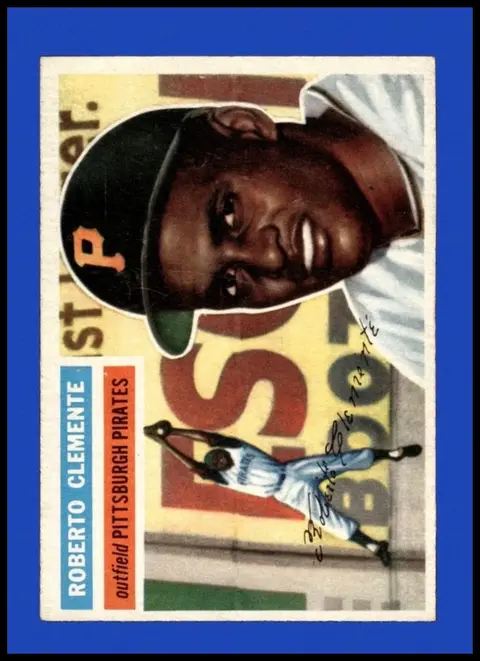
The card was first released in the 1960 Topps Baseball set, issued in 1960 as part of Topps’ standard baseball card production for that year; the graded listing identifies it as 1960 Topps #326 Roberto/Bob Clemente.[2][3]
- This is one of Clemente’s key early Topps cards and is widely collected as a major Hall of Fame issue from the 1960s.[4][6]
- The graded and dealer listings show the card as #326, and some databases/catalogs use 'Bob Clemente' while modern hobby references usually call him Roberto Clemente.[1][2][3]
- Dealer price examples show meaningful value even in mid-grade condition, reflecting strong demand for Clemente vintage cards.[2][5]
Rarity and print run
- Tier
- Uncommon
- Print run
- Very High
- First printed in
- 1960 Topps Baseball
- Demand
- Very High
- Supply
- Medium
- The card is from a very high-print-run mainstream Topps set, so it is not rare in raw form.
- High-grade examples are scarcer because 1960 Topps cards are prone to centering issues, border wear, and corner softness.
- Clemente is a top-tier Hall of Famer, which increases collector demand beyond normal commons.
Collector notes
Condition. Check for centering, especially left-right centering on the white-bordered 1960 Topps design, plus corner wear, edge chipping, surface print spots, and crease lines. The 1960 Topps issue is known for showing wear easily because of its white borders, so even small flaws can have a large impact on grade.
Storage. Use a penny sleeve and rigid top loader or semi-rigid holder, keep the card in a cool dry environment, and avoid humidity and direct light. For higher-value copies, use archival-quality storage and consider grading if the card is high-grade or appears pack-fresh.
Authenticity. Compare print quality, paper stock, and border whiteness against verified examples. Authentic cards should show period-correct Topps printing characteristics, while reprints often have sharper digital-looking images, different cardstock feel, or overly clean edges. graded-graded examples or expert authentication are the safest route for expensive copies.[3]
Sources: sportscardspro.com, deanscards.com, psacard.com, oldsportscards.com, allstarcardsinc.com