Market outlook
Rising Outlook 8/10
Long-term collector demand for iconic Hall of Fame rookie cards remains strong, and the top end of the market continues to reward exceptional condition and provenance.[1][5]
Next months. Prices for solid graded examples are likely to remain firm, with occasional spikes for eye-catching copies and registry-grade examples.
Long term. Expect continued appreciation at the high end, especially for graded 8 and above; lower grades should remain liquid but grow more slowly.
History
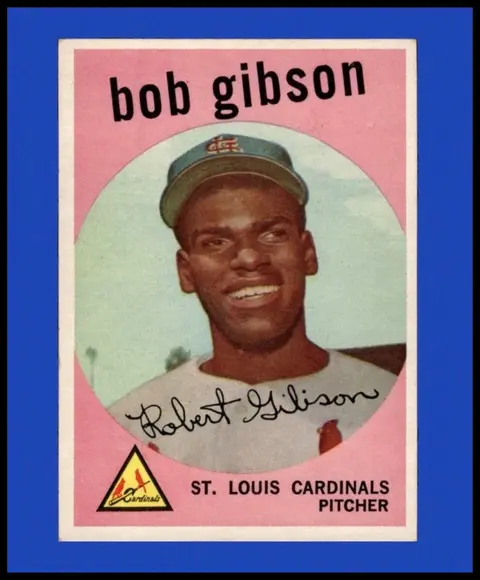
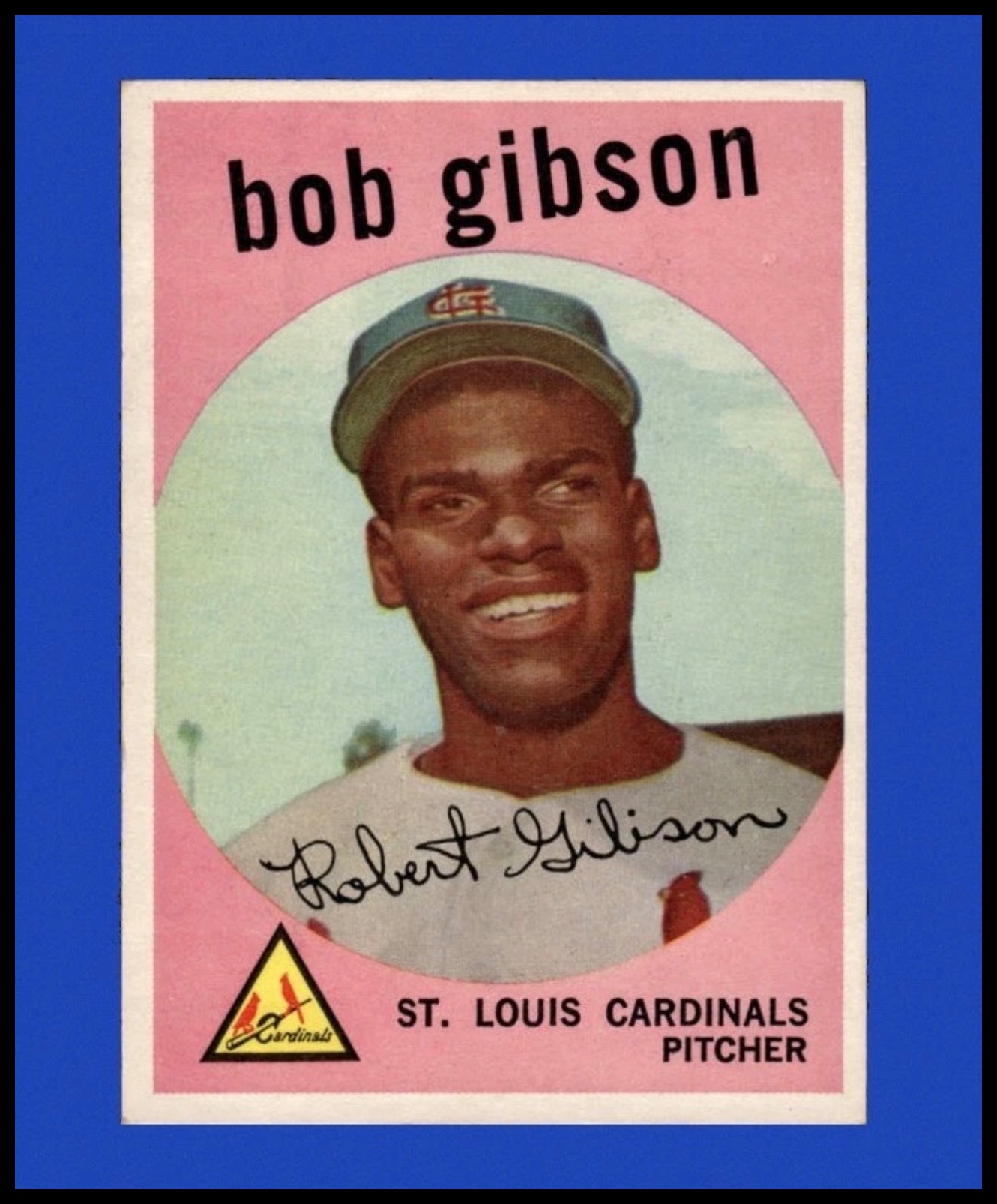
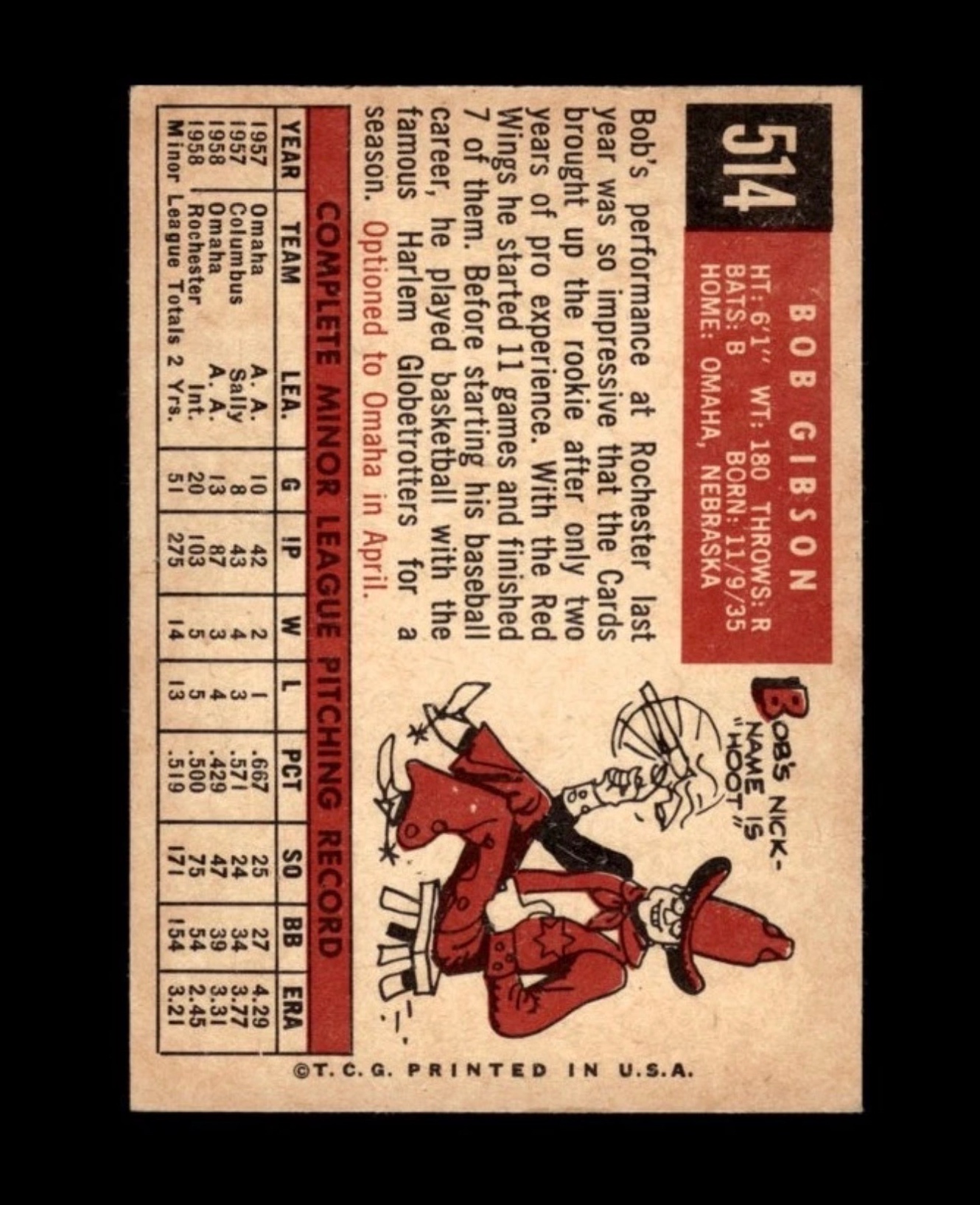
Bob Gibson (Robert Gibson, 1935–2020) was one of the greatest pitchers in Major League Baseball history, best known for his dominant career with the St. Louis Cardinals. He was a two-time World Series champion, nine-time Gold Glove winner, nine-time All-Star, two-time Cy Young Award winner, and the 1968 National League MVP, with a reputation for extraordinary competitiveness and intimidation on the mound. His 1959 Topps card is his rookie card and is widely regarded as the key card in the 1959 Topps baseball set because Gibson is the only Hall of Fame rookie player in the checklist at #514.[1]
This card was first released in the 1959 Topps Baseball set, issued by Topps in 1959 for the U.S. baseball card market.[1][4]
- #514 is Bob Gibson’s rookie card and the key rookie in the 1959 Topps set.[1]
- graded lists the 1959 Topps Bob Gibson #514 as a major condition-census card, with a graded 10 example and only 3 graded 10s known in the population report shown.[1]
- High-grade copies command strong prices, with graded reporting a most recent graded 10 sale of $324,000 and graded 9 sales around $49,200.[1]
Collector notes
Condition. Check centering first, since 1950s Topps issues are often poorly centered. Also inspect corners, edges, print registration, surface gloss, wax staining, and snow/border chipping; for this card, eye appeal and centering heavily influence grade and value.[1]
Storage. Store in an acid-free sleeve and rigid holder, keep away from light, humidity, and temperature swings, and avoid pressure on corners and edges. For a valuable rookie like this, a graded slab is often preferred for long-term protection and liquidity.
Authenticity. Authentic examples should show period-correct 1959 Topps printing characteristics, stock, and aging. Reprints often have sharper modern print quality, incorrect paper feel, or overly clean surfaces; because of the card’s value, third-party grading and authentication are strongly recommended, especially for raw copies.[2][4]