Market outlook
Stable Outlook 7/10
The card already has strong historical recognition and established pricing tiers. Prices for top grades should remain firm, while raw and lower-grade copies are more likely to fluctuate with overall vintage Pokémon market sentiment.
Next months. Likely stable to mildly rising for clean copies and graded examples, especially graded 9/10 and equivalent grades.
Long term. Over 1-3 years, the card should remain a blue-chip vintage Japanese holo with gradual appreciation in top condition, while common-grade copies should track broader market cycles.
History
Lugia is a Legendary Pokémon introduced in the Johto-era Pokémon games and anime, known as the guardian of the seas and a powerful Psychic/Flying-type in the franchise’s lore. As a mascot-level Legendary from the original Generation II era, it became one of the most recognizable Pokémon from the Neo period and a major chase character in Japanese and international trading card releases.
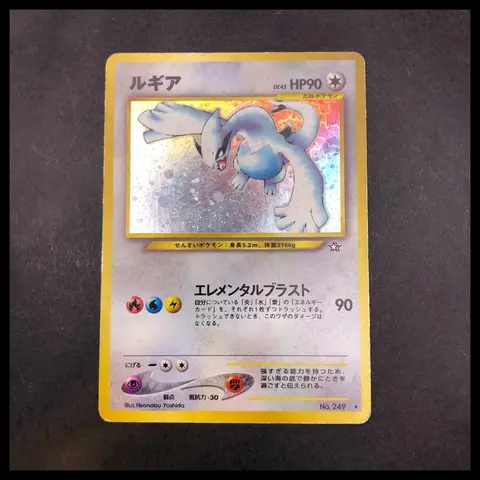
First released in Japan on February 4, 2000, in the Neo expansion 'Gold, Silver, to a New World' (Japanese Neo Genesis equivalent), as card number 249 and a Rare Holo.
- This card is the Japanese Neo-era Lugia #249 and is widely regarded as the first Lugia Pokémon card ever printed.
- Price guide data lists it as a Rare Holo with substantial grade spread, from roughly $111 ungraded to over $1,600 in graded 10 and much higher for elite black-label/black-10 style grades.
- The card is strongly associated with the early-2000s Pokémon boom and remains one of the most collected Japanese holos from the Neo era.
Rarity and print run
- Tier
- Rare
- Print run
- Low
- First printed in
- Gold, Silver, to a New World
- Demand
- High
- Supply
- Medium
- First-print Japanese Neo-era holo
- High demand from Lugia collectors and vintage Japanese holo collectors
- Strong grade sensitivity, with gem-mint copies much scarcer than raw copies
Collector notes
Condition. Check for holo scratching, edge whitening, corner wear, centering issues, surface dents, and print lines. Japanese Neo holos often show visible scratching in the foil area and edge wear on the dark border is especially important.
Storage. Store in a clean penny sleeve and rigid top loader or semi-rigid holder, keep away from humidity and direct light, and use a grader-friendly sleeve/holder if submitting for authentication or grading.
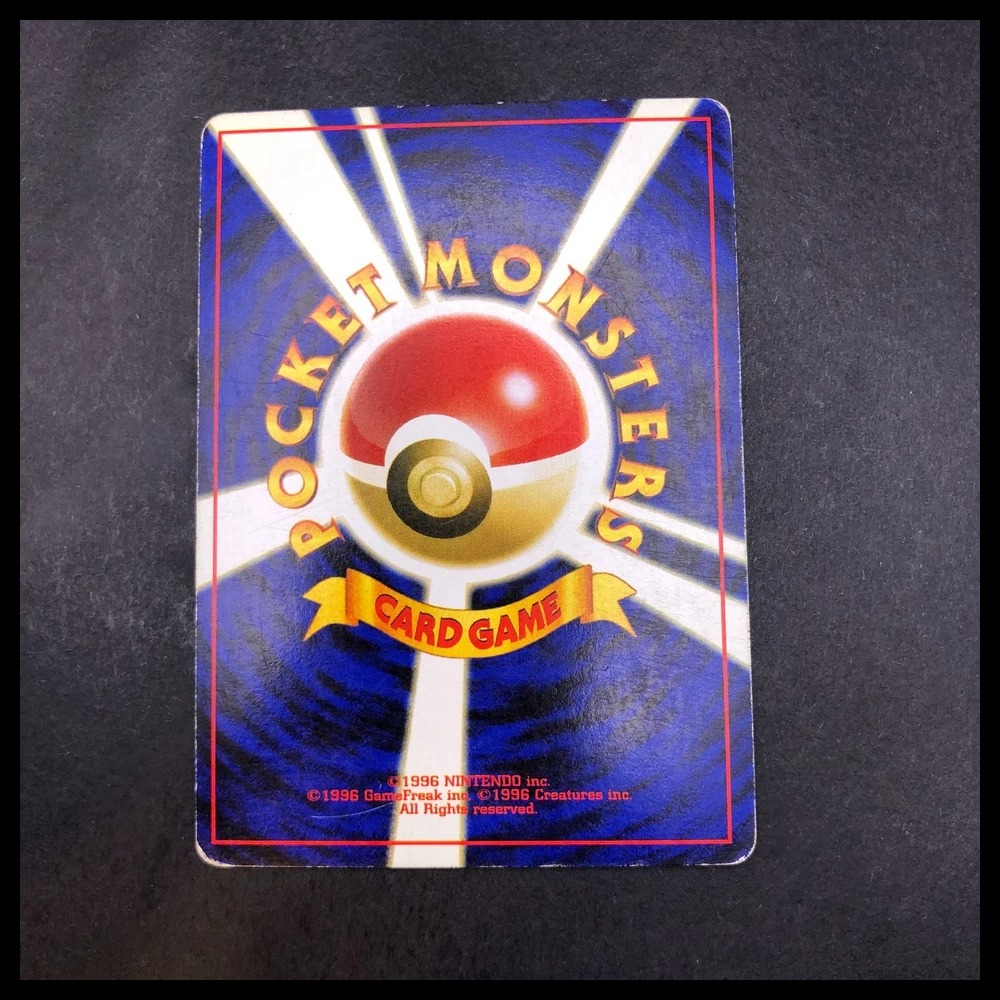
Authenticity. Verify the Japanese card stock, holo pattern, font sharpness, card number 249, and copyright text. Fakes often show poor holo brightness, incorrect text alignment, soft printing, or inconsistent back coloration. Compare the card to authenticated examples and inspect under magnification for dot patterns, edge quality, and surface texture.
Sources: pricecharting.com, reddit.com, tcgplayer.com, cardmarket.com, monmouthcards.com