Market outlook
Stable Outlook 7/10
Prices for iconic modern Japanese SAR cards usually stabilize after release spikes, then move with grading demand, hype cycles, and broader Pokémon market sentiment. Mew’s evergreen popularity supports a durable floor.
Next months. Likely to trade in a fairly tight range with occasional spikes for pristine copies and high-grade slabs.
Long term. Likely to remain a strong long-term collectible with gradual appreciation if Japanese modern SAR demand stays healthy, especially for gem-mint examples.
History
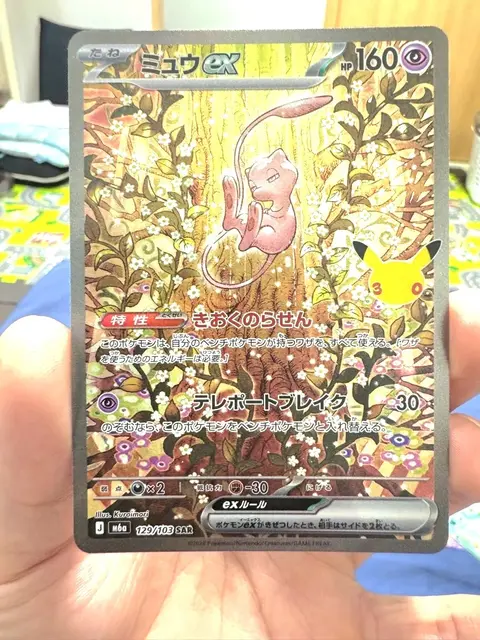
Mew is a Mythical Pokémon first introduced in Generation I and long associated with rarity, mystery, and collector appeal. It is one of the franchise’s most iconic characters, often tied to the original lore of being an extremely elusive Pokémon and to special promotional or premium cards.
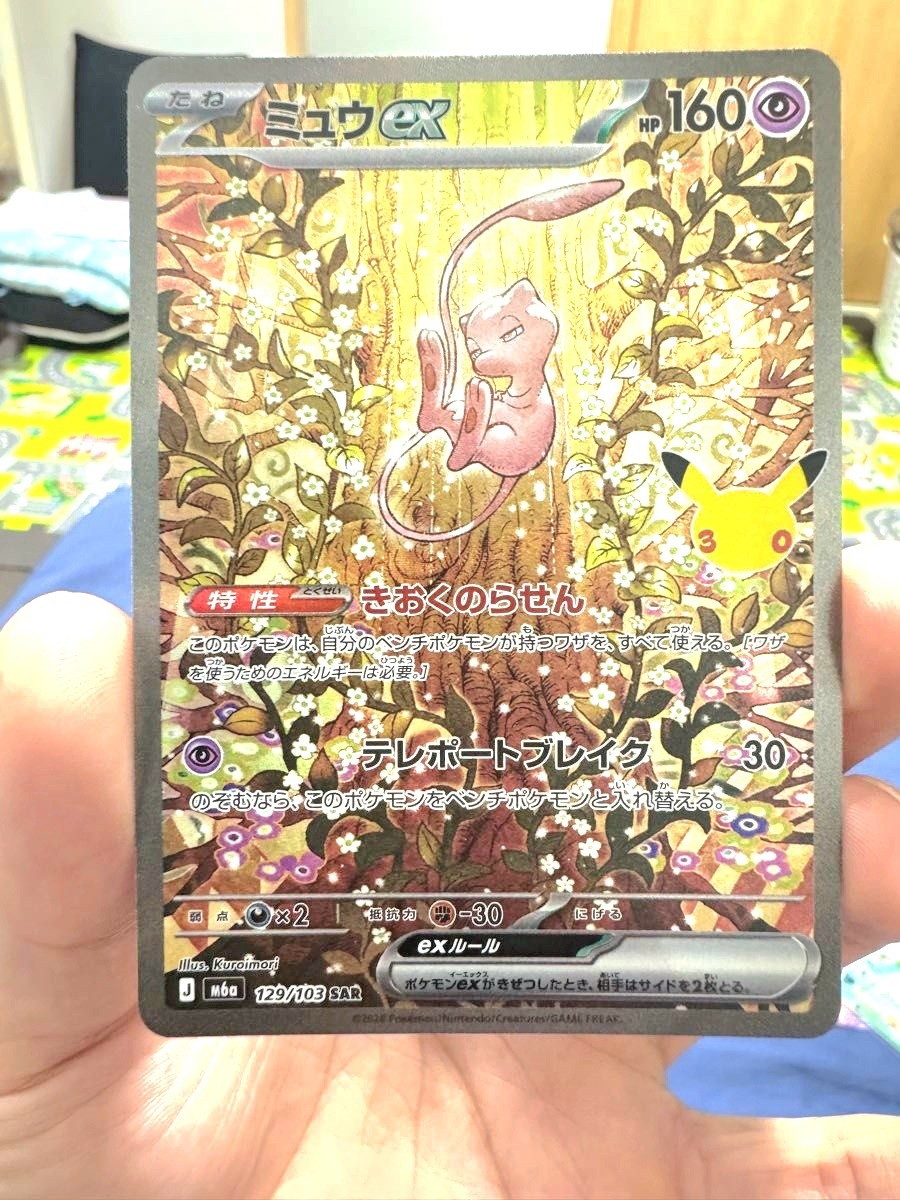
The Japanese SAR version listed here was first released in the Japanese set Shiny Treasure ex (also referenced in some market sources under related 30th Celebration/MEGA naming conventions) in late 2023; available market references tie this exact numbering and card to Japanese release-period listings and price tracking.
- This card is a Special Art Rare (SAR), which is one of the highest-value rarity tiers in modern Japanese Pokémon TCG releases.
- Market trackers show this card has been actively traded and tracked with multiple completed sales and price snapshots in the Japanese market.
- Some market pages use inconsistent set naming for this exact card entry, but the card number 129/103 and Japanese Mew ex identification are consistently matched across listings.
Collector notes
Condition. Check centering, edge whitening, corner wear, surface scratches, and print lines. For Japanese SAR cards, holo surface scuffs, corner dings, and factory imperfections are common grading hits.
Storage. Store in a penny sleeve plus rigid top loader or semi-rigid holder, keep away from heat and humidity, and avoid repeated handling. For long-term preservation, use a binder with acid-free pages and sleeve before insertion.
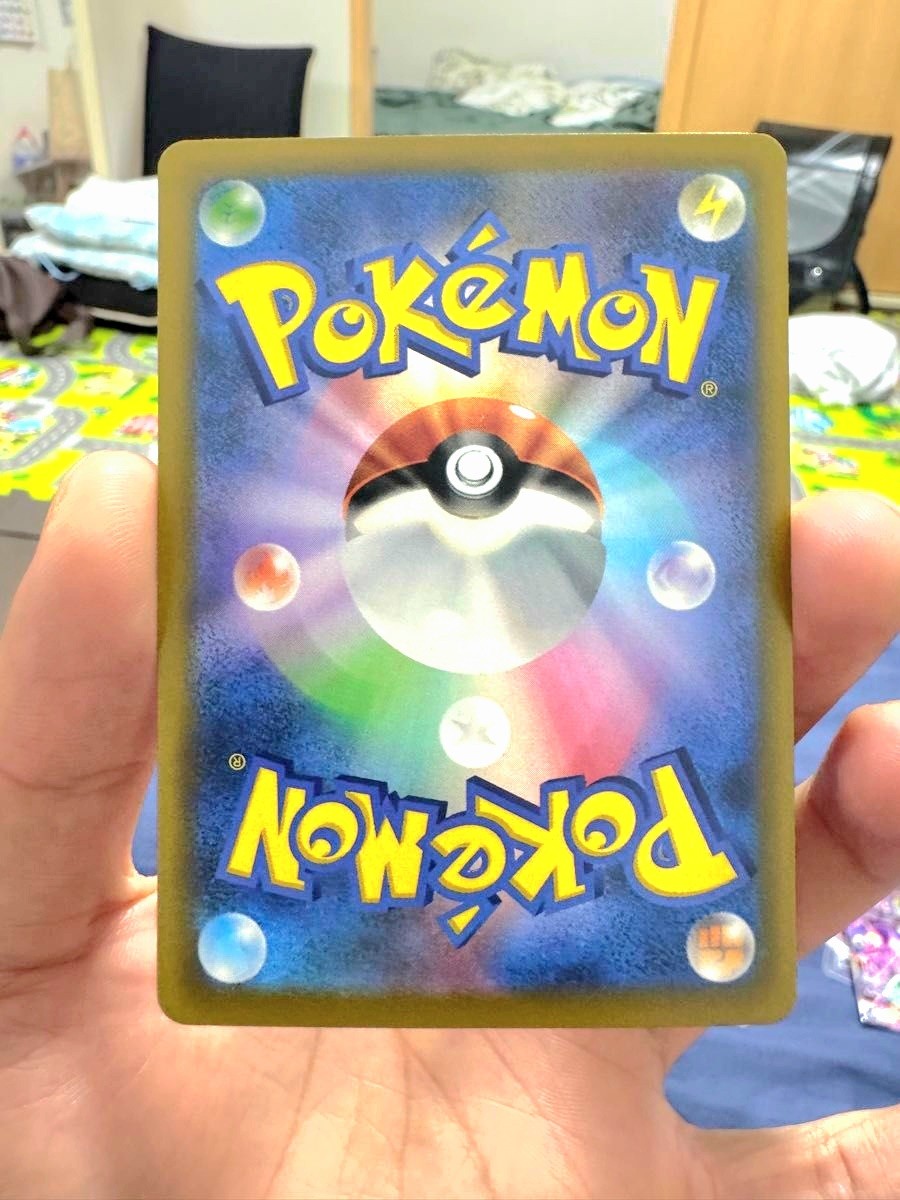
Authenticity. Verify crisp Japanese text, correct texture pattern on the SAR foil, accurate set numbering 129/103, and consistent print saturation. Counterfeits often have weak texture, off-color holography, poor font alignment, or blurry edges. Comparing against known authentic scans and checking weight, finish, and back-card color can help spot fakes.