Market outlook
Stable Outlook 7/10
The 1963 Topps set remains a cornerstone of vintage baseball card collecting, and Al Kaline's Hall of Fame status ensures consistent demand. However, the card's common nature and high supply limit significant price appreciation. The market trend is stable with modest growth potential over time
Next months. Stable prices with minor fluctuations over the next 3-6 months, likely ranging between $17-$25 for ungraded copies
Long term. Gradual appreciation over 1-3 years, with graded copies potentially increasing 10-15% as vintage collecting interest remains strong
History
Al Kaline was a legendary Detroit Tigers outfielder who made his MLB debut on June 25, 1953, just one week after graduating from high school. He went straight from high school to the major leagues, becoming an 18-time American League All-Star, winning 10 Gold Gloves, and hitting .379 against the St. Louis Cardinals during the 1964 World Series where he led the Tigers to the championship. His nickname 'Mr. Tiger' reflects his iconic status with the franchise
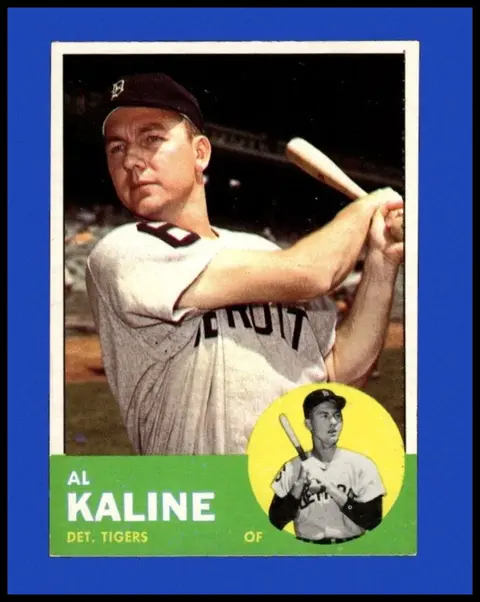
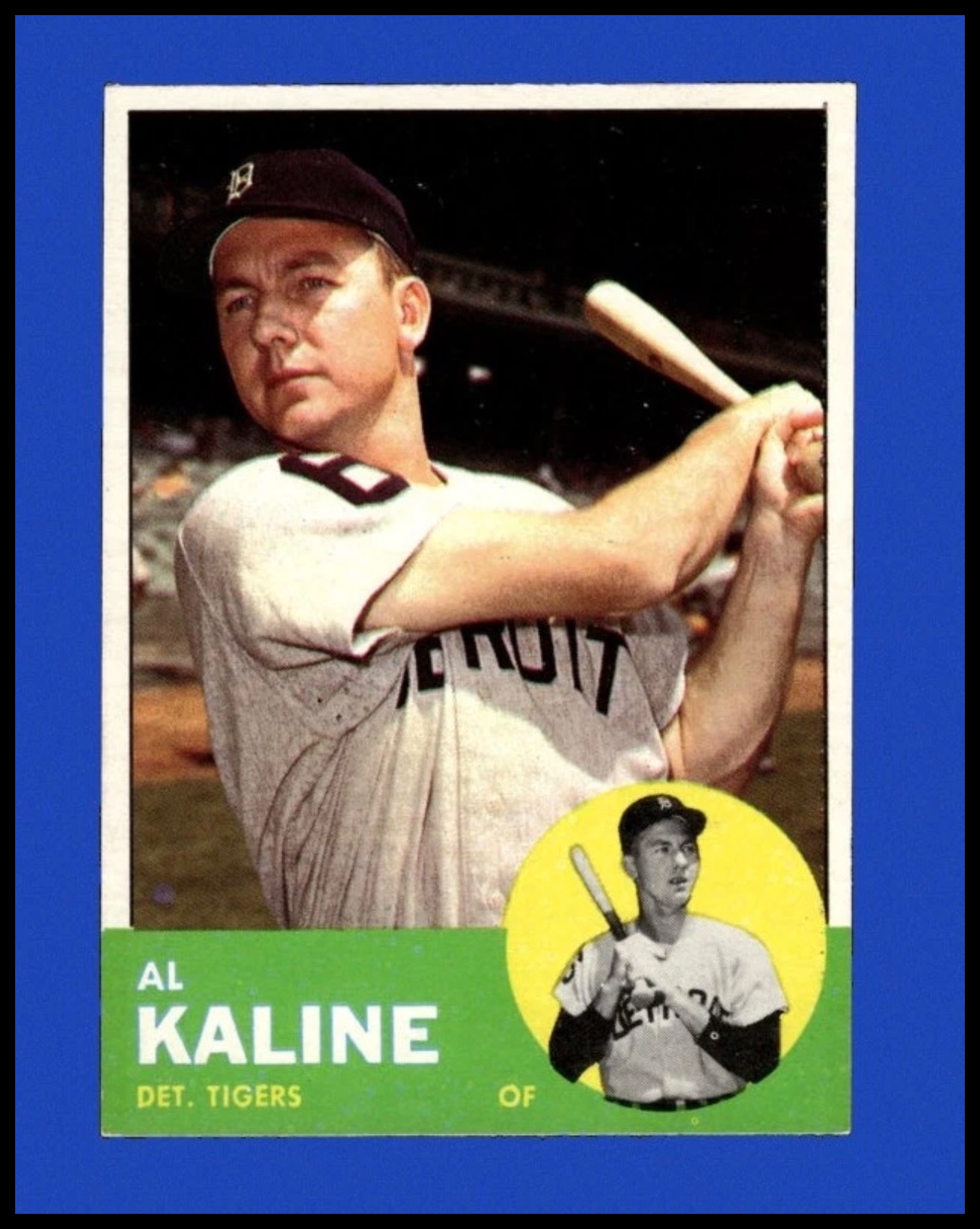
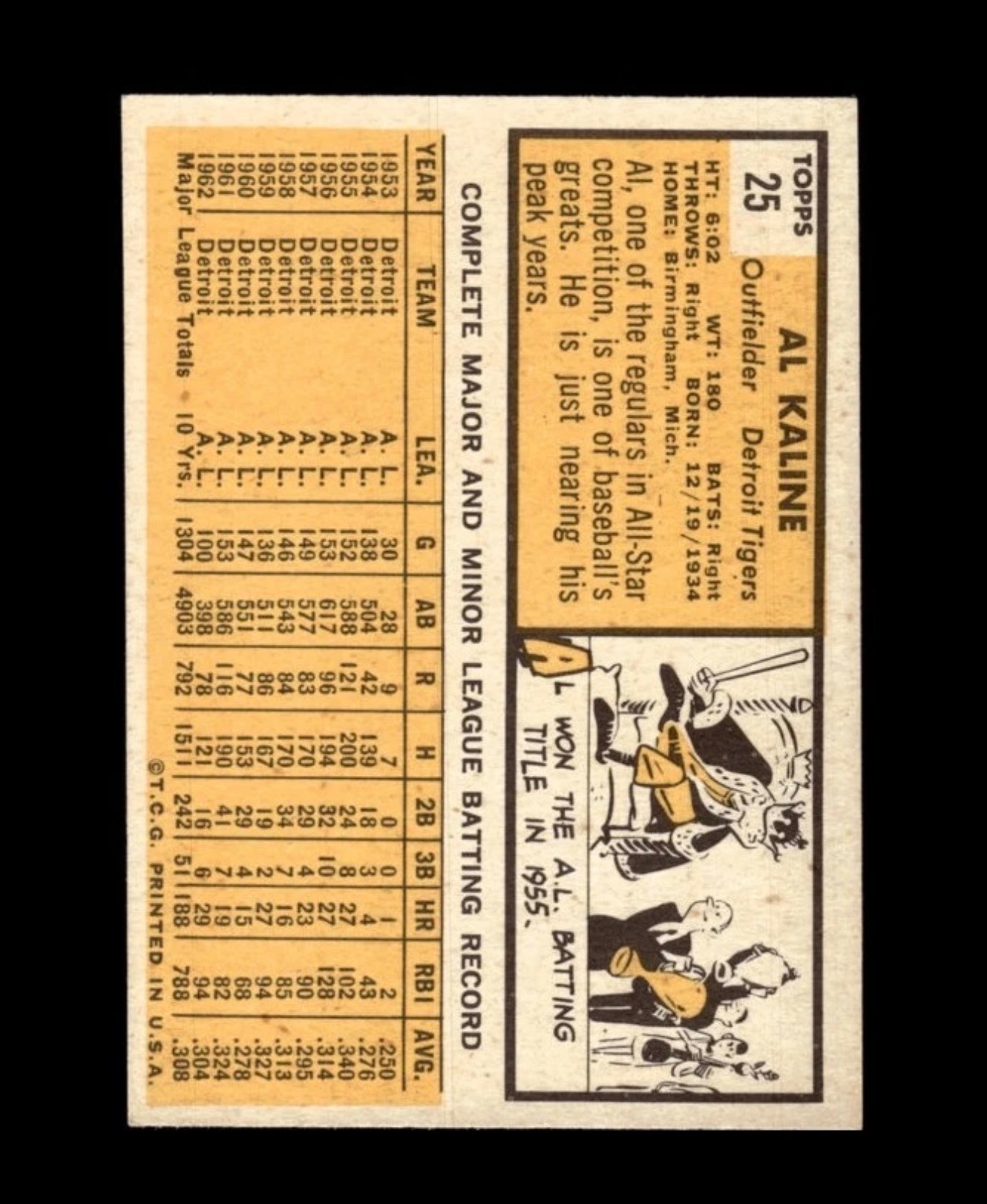
This card was first released in 1963 as part of the Topps Baseball set, printed in the United States by Topps, with Al Kaline #25 being the 25th card in the series
- Al Kaline was an 18-time AL All-Star selection
- He won 10 Gold Gloves throughout his career
- He hit .379 against the St. Louis Cardinals in the 1964 World Series
- Known as 'Mr. Tiger' for his legendary status with the Detroit Tigers
- Made his MLB debut just one week after graduating high school
Rarity and print run
- Tier
- Common
- Print run
- Very High
- First printed in
- 1963 Topps Baseball
- Demand
- Medium
- Supply
- Abundant
- Mass-produced in 1963 as part of a standard Topps set
- High print run typical of 1960s baseball cards
- Common card with no special printing or variant
- Widely available in the market due to abundant supply
Collector notes
Condition. Key flaws to check include centering issues (common in 1960s Topps), edge wear, corner wear, and surface scratches. The card's white borders are prone to yellowing over time. Look for print defects like 'rouge' or 'ink spots' on the image. Card corners often show wear due to handling
Storage. Store the card in a rigid, archival-quality plastic sleeve or holder (such as a Toploader) to prevent bending. Keep in a climate-controlled environment away from humidity and direct sunlight. Use acid-free backing boards and avoid storing in cardboard boxes that can cause yellowing
Authenticity. Fakes and reprints can be spotted by examining the paper stock (originals use specific 1960s card stock with distinct texture), print quality (reprints often have sharper, more modern printing), and color saturation (originals have slightly faded, vintage colors). Look for the 'Topps' logo and copyright date on the back. Authentication through graded or graded is recommended for high-value copies
Sources: psacard.com, sportscardspro.com, sportsmemorabilia.com, sportscardinvestor.com, steinersports.com