Market outlook
Stable Outlook 7/10
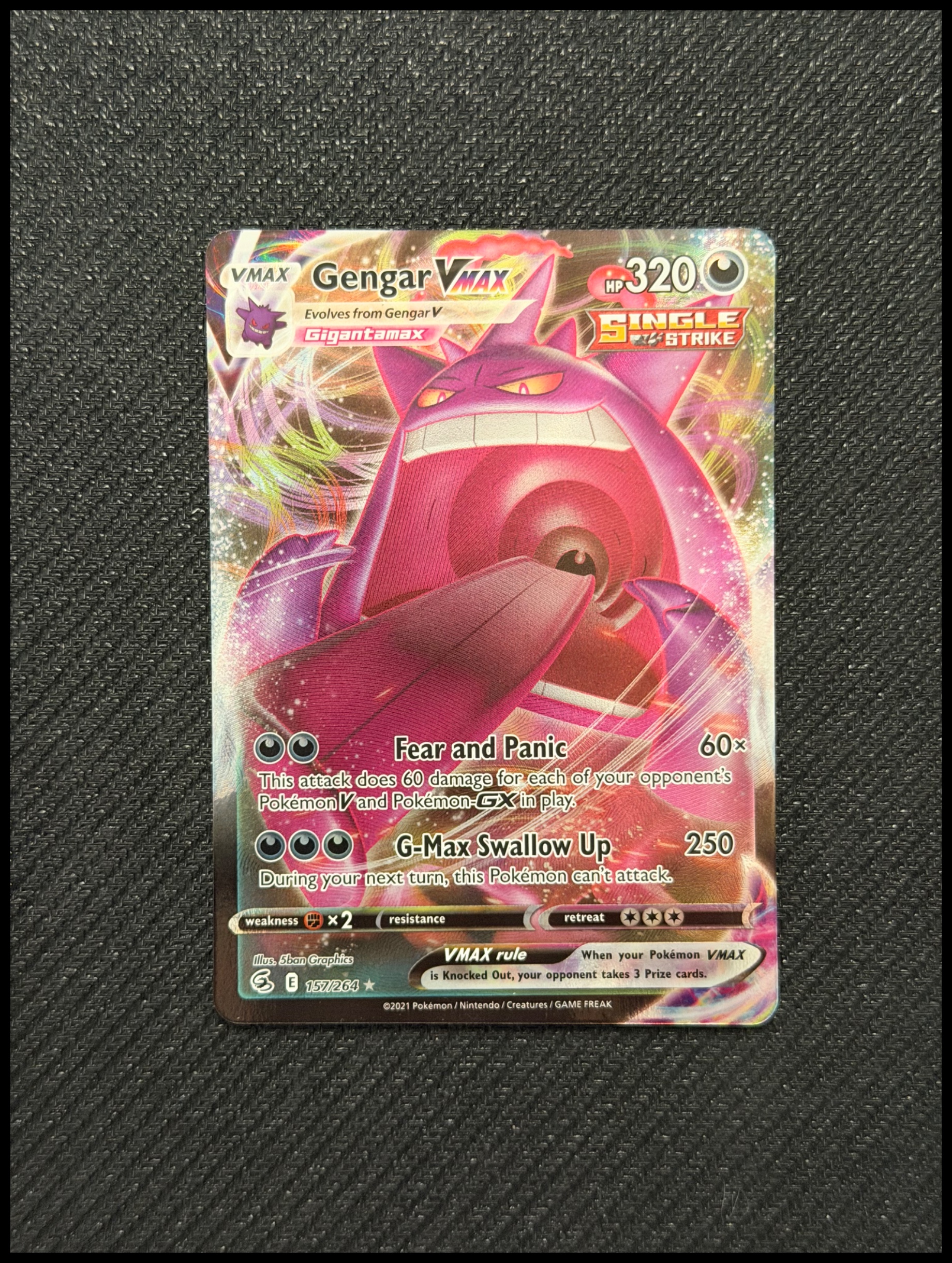
The standard Gengar VMAX 157/264 has broad collector appeal but also broad supply. That usually produces a stable-to-gradual growth pattern rather than a sharp speculative move. Demand should remain healthy because Gengar is a perennial favorite, but the card is unlikely to experience major scarcity-driven acceleration unless sealed product dries up significantly or nostalgia/fandom demand intensifies.
Next months. Likely to remain in a tight trading range with modest fluctuations based on grading demand, overall Pokémon market sentiment, and attention on Fusion Strike as a set.
Long term. Over 1-3 years, expect slow appreciation for gem mint copies if the broader Pokémon market remains healthy, while raw copies should stay relatively affordable due to continued supply.
History
Gengar is a classic Ghost-type Pokémon introduced in Generation I (the original Kanto games) and has remained one of the most recognizable fan-favorite Pokémon in the franchise. Gengar’s appeal comes from its mischievous, spooky design, strong competitive history, and long-running popularity in both video games and the Trading Card Game. The VMAX form is part of the Sword & Shield era, representing the Dynamax/Gigantamax-inspired mechanic, and Gengar VMAX became especially notable because it combines a beloved original Pokémon with a dramatic full-art alternate-style presentation that collectors strongly favor.
First released in the English Pokémon TCG in the Sword & Shield: Fusion Strike expansion in 2021. Card number 157/264 is the standard Ultra Rare Gengar VMAX; it was distributed in booster packs and sealed product associated with the Fusion Strike set.
- Gengar is one of the most collected Pokémon across all eras, which gives this card enduring demand beyond set-specific interest.
- Fusion Strike produced multiple Gengar VMAX versions, including the standard Ultra Rare 157/264 and the much more valuable alternate-art secret rare 271/264, often causing confusion in market listings.
- The 157/264 version is significantly more affordable and abundant than the alternate-art 271/264, making it a popular lower-cost collector option for fans of the character.
Collector notes
Condition. Check for edge wear, corner whitening, surface scratches, print lines, centering, and holo scuffing. Full-art/VMAX cards often show whitening on corners and edges from pack friction, plus surface marks that are easier to see under angled light. Centering matters for graded/graded/graded grading and can heavily affect value. Because this card is still relatively modern, mint copies are common, but true gem mint copies should still be inspected carefully for factory imperfections.
Storage. Store in penny sleeves and rigid top loaders or semi-rigid holders for raw copies. For graded or high-value mint copies, use perfect-fit sleeves plus binder storage only if using archival, side-loading, non-PVC pages. Keep cards in a cool, dry environment away from sunlight and humidity. If handling frequently, use clean hands or gloves and avoid bending the card when removing it from sleeves.
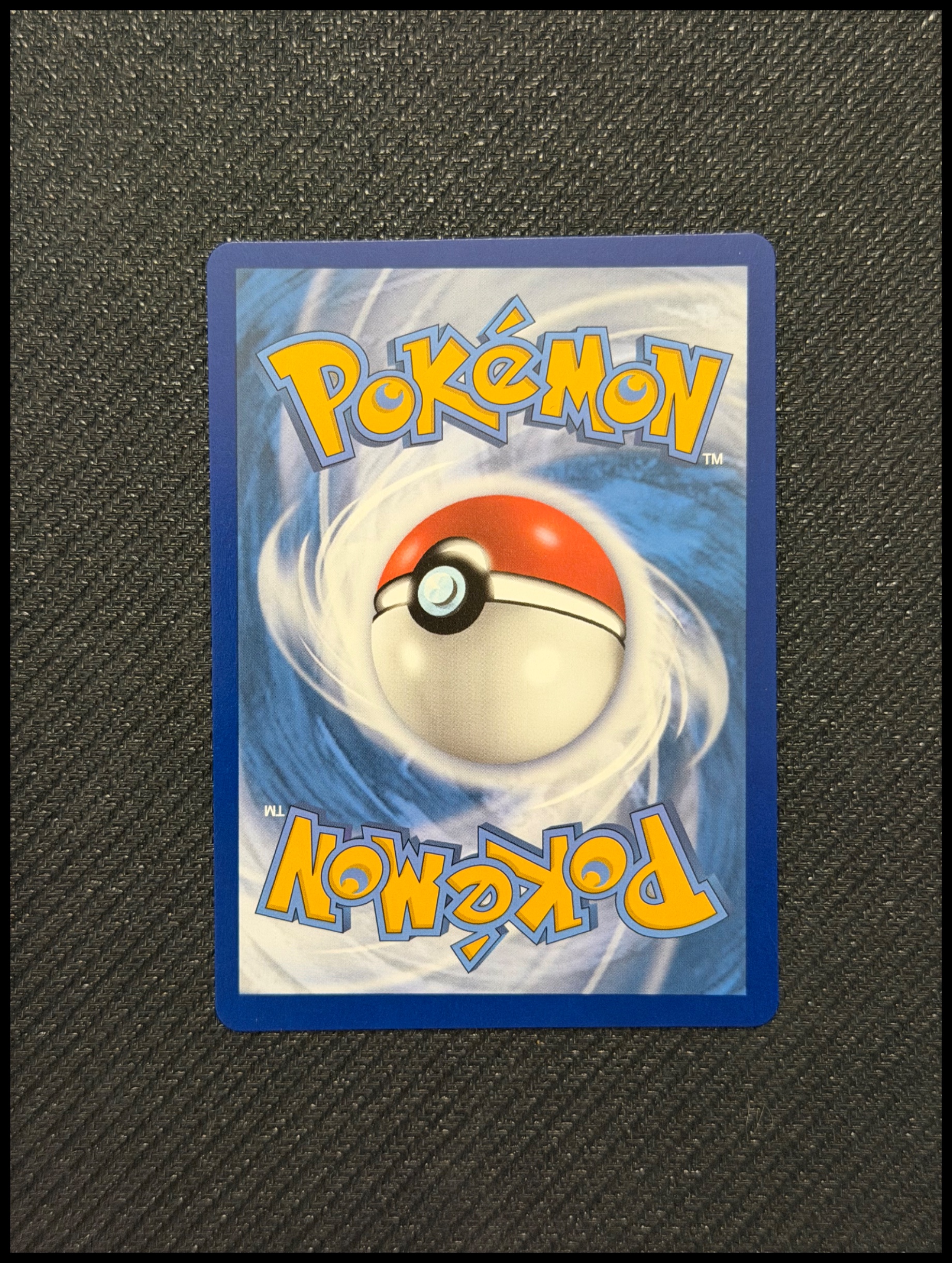
Authenticity. Verify the set symbol, card number 157/264, correct typography, texture, and print quality. Authentic modern Pokémon cards should have crisp text, consistent holo patterning, and correct color saturation. Fakes may have blurry text, incorrect texture or holo placement, weak card stock, off-color borders, or incorrect back coloration. Comparing weight, surface texture, and light test behavior against a known authentic card can help. For expensive graded targets, buy from reputable sellers and compare the exact art, numbering, and rarity because Fusion Strike Gengar exists in multiple versions.