Market outlook
Stable Outlook 7/10
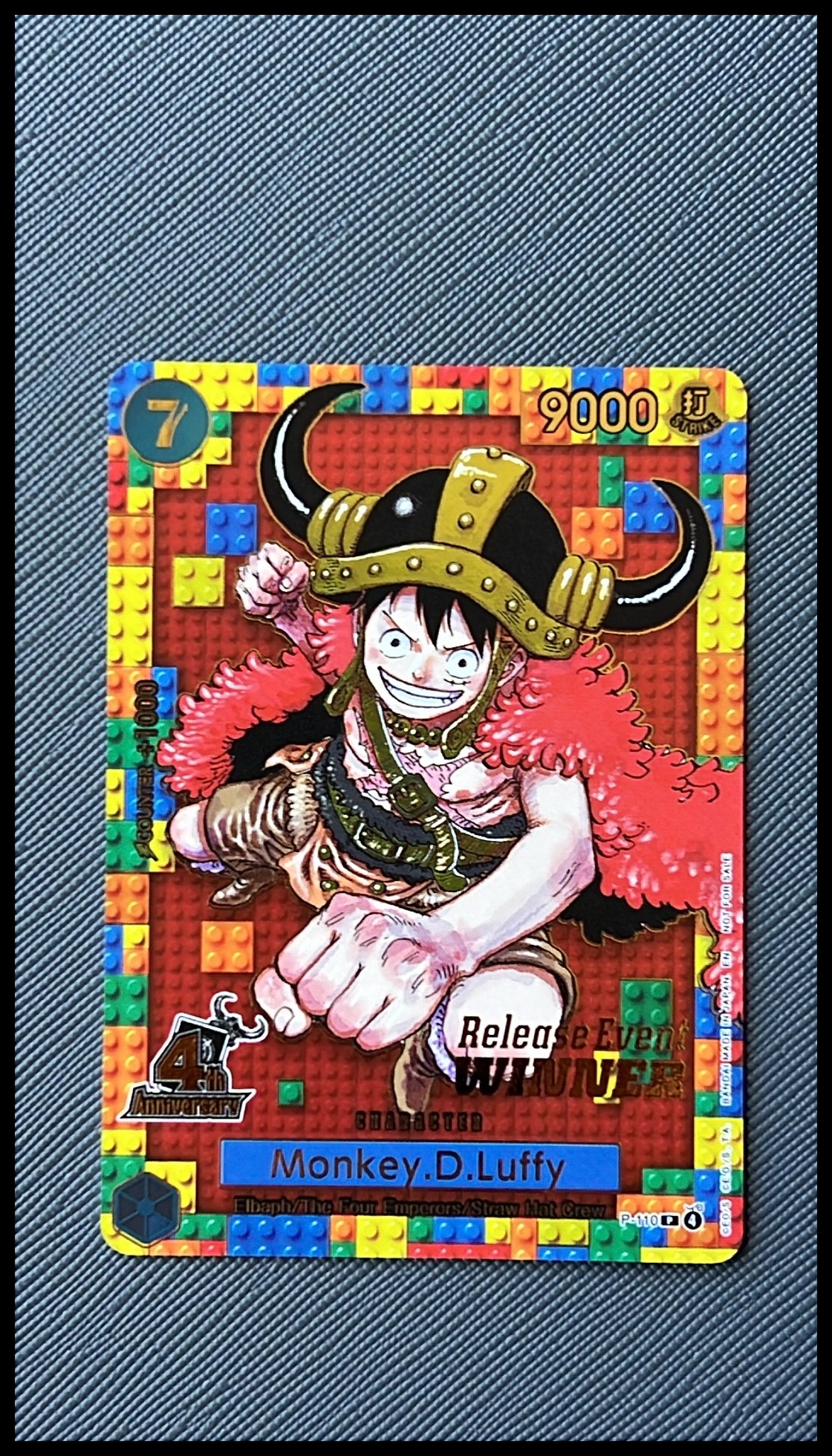
The Winner variant maintains a large premium over the regular P-110, and graded 10 examples can command substantial prices. However, the market is still developing, sales are relatively sparse, and prices are sensitive to grading population, event supply, and new Luffy releases.[1][4][5]
Next months. Over the next 3-6 months, expect volatile but generally firm pricing, with raw copies likely concentrated around the high hundreds of dollars and graded 10 copies potentially ranging from several hundred dollars to about $1,000 or more depending on supply and buyer competition.
Long term. Over 1-3 years, the card has favorable upside if the game expands and winner copies remain scarce. Prices could soften if substantial sealed inventory emerges, grading populations rise quickly, or newer Luffy chase promos divert demand; high-grade, well-centered copies with strong provenance should remain the most resilient.
History
Monkey D. Luffy is the protagonist of Eiichiro Oda's One Piece and captain of the Straw Hat Pirates. He gained rubber-like abilities after eating the Gum-Gum Fruit, later revealed as the Mythical Zoan Human-Human Fruit, Model: Nika. Luffy's central significance is his pursuit of the One Piece and his goal of becoming Pirate King while promoting freedom and loyalty.
The English P-110 Release Event Winner parallel is associated with the 2024 One Piece Card Game promotional cycle and was distributed as a winner prize for Release Events. Public listings identify it as the 4th Anniversary Winner variant; exact first-event date and official print quantity are not publicly documented.
- P-110 is a promotional card number rather than a standard booster-set number.
- The Release Event Winner version is a distinct parallel with a winner stamp and substantially higher market value than the non-winner version.
- Market listings distinguish the English 4th Anniversary Winner card from later Japanese One Piece Day P-110 releases and other P-110 variants.
- The card has been listed in sealed winner or event-promo packaging.
Collector notes
Condition. Inspect centering, corner whitening, edge chipping, surface scratches, dents, print lines, foil defects, and evidence of mishandling around the stamp. Winner-stamped promos should be checked for clean stamp application, absence of smearing, and consistent alignment. Sealed copies should be examined for packet damage, tampering, and moisture exposure.
Storage. Store in an archival penny sleeve followed by a semi-rigid holder or fitted card saver; for raw long-term storage, use a rigid top loader with a clean sleeve. Keep upright in a cool, dry, temperature-stable environment away from sunlight, pressure, humidity, and PVC materials. Graded copies should remain in their slabs and be protected from impact and extreme heat.
Authenticity. Compare the card's typography, color saturation, foil pattern, card stock, borders, copyright line, and set number with confirmed examples. Check that the winner stamp has authentic placement, ink density, and edge detail. Be cautious with unusually cheap sealed copies, altered stamps, resealed event packaging, and listings that confuse the Winner parallel with the much cheaper regular P-110. Third-party grading provides additional protection, but verify the certification number and slab details with the grading company.