Market outlook
Stable Outlook 7/10
The card benefits from Marino’s legendary status, but because it is a common base issue with abundant supply, prices usually move gradually and are most sensitive to grade and eye appeal rather than scarcity.
Next months. Expect relatively stable raw prices and modest movement in graded 9/10 prices based on grading population and auction timing.
Long term. Likely to remain a steady collector card with slow appreciation in top grades, while raw copies stay inexpensive due to high supply.
History
Dan Marino is one of the most iconic quarterbacks in NFL history, best known for his record-setting arm talent, quick release, and prolific passing numbers with the Miami Dolphins. A first-round pick in 1983 out of the University of Pittsburgh, Marino became the face of the Dolphins franchise for nearly two decades and helped define the modern passing era. His Hall of Fame career and enduring popularity make his cards a staple for football collectors.
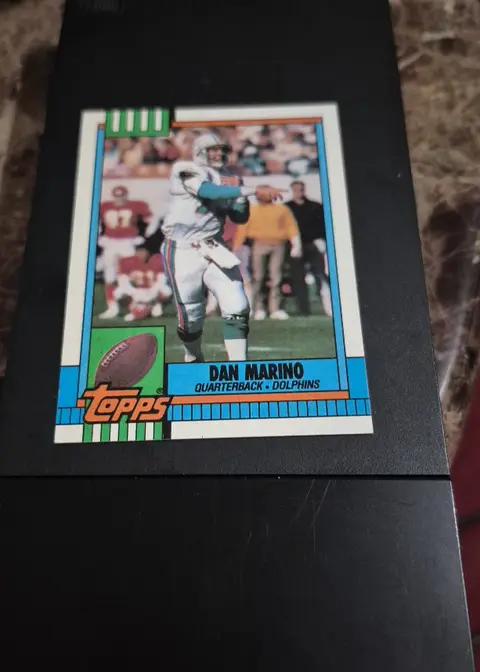
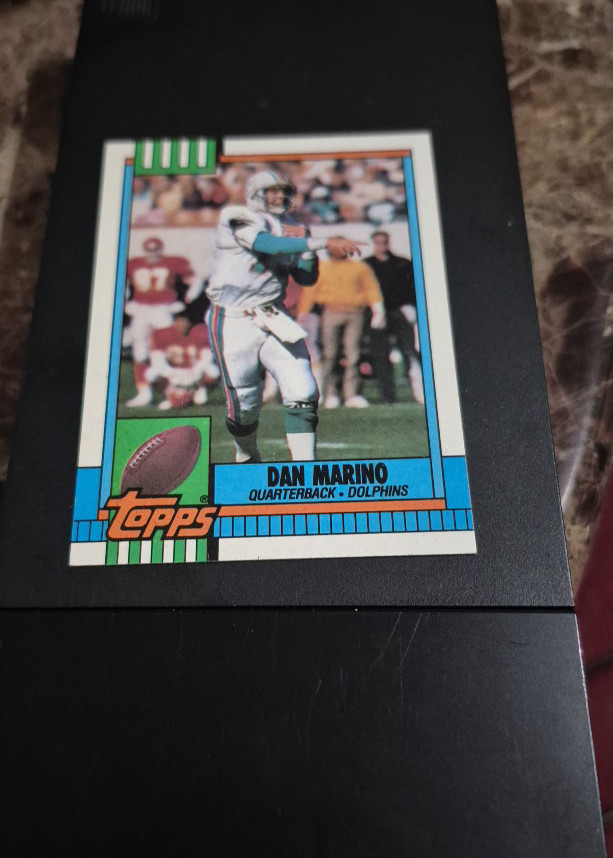
This card was first released in 1990 as part of the 1990 Topps Football base set, distributed in the United States through hobby shops, card stores, and mass-market retail packs and boxes by Topps.
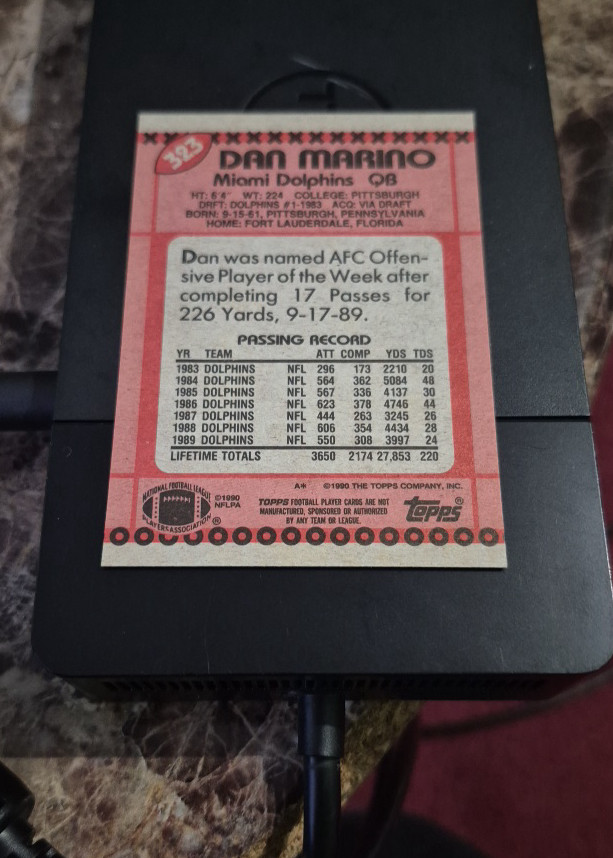
- Card #323 is a base-card issue, not a rookie card; Marino’s true rookie cards are from 1984.
- 1990 Topps Football is a large, mass-produced mainstream set, so the Marino card is widely available in raw condition.
- The card remains popular because Marino is a Hall of Famer and one of the most collected quarterbacks from the pre-scarcity era.
Collector notes
Condition. Check centering carefully, especially front centering and left-right balance. Common flaws include wax/stain damage, soft corners, edge chipping, print snow/surface speckling, and minor roller marks from pack handling. Since this is a common card, high-grade copies matter most for value.
Storage. Store in a penny sleeve and rigid top loader or card saver for individual protection, and keep in a cool, dry, low-light environment. For long-term storage, use acid-free boxes and avoid humidity, bending, and repeated handling. High-grade candidates should not be cleaned or pressed without professional experience.
Authenticity. 1990 Topps base cards are widely printed, so counterfeits are less common than for premium vintage cards, but altered or trimmed copies can still appear. Verify correct stock feel, crisp Topps printing, proper card back design, and accurate dimensions. Compare borders, color saturation, and text alignment against known authentic examples. For high-value graded submissions, use reputable third-party grading.