Market outlook
Stable Outlook 7/10
Pricing is likely to remain supported by Gengar demand and set desirability, but the card already has a visible premium market and will likely move more on grade-population changes and collector attention than on pure scarcity.
Next months. Likely to trade within a relatively narrow range unless a major graded sale shifts perception or supply changes materially.
Long term. Over 1-3 years, the card has a good chance to hold value or appreciate modestly if collector demand for Chinese exclusives remains strong and graded 10/elite graded supply stays limited.
History
Gengar is a classic Kanto-era Pokémon from the original Pokémon franchise, known in Japanese as Gengar and in Chinese as 耿鬼. It is the final evolution of Gastly and Haunter, and has long been one of the franchise’s most recognizable Ghost/Poison-type Pokémon because of its mischievous, shadowy design and strong presence in games, anime, and trading cards.
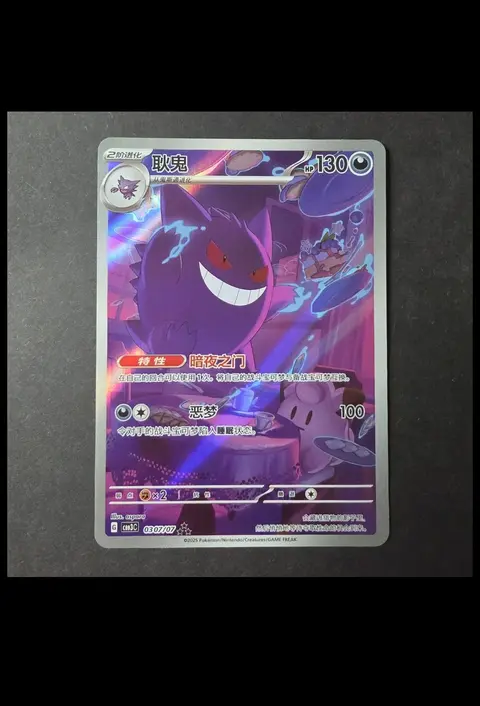
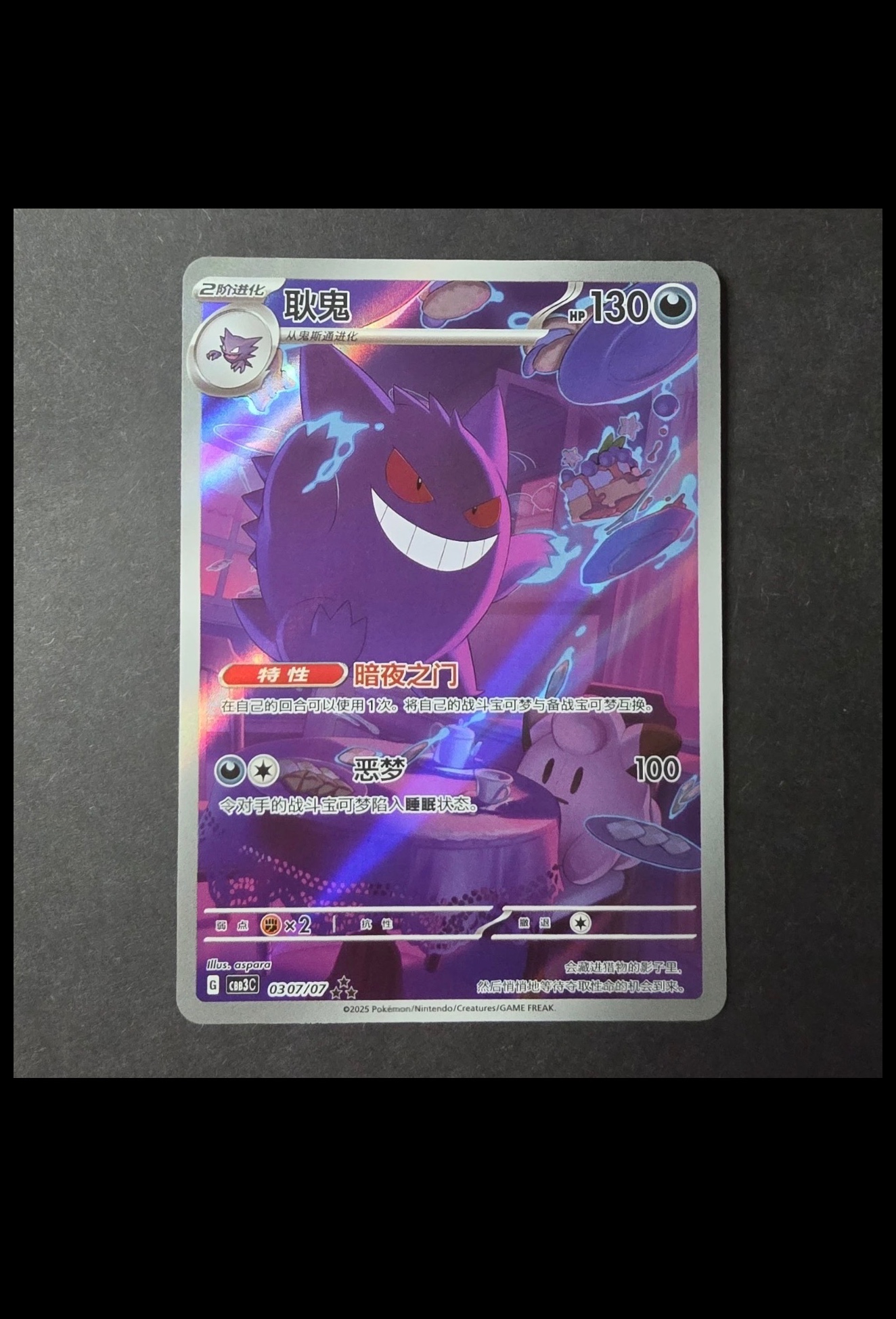
This card was first released in Mainland China in Gem Pack Vol. 3 on September 26, 2025. It is the Chinese Full Art/Gallery-style Gengar from that set, listed as card 03 07/07 in the collector-facing numbering system used for the exclusive art rares in the release.
- Gem Pack Vol. 3 was released in Mainland China on September 26, 2025 and contains 136 cards total, including 5 exclusive art rares.[1]
- The Gengar art rare is identified as the most expensive card in the Gem Pack Vol. 3 set.[1]
- Authentic cards pulled from official Gem Pack Booster Boxes reportedly include a small Pokémon-logo authenticity stamp at the bottom left under the set code.[1]
Rarity and print run
- Tier
- Rare
- Print run
- Medium
- First printed in
- Pokémon Chinese Gem Pack Vol. 3
- Demand
- High
- Supply
- Medium
- It is one of only 5 exclusive art rares in a 136-card set.[1]
- It is a character favorite with broad collector appeal.
- As a Chinese-exclusive release, it is less available internationally than mainstream English/Japanese products.
Collector notes
Condition. Check the holofoil surface for scratches, print lines, edge whitening, corner wear, and centering. Full-art Chinese cards can also show roller lines, surface scuffs, and manufacturing nicks near the borders or embossed-looking foil areas.
Storage. Store in a penny sleeve and semi-rigid or top-loader immediately after opening, keep away from direct sunlight and humidity, and use graded-slab protection if the card is high grade or intended for long-term retention.
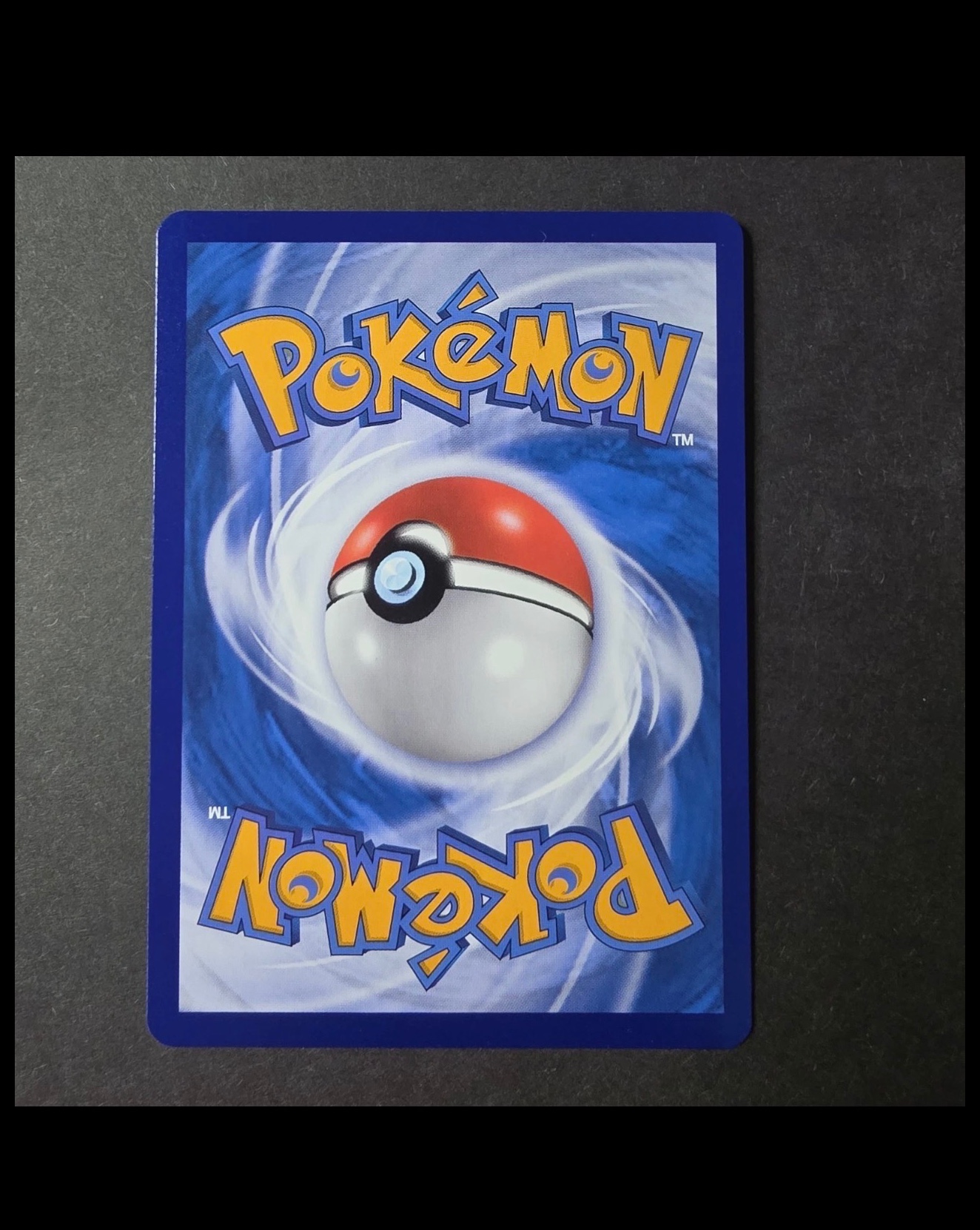
Authenticity. Compare the card against verified scans for the exact Chinese text, set numbering, and holo pattern. Authentic pulls from official boxes should have the Pokémon-logo authenticity stamp on the bottom left below the set code.[1] Counterfeits may have incorrect text, poor color saturation, blurry printing, missing or malformed stamps, and inconsistent foil texture.
Sources: pokecottage.com, youtube.com, instagram.com, facebook.com, pricecharting.com