Market outlook
Stable Outlook 7/10
Base modern Topps Chrome cards typically follow player performance and overall hobby sentiment, but common-print cards usually settle into a relatively stable price band after release. Anthony Edwards’ star status supports demand, while the high print volume caps scarcity-driven appreciation for the base card.[1][6]
Next months. Expect modest price movement with spikes around major player news, playoff runs, or grading-market strength.
Long term. Over 1-3 years, the base card is likely to remain a liquid but low-premium modern issue, while numbered parallels and gem-mint copies should outperform the raw base card.
History
Anthony Edwards is an American professional basketball player born in 2001 who became the No. 1 overall pick in the 2020 NBA Draft and quickly emerged as the franchise cornerstone of the Minnesota Timberwolves. He is widely regarded as one of the NBA’s premier young stars because of his elite athleticism, scoring ability, playoff production, and growing superstar profile, which makes him a highly collectible modern basketball subject.[1][10]
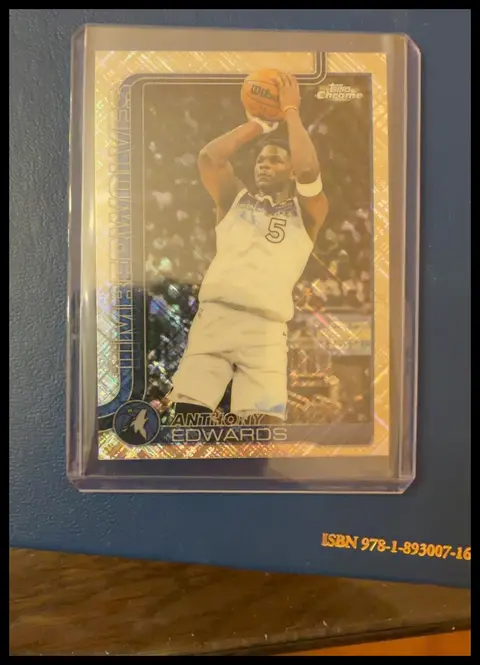
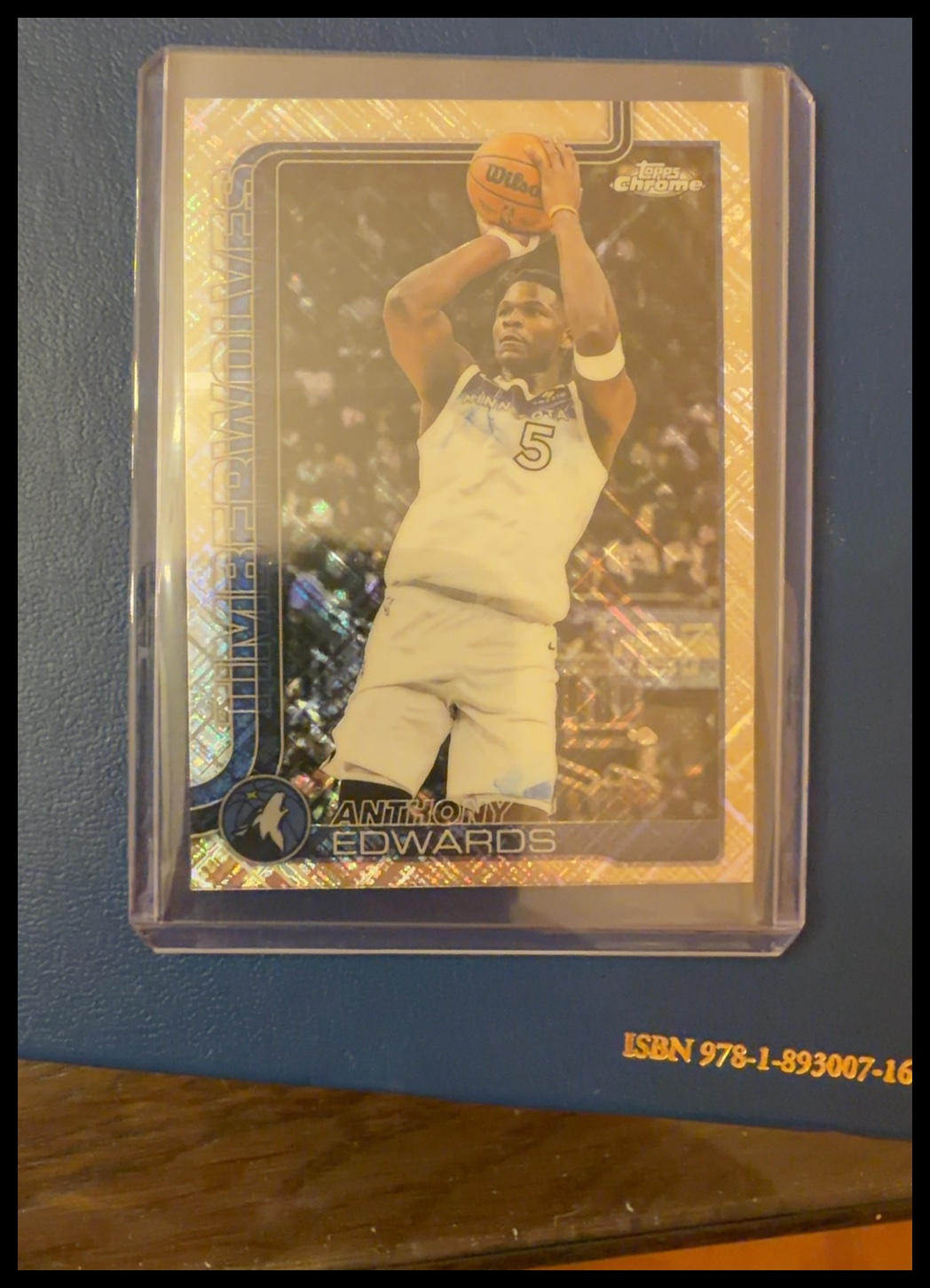
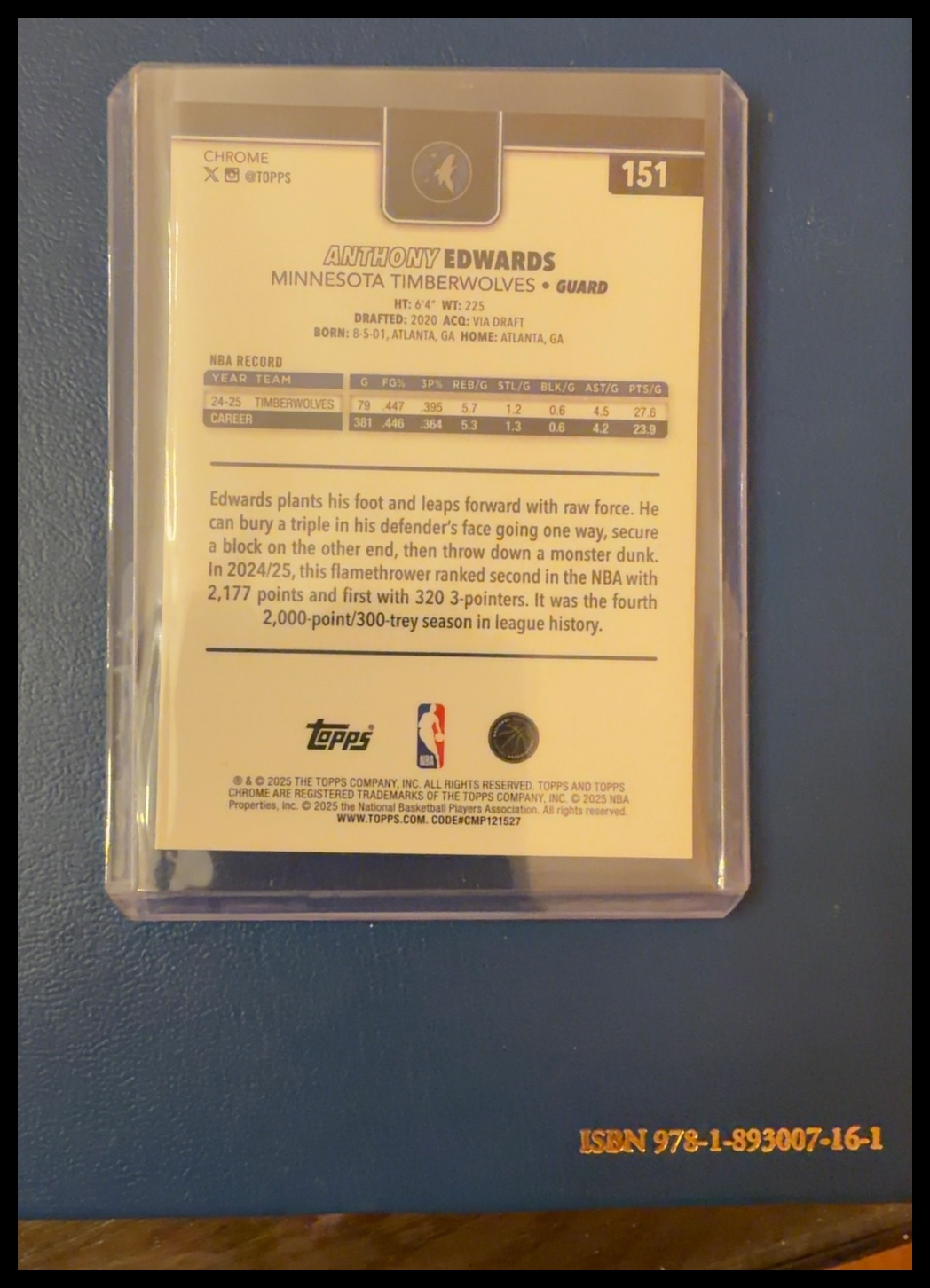
This card first appeared in the 2025-26 Topps Chrome Basketball release as card #151, with checklist references showing Anthony Edwards at #151 in the 2025-26 set and retail/product listings for the same card in circulation by early 2026.[6][10][8]
- The card is cataloged as 2025 Topps Chrome / 2025-26 Topps Chrome Basketball #151 Anthony Edwards, confirming it is a modern Topps Chrome base-card issue.[1][10]
- Price-guide data shows the base card has relatively low raw value but a meaningful premium in high grades, including graded 10 at about $45 on one guide.[1]
- Checklist data for the set shows Anthony Edwards also appears in multiple parallels and short-print formats, including Red Refractor, SuperFractor, and FrozenFractor entries, indicating broad parallel demand across the release.[6]
Collector notes
Condition. Check centering first, since Chrome basketball cards often lose grade value from slight left-right or top-bottom drift. Also inspect the glossy surface for scratches, print lines, roller marks, dimpling, edge chipping, and corner whitening, especially because refractor and chrome finishes tend to reveal defects easily.[1][2]
Storage. Store in a penny sleeve and rigid top loader or card saver for raw copies, and use clean, low-dust handling to avoid surface scratches. For long-term protection, use penny sleeve plus semi-rigid holder or slab it if the card is a high-grade candidate, because Chrome surfaces show wear quickly and high grades carry a strong premium.[1][3]
Authenticity. Verify the print quality, chrome finish, and card stock against known authentic examples, and compare the front and back typography with confirmed listings. For serial-numbered parallels, confirm the serial stamp is sharply printed and consistent with the parallel type, because counterfeiters often miss exact foil texture, serial placement, or surface gloss.[3][7]