Market outlook
Rising Outlook 8/10
Market data shows strong recent sales at high grades and ongoing interest in Seaver as a blue-chip Hall of Fame rookie.[4] Registry competition, scarcity of top-graded copies, and the card’s status as the key Seaver rookie support long-term appreciation.[1][2][4]
Next months. Likely to remain firm to slightly higher, especially for authenticated mid- and high-grade examples.
Long term. Expected to continue gradual appreciation, with the strongest gains concentrated in graded 8/9 and other top-condition copies.
History
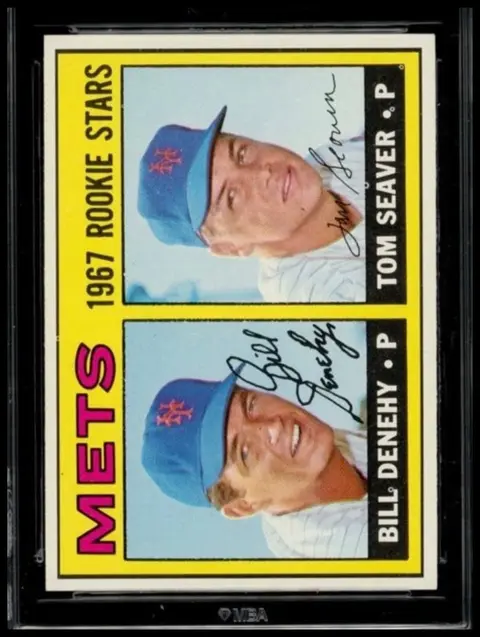
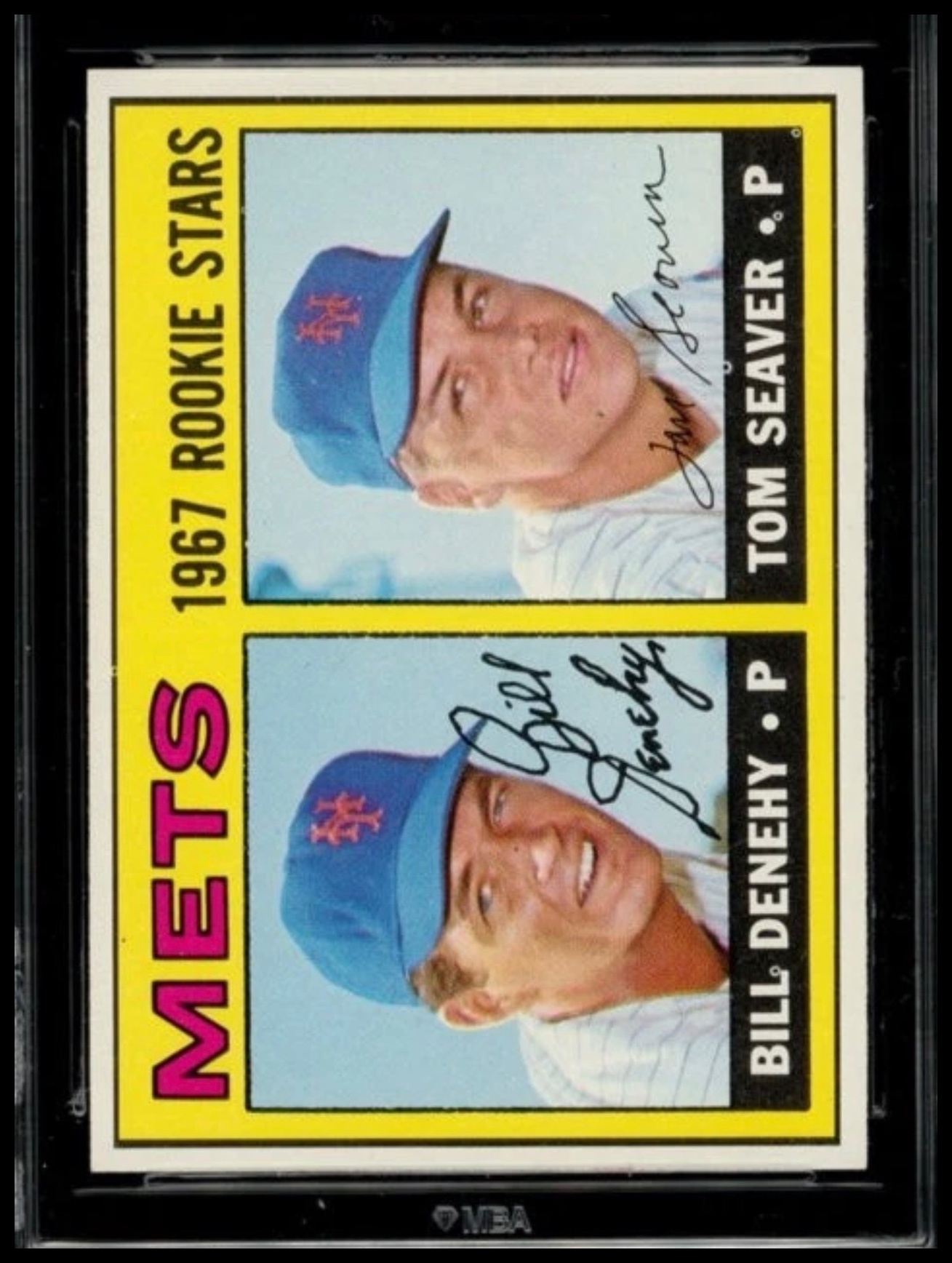
Tom Seaver was a right-handed pitcher from Fresno, California, who became one of the defining stars of the New York Mets and one of baseball’s greatest pitchers; he is widely identified as the headline player on this card and is recognized as the card’s key rookie attraction.[1][2][5] Bill Denehy was a Mets pitching prospect from the same rookie-era checklist, included as the co-feature on the card, but Seaver’s career outcome is what gave the card its enduring significance.[1][2] The card is historically important because it is Seaver’s rookie card in the 1967 Topps Baseball set, making it one of the most collected rookie issues of the era.[1][2][3]
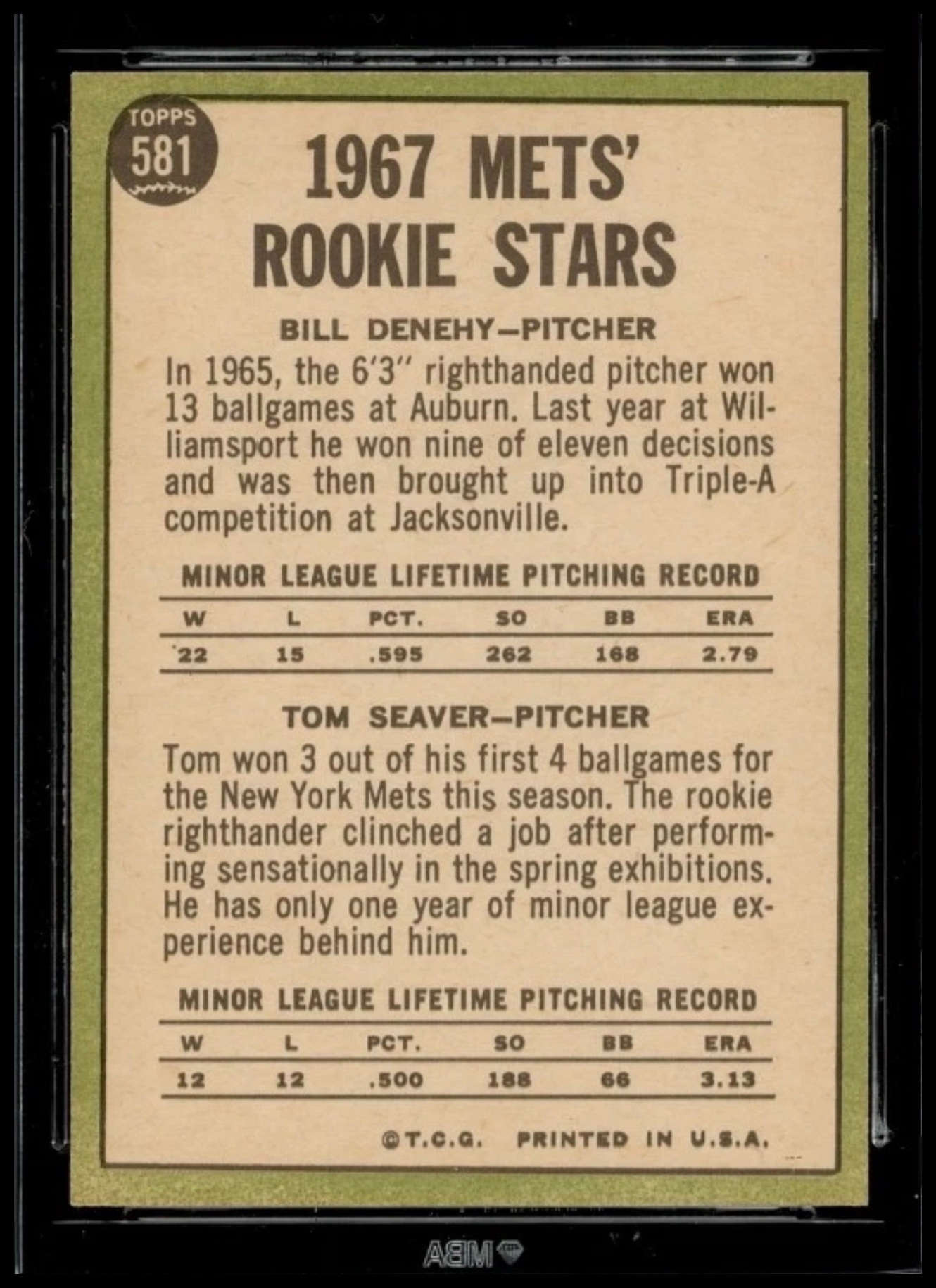
First released in the 1967 Topps Baseball set in the United States as card #581, part of Topps’ 1967 season wax-pack distribution and hobby circulation.[1][6]
- graded identifies #581 as "Mets Rookies" and notes it is challenging to find well centered because of the narrow borders.[1]
- The card’s green reverse border shows wear easily, making back-condition important in grading.[1]
- graded notes that authentic examples are often targeted by counterfeiters and that reprints are widely sold online, so authentication is important.[2]
- Sports Card Investor and other market trackers treat this as Tom Seaver’s key rookie card, with high-end graded examples reaching five figures.[3][4]
Rarity and print run
- Tier
- Common
- Print run
- Very High
- First printed in
- 1967 Topps Baseball
- Demand
- Very High
- Supply
- Medium
- It is not a print-rarity card; it comes from a mass-produced 1967 Topps issue.[1]
- High-grade examples are harder to find because centering and back-border wear are common problems.[1]
- Counterfeit and altered copies create an additional premium for authenticated cards.[2]
Collector notes
Condition. Check centering first, especially left-right centering due to the narrow white borders.[1] Inspect corners for softness, edge wear on the white front border, and green border wear on the back.[1] Look for surface print defects, wax staining, and any ink loss or paper chipping, all of which affect grade on this issue.
Storage. Store in an archival sleeve and rigid holder, ideally a graded slab if authenticated.[2] Keep it dry, cool, and away from light because the card stock and colored borders make wear and fading visible. Avoid repeated handling; use clean gloves or handle by the edges only.
Authenticity. This card is frequently reprinted, so authentication is strongly recommended for raw copies.[2] Compare the printed signatures and image details to known genuine examples; graded notes that fakes may show shadowing behind the signatures where genuine printing is solid black.[2] Also examine stock thickness and overall feel, since counterfeit examples may have inconsistent paper stock and weight.[2]
Sources: psacard.com, cgccards.com, sportscardspro.com, sportscardinvestor.com, nw-sportscards.com