Market outlook
Stable Outlook 6/10
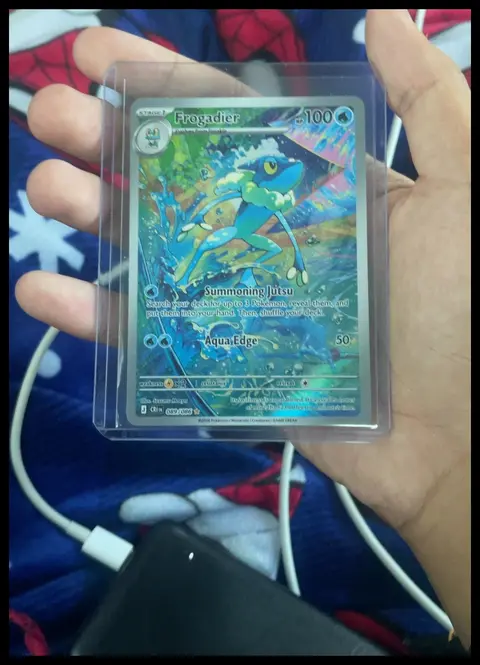
The card’s value is likely to remain supported by character popularity and collector interest in shiny/full-art variants, but the available pricing data suggests a mature market with limited short-term breakout potential.
Next months. Likely to trade in a narrow range unless the 2026 set version creates a new collector chase or the card gains competitive or nostalgia-driven attention.
Long term. Over 1–3 years, expect gradual appreciation if the card remains a notable chase in the Froakie line, but not rapid growth unless supply tightens or the 2026 full-art version becomes significantly more sought after.
History
Frogadier is a Water-type Pokémon from the Pokémon video game and anime franchise, introduced in Generation VI as the middle evolution of Froakie and the evolved form of Frogadier’s pre-evolution line’s first stage, Froakie, and it later evolves into Greninja. Its design and popularity are tied to the Kalos region’s starter line, and Greninja in particular became one of the franchise’s most recognizable characters, which helps sustain collector interest in Frogadier cards as part of that evolution line.
The first widely documented English Frogadier trading card was in Sun & Moon: Hidden Fates Shiny Vault as SV12/SV94, where it appeared as a shiny vault card; current database listings and market pages identify that printing as Hidden Fates. A 2026 full-art Frogadier card was also previewed by Pokémon for Mega Evolution: Chaos Rising, but the query’s exact card details do not match any confirmed public listing in the provided results, so the safest first-print reference is Hidden Fates SV12.
- PriceCharting lists Frogadier SV12 from Hidden Fates with an ungraded market value around $3.15 and graded prices rising to around $10–$11 for graded/graded-style 9–9.5 equivalents.
- TCGplayer’s card page describes Frogadier’s evolving-ability attack text, confirming the Hidden Fates Shiny Vault card’s gameplay identity.
- Pokémon’s official news in 2026 promoted a full-art Frogadier for Mega Evolution: Chaos Rising, showing the character is still being actively featured in modern sets.
Collector notes
Condition. Check the dark full-art/shiny surface for edge whitening, print lines, corner wear, and visible scratching on the holo layer; modern full-art/shiny cards also commonly show centering issues and edge chipping. For sealed-pack pulls, verify whether the card has factory roller marks, surface dimples, or texture loss, since these affect grade significantly.
Storage. Use a penny sleeve plus a semi-rigid holder or top loader, keep it away from moisture and UV light, and store vertically in a cool, dry environment. For a higher-value copy, consider a card saver for grading submission and avoid frequent handling because textured full-art surfaces show fingerprints and micro-scratches easily.
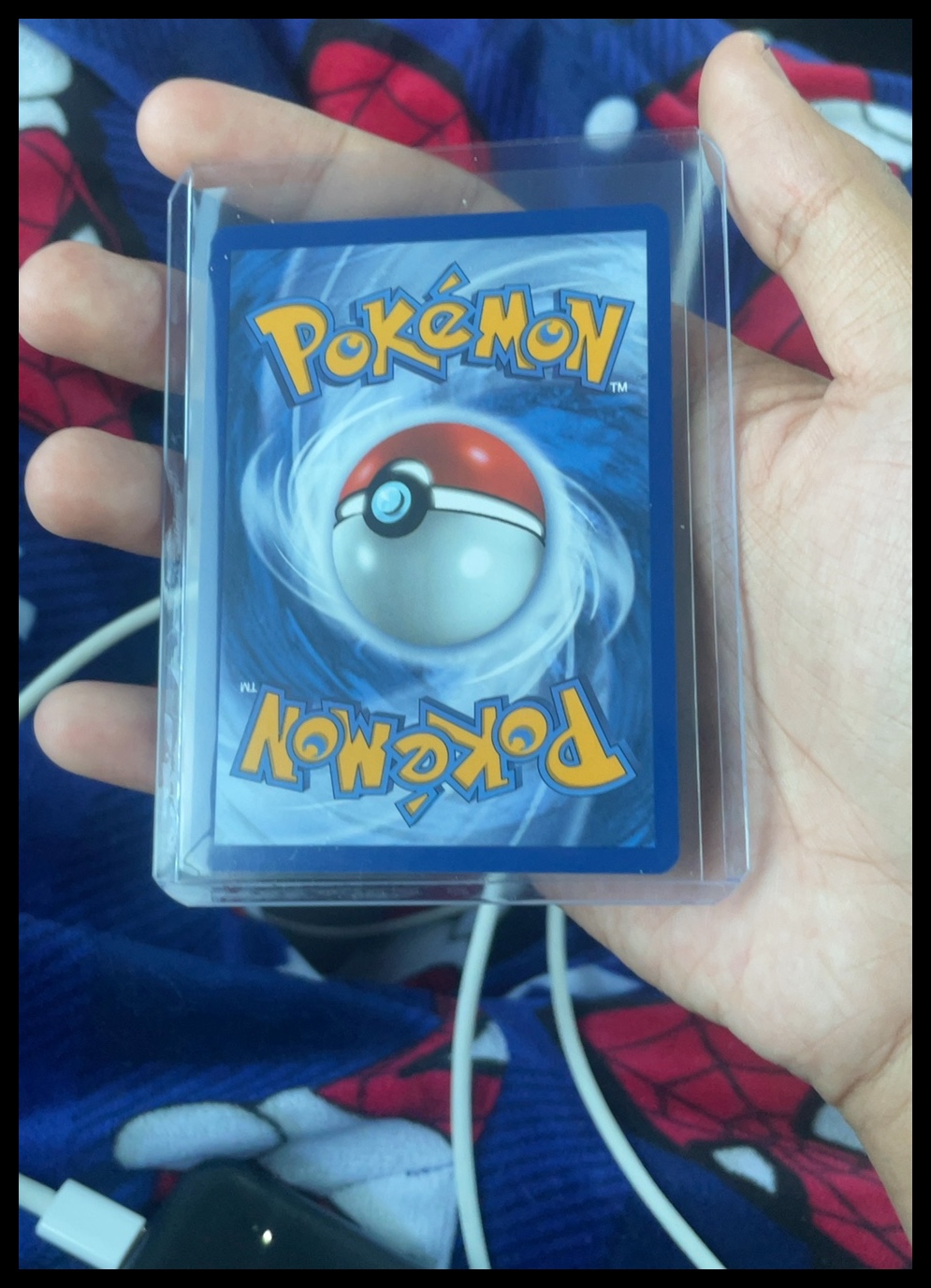
Authenticity. Authentic Pokémon cards should have crisp print text, correct font weight, even holo texture, and proper color saturation; fakes often have blurry lettering, incorrect energy symbols, or flat-looking shine. Compare the texture pattern and card stock thickness against a known genuine Hidden Fates or modern Pokémon full-art card, and check for accurate set numbering, copyright text, and the expected Pokémon Company International copyright line. Modern counterfeits may also misplace the set symbol or use incorrect cut dimensions.