Market outlook
Stable Outlook 7/10
The card has already established itself as a flagship modern chase card, so explosive short-term growth is less likely than steady premium retention. Prices tend to move with overall hobby demand, grading premiums, and collector interest in alternate arts.
Next months. Likely to remain price-stable with occasional spikes tied to collector demand, graded population shifts, or broader market strength.
Long term. Expected to hold collectible status well over 1-3 years, with gradual appreciation most likely for high-grade copies and sealed product-related demand continuing to support the card.
History
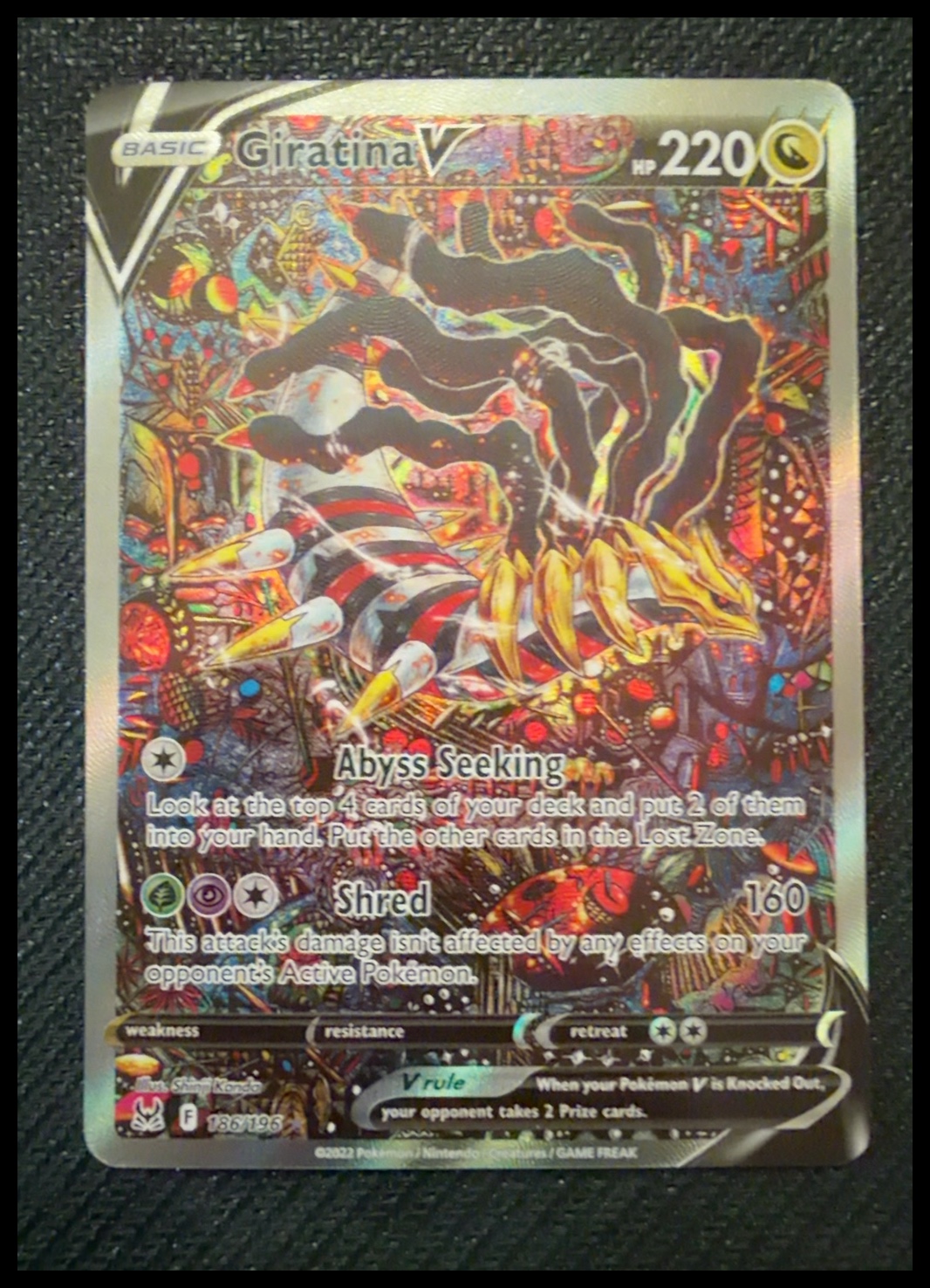
Giratina is a Legendary Pokémon from the Sinnoh region, first introduced in the core video games Pokémon Diamond and Pearl. It is known as the Renegade Pokémon and is associated with the Distortion World, making it one of the most iconic and lore-heavy Legendary Pokémon in the franchise. In the Trading Card Game, Giratina is a recurring high-demand chase character because of its popularity, strong artwork appeal, and status as a fan-favorite Legendary.
This card was first released in 2022 in the English Sword & Shield expansion Lost Origin as card 186/196, in the Alternate Art Ultra Rare slot. It debuted in booster packs and related sealed products for the Lost Origin set.
- This is the alternate art version of Giratina V, widely considered the chase card of Lost Origin.
- The artwork is highly regarded for its cinematic, surreal composition and strong narrative feel.
- It is one of the most expensive and collectible modern English Pokémon TCG cards from the Sword & Shield era.
Rarity and print run
- Tier
- Ultra Rare
- Print run
- High
- First printed in
- Sword & Shield: Lost Origin
- Demand
- Very High
- Supply
- Medium
- Alternate art slot chase card in a popular modern set
- High demand from both collectors and investors
- Gem mint copies are harder to secure due to centering and surface quality requirements
- Single-card demand is amplified by Giratina's popularity as a legendary character
Collector notes
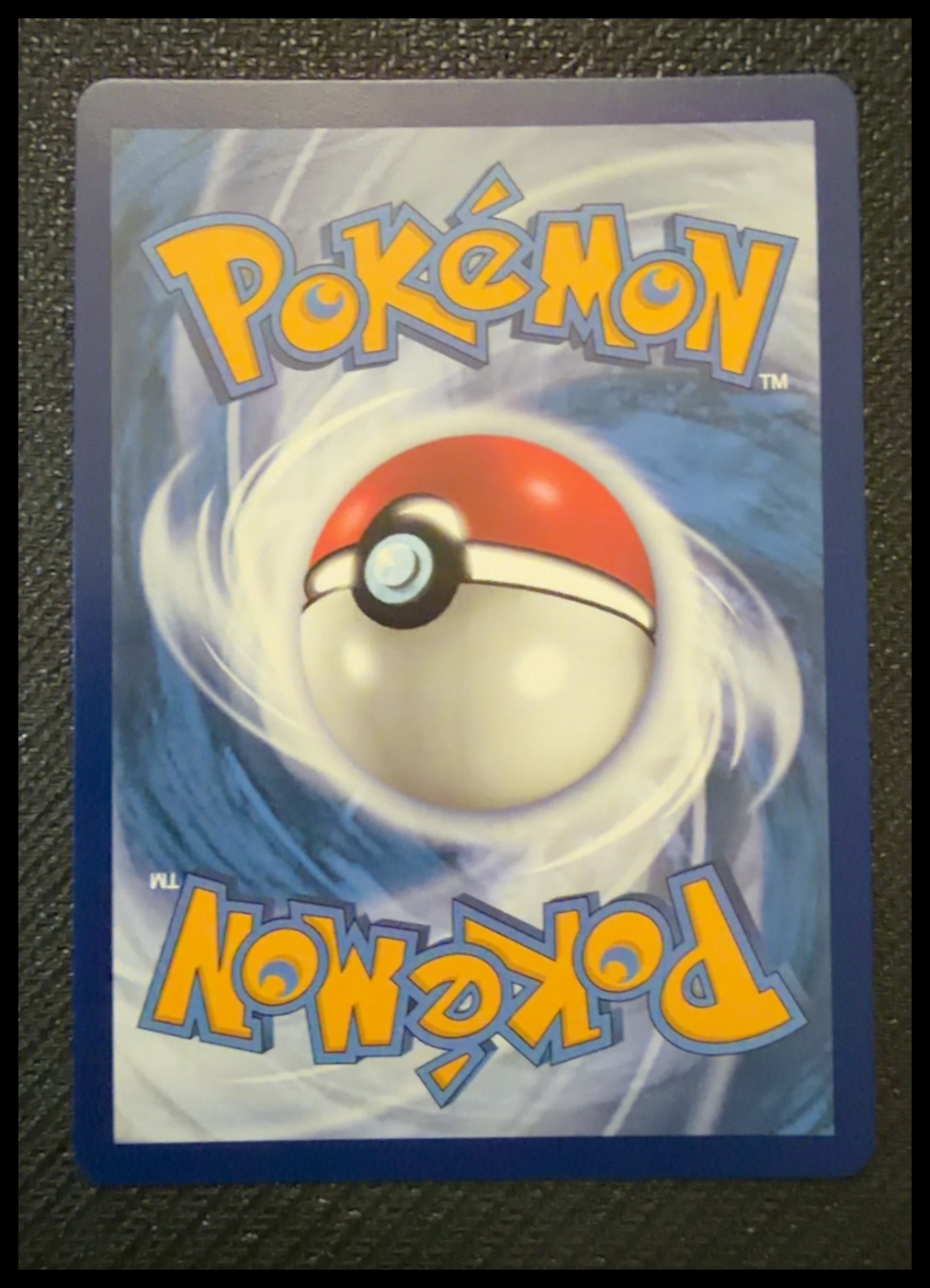
Condition. Check for centering on both front and back, especially because alternate arts are heavily scrutinized by graders. Common flaws include edge whitening, corner wear, surface scratches, print lines, and slight silvering along the borders. The dark background can make scratches and roller marks more visible than on lighter cards.
Storage. Use soft sleeves immediately, then store in a semi-rigid holder or top loader with a penny sleeve. Keep the card in a dry, temperature-stable environment away from sunlight. For long-term value, consider professional grading if the card is centered well and has minimal surface wear.
Authenticity. Authentic copies should have crisp print texture on the full art areas, clean font alignment, and proper holofoil behavior consistent with modern Pokémon TCG cards. Counterfeits often show blurry text, flat or overly glossy surfaces, incorrect coloration, and poor edge cutting. Compare the card’s holo pattern, set number 186/196, and texture against known authentic references.