Market outlook
Rising Outlook 8/10
Demand for Old Back Japanese cards is surging globally, especially for Team Rocket holos. graded 10 copies are increasingly rare, driving up prices[3][10]
Next months. Stable to rising over next 3–6 months, with graded 8–9 seeing 5–10% gains
Long term. Strong 1–3 year outlook; graded 10 copies could reach $2,000+ as supply dwindles
History
Dark Slowbro (わるいヤドラン) is the 'evil' variant of Slowbro, belonging to Team Rocket (ロケット団), the first Pokémon expansion pack centered on villainous organizations. It represents a corrupted version of the standard Slowbro, mutated or influenced by Team Rocket's dark experiments, with Level 27 and 60 HP, Psychic type, and the ability 'Fish Up' (つりあげる) that allows retrieving cards from the deck[6].
First released in Japan in 1997 as part of the 4th expansion pack 'Team Rocket' (第4弾 拡張パック「ロケット団」), card number 080, under the 'Old Back' (旧裏) version of the set[1][6][8].
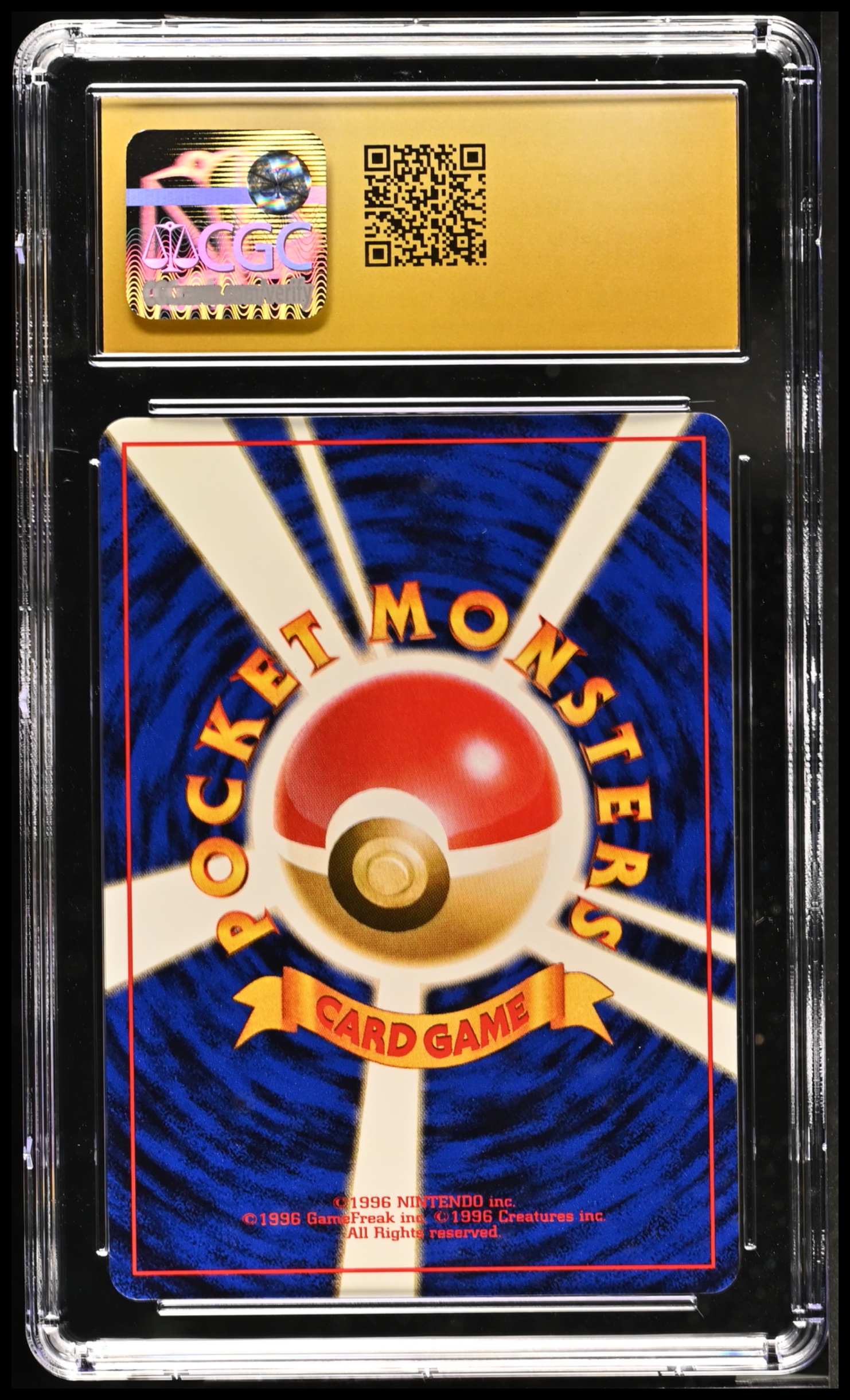
- It is a holographic Rare card featuring the iconic 'Old Back' (pre-2000s Japanese card back) design, making it highly sought by collectors[1][3]
- The card has a star (*) rarity symbol and is one of the key holos from Team Rocket, a set known for introducing Dark Pokémon[6][7]
- graded 10 graded versions exist and are among the highest-value Japanese Team Rocket cards, with recent sales reflecting strong demand[5][8]
Rarity and print run
- Tier
- Rare
- Print run
- Low
- First printed in
- Team Rocket (ロケット団, PMCG4)
- Demand
- High
- Supply
- Scarce
- Old Back print (1997) is no longer reproduced, making original copies finite
- graded 10 copies are extremely rare due to foil sensitivity and 1997 printing quality
- Team Rocket holos are among the most collected Japanese cards from the early era[1][3][5]
Collector notes
Condition. Check for centering, edge wear, corner dings, and surface scratches. The holographic foil is prone to 'foil scratches' and 'whitening' along edges. Grading focuses heavily on foil integrity and corner sharpness[3][5].
Storage. Store in a rigid top loader with a soft sleeve, kept in a climate-controlled environment away from direct light. For high-value copies, consider graded or graded grading immediately[5][8].
Authenticity. Fakes often have incorrect font, faded holographic pattern, or wrong back color. The 'Old Back' version has a distinct brownish-red back; reprints have a newer blue back. Authentic cards show deep, crisp holographic swirls and correct Japanese text alignment[3][5].
Sources: netoff.co.jp, kyupokeca-kaitori.com, premium.gamepedia.jp, jp.mercari.com, paypayfleamarket.yahoo.co.jp