Market outlook
Stable Outlook 6/10
Recent sales show minor fluctuations with +3.5% 30-day change after prior dip, supported by steady demand for 151 nostalgia but abundant raw supply[2]
Next months. Stable with raw prices $20-$30, potential graded uptick post-2026 events
Long term. Modest appreciation for graded 10s to $200+ driven by starter icon status, raw may plateau
History
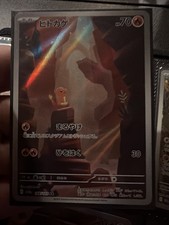
Charmander (ヒトカゲ in Japanese) is the Fire-type starter Pokémon from the original Generation 1 Pokémon games (Red, Green, Blue, Yellow), introduced in 1996. As a lizard-like creature that evolves into Charmeleon and Charizard, it holds iconic status as one of the first starter choices, symbolizing beginner trainers' journeys and beloved for its flame-tail mechanic where the flame size indicates health.
First printed in the Japanese Scarlet & Violet: 151 set (SV2a), released June 16, 2023, as an Art Rare (AR) at #168/165.
- This card features stunning artwork by a renowned Pokémon illustrator, emphasizing Charmander's nostalgic appeal in the 151 set celebrating original Kanto Pokémon.
- It is a Special Illustration Rare variant in English, but specified as Japanese Art Rare.
- Part of the Pokémon 151 subset focusing exclusively on the first 151 Pokémon species.
Rarity and print run
- Tier
- Ultra Rare
- Print run
- Medium
- First printed in
- Japanese Scarlet & Violet: 151 (SV2a)
- Demand
- Medium
- Supply
- Medium
- Art Rare pull rate in Japanese 151 set (1 in ~3-5 boosters)
- High collector demand for Charmander as iconic starter
- Limited to 151-themed sets with no reprints to date
Collector notes
Condition. Inspect centering on all edges (especially top-left due to Japanese printing), surface scratches on holo pattern, edge whitening, print defects on Charmander's tail flame, and corner wear; common flaws include minor printing lines and surface fingerprints.
Storage. Use semi-rigid top-loaders with sleeves in cool, dry environments away from sunlight to prevent holo oxidation; avoid stacking without dividers for long-term preservation.
Authenticity. Verify Japanese text (ヒトカゲ), exact holo pattern matching official scans, SV2a set code, and black market rarity stamp absence; check for thick card stock, precise registration, and UV blacklight reactivity on stamp; fakes often have blurry art or incorrect font weights.
Sources: stockx.com, sportscardinvestor.com, pricecharting.com, goldenapplecomics.com, tcgplayer.com