Market outlook
Rising Outlook 8/10
Long-term Mantle demand remains exceptionally strong, and major auction results continue to support blue-chip status for the card. High-grade population scarcity and registry competition should continue to underpin prices, especially for graded 8 and above.[2][5][10]
Next months. Prices should remain firm to slightly higher in the next 3-6 months, with the strongest performance likely in certified high-grade examples.
Long term. Over 1-3 years, the card is likely to continue appreciating gradually, with the best gains concentrated in graded/graded/graded high-grade and premium-centered examples.
History
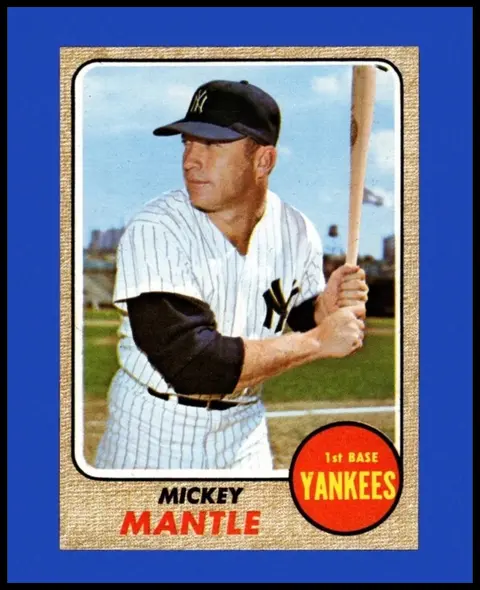
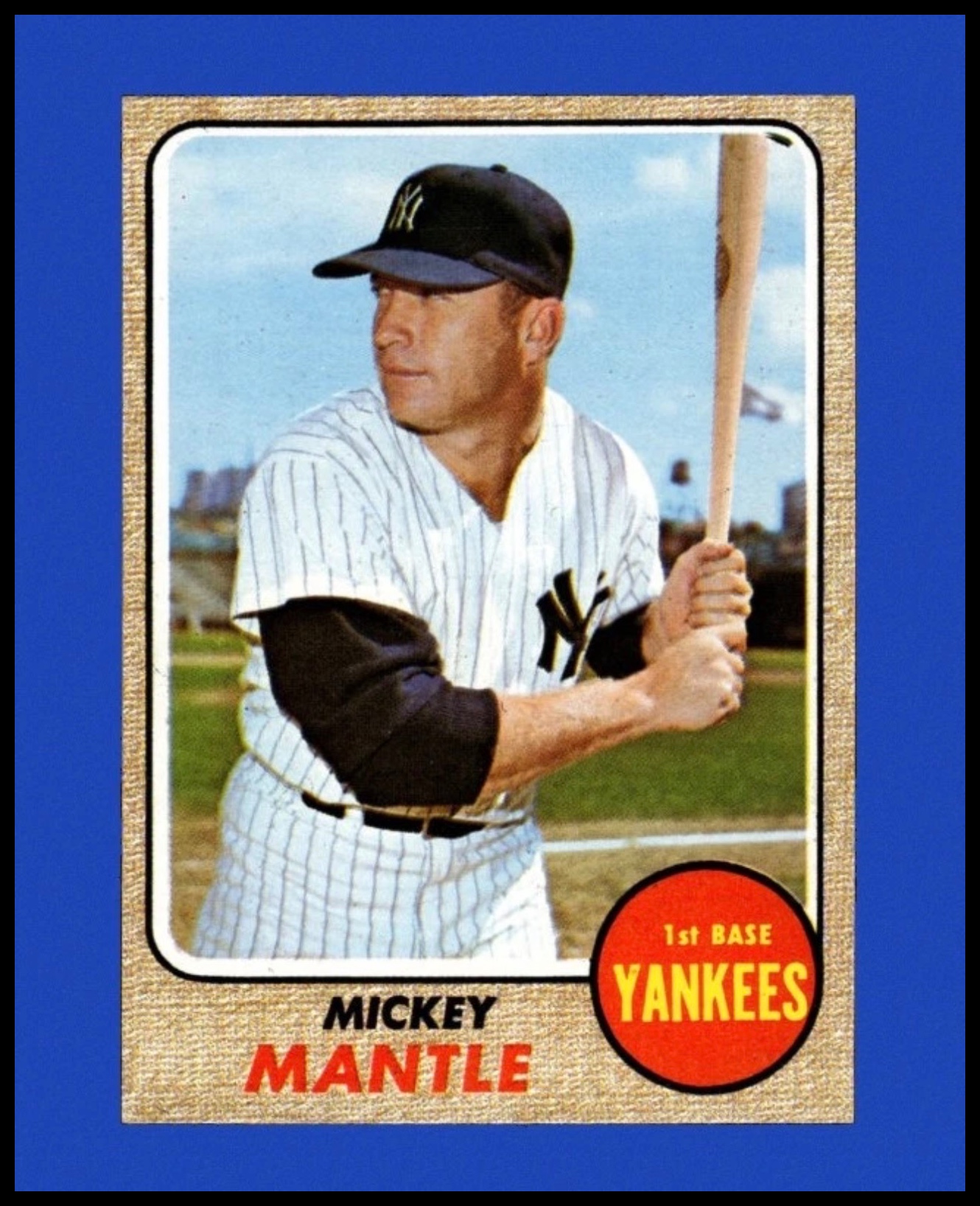
Mickey Mantle was one of the most iconic players in Major League Baseball history, starring for the New York Yankees from 1951 through 1968. A switch-hitting center fielder known for extraordinary power and speed, he became a symbol of postwar baseball greatness and remains one of the sport’s most collectible Hall of Famers. The 1968 Topps card is especially significant because it is Mantle’s final Topps card issued during his playing career and the first Topps card to list him as a first baseman, reflecting the late-career position change that Topps captured on the card.[11]
The card was first released in the 1968 Topps Baseball set in 1968 in the United States as part of Topps’ standard wax pack, cello pack, and vending-era distribution for the year’s baseball issue.[1][11]
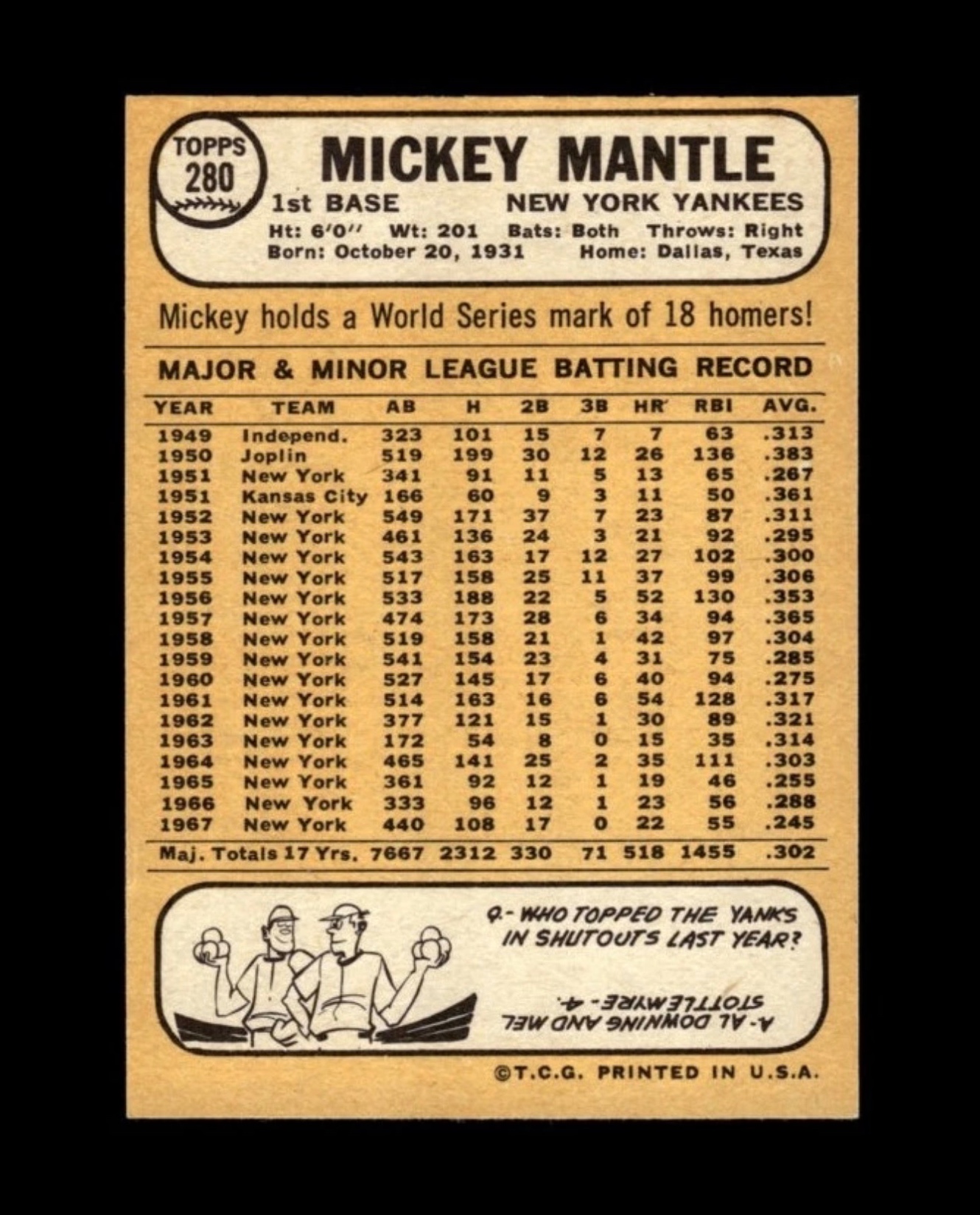
- Card #280 is Mantle’s last Topps card from his playing career, making it a major career-ending issue for collectors.[11]
- It is not from the high-number series, which makes it somewhat easier to find than late-series 1968 Topps cards.[11]
- graded reports very strong demand at the top end, with only 11 graded Gem Mint 10 copies recorded in its card facts population display.[2]
Collector notes
Condition. Focus on centering, corner sharpness, edge wear, surface gloss, and back cleanliness. Common issues for this card include off-centering, corner whitening, print defects, surface scratches, and light creases; severe flaws can push the card into low-grade territory quickly.[11][13] Because it is a black-bordered design, edge wear and chipping are especially noticeable.[11]
Storage. Store the card in a penny sleeve and rigid top loader or semi-rigid holder, then keep it in a cool, dry environment away from light and humidity. For high-grade copies, use archival-safe materials and avoid repeated handling to preserve corners, gloss, and centering appearance.
Authenticity. Check paper stock, print quality, border wear consistency, and aging of the back stock; authentic 1968 Topps cards should show period-correct printing and aging rather than modern gloss or overly sharp digital printing. Reprints often look too clean, have incorrect stock feel, or show inconsistent color and border texture. For valuable examples, third-party grading from graded, graded, or graded is strongly preferred because this card has substantial counterfeit and reprint incentive.[2][5]