Market outlook
Stable Outlook 8/10
The card is already established as a blue-chip vintage football rookie, so pricing tends to move with broader vintage football demand, Hall of Fame legacy interest, and high-grade population pressure rather than sudden hype spikes.
Next months. Expect steady pricing with occasional spikes for elite-condition examples or auction attention.
Long term. Likely to remain a core vintage football investment card, with the best-condition copies outperforming the raw market over time.
History
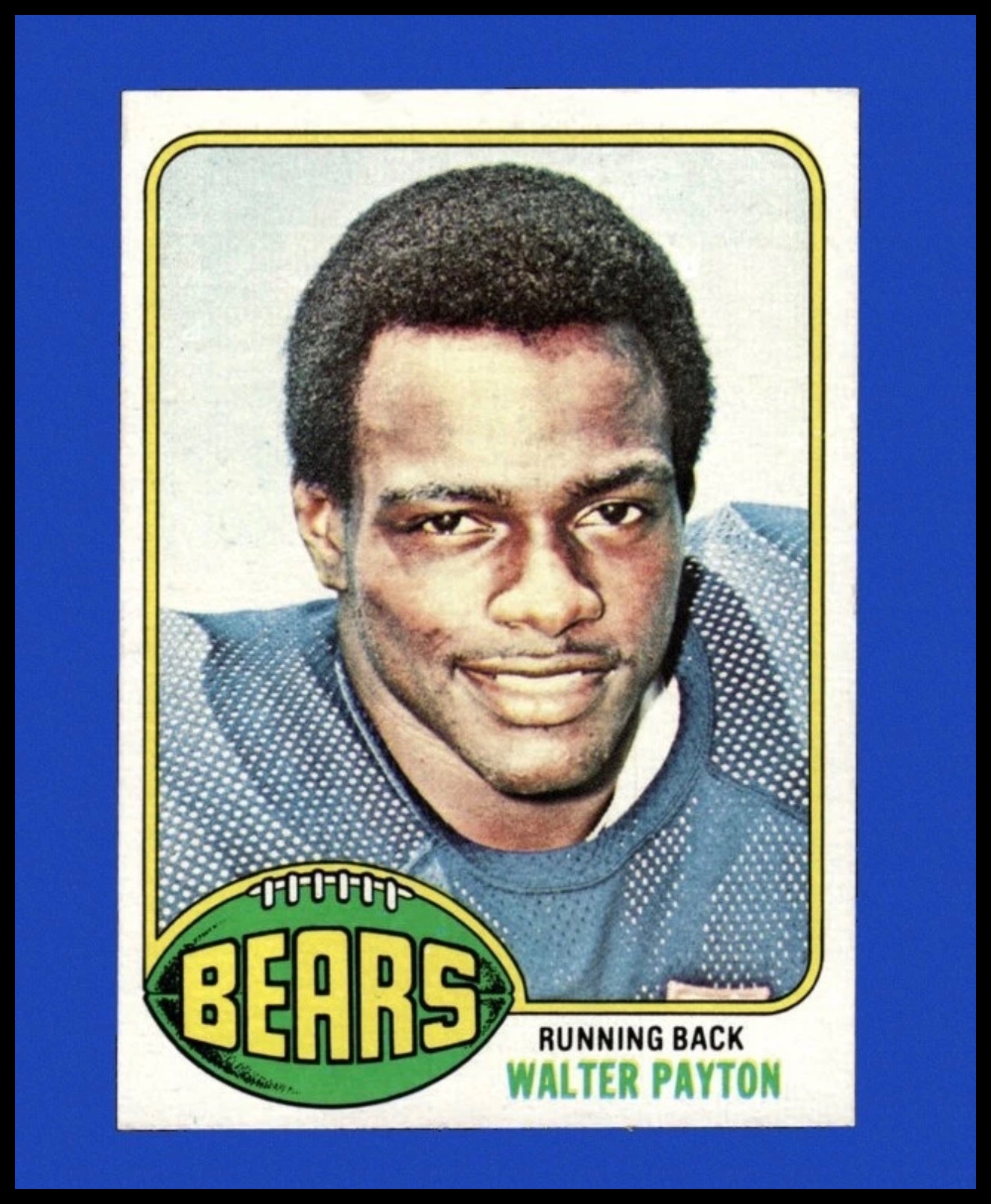
Walter Payton (1954–1999), nicknamed 'Sweetness,' was one of the greatest running backs in NFL history and the defining star of the Chicago Bears. He became a national football icon through his balance, vision, durability, and all-around production, finishing his career as the NFL's all-time leading rusher at retirement. His rookie card in the 1976 Topps football set has become one of the most important postwar football cards and a cornerstone issue for vintage collectors.
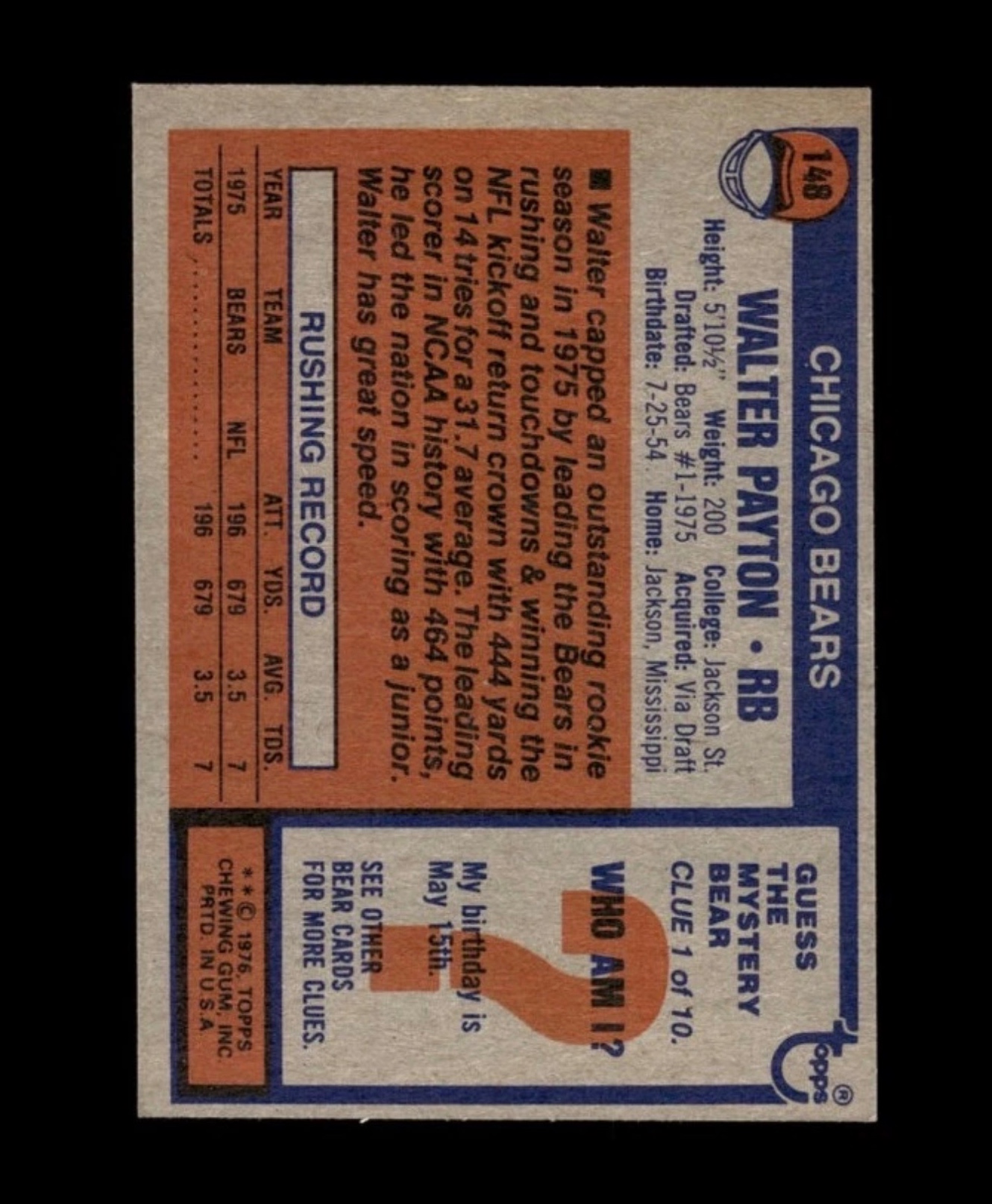
First released in the 1976 Topps Football set, issued in wax packs and hobby distribution in 1976. Card #148 is Payton's rookie card from that flagship Topps release.
- This is Walter Payton's key rookie card and one of the most celebrated football cards of the 1970s.
- High-grade copies are very scarce relative to the set's overall print volume, especially graded 9 and graded 10 examples.
- The card has remained a blue-chip vintage football issue, with strong demand from both football collectors and cross-over vintage investors.
Collector notes
Condition. Check centering first, then corners, edges, and surface. Common flaws include off-centering, soft corners, print speckling, wax/stain issues, and edge wear from handling or packaging. Because it is a yellow-bordered vintage card, border chipping is especially visible.
Storage. Use penny sleeves and rigid top loaders or card savers for raw copies, then place them in a dry, cool, low-light environment. For high-grade copies, consider professional grading and long-term slab storage away from humidity and temperature swings.
Authenticity. Authentic cards should show vintage stock, consistent aging, and period-correct printing quality. Watch for modern reprints with overly bright color, suspiciously sharp edges, incorrect paper stock, or artificially aged surfaces. Compare dimensions, border color, and print texture against verified examples; graded examples from major third-party graders reduce risk substantially.