Market outlook
Stable Outlook 3/10
The card is a common base issue with limited scarcity, so pricing typically follows condition and general golfer nostalgia rather than strong speculative demand. Market interest is more likely to remain steady than meaningfully accelerate unless tied to a broader surge in 2001 golf set collecting.
Next months. Expect prices to remain mostly flat, with small variation based on grade and listing quality.
Long term. Over 1-3 years, the card should remain a low-value common with gradual appreciation only in top-graded examples and well-centered copies.
History
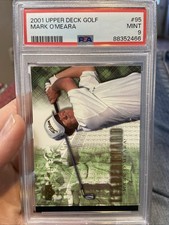
Mark O'Meara is an American professional golfer from Dallas, Texas, best known for winning two major championships in 1998, the Masters Tournament and The Open Championship. He became one of the defining veteran players of the late 1990s, and his presence in the 2001 Upper Deck Golf base set reflects his status as a major champion and established tour star rather than a rookie or prospect.[5]
This card was first released in the 2001 Upper Deck Golf base set, a standard retail/hobby golf product listed by Beckett and graded CardFacts as a 2001 release.[1][5]
- Card number 95 in the 200-card 2001 Upper Deck Golf base set checklist.[1][5]
- The set is a standard base issue, not a serial-numbered parallel or insert, which makes this card widely available compared with chase cards from the same year.[1][5]
- Mark O'Meara is one of the marquee veteran names in the set, appearing alongside other notable golfers such as Tom Lehman and David Duval in the numbering sequence around his card.[1][5]
Rarity and print run
- Tier
- Common
- Print run
- Very High
- First printed in
- 2001 Upper Deck Golf
- Demand
- Low
- Supply
- Abundant
- Base-card status in a 200-card flagship-style set
- No serial numbering, memorabilia, or autograph content
- Broad distribution through 2001 Upper Deck Golf packs and boxes
Collector notes
Condition. Check centering carefully, especially left-right and top-bottom alignment, since 2001 Upper Deck base cards were mass-produced but still commonly show minor cutting variance. Look for surface scratches, edge whitening, corner wear, and print defects such as roller marks or light chipping from handling and pack insertion.
Storage. Store in a penny sleeve and rigid top loader or semi-rigid holder, then keep in a cool, dry, dark environment. For higher-grade copies, avoid PVC materials and use archival-quality sleeves and holders to reduce long-term surface damage.
Authenticity. Because this is a common base card from a major 2001 Upper Deck release, counterfeit risk is low compared with premium autograph or serial-numbered cards. Verify the card against the published checklist and standard design elements for the set; for graded copies, confirm the slab certification and match the card number and player name to the grading company registry where possible.
Sources: beckett.com, steinersports.com, sportsmemorabilia.com, sportscardspro.com, psacard.com