Market outlook
Stable Outlook 3/10
Common golf base cards usually move very little unless the player has exceptional long-term collector demand or the copy is high-grade gem mint. Gary Player has strong historical importance, but the card itself is not scarce enough to create sustained price pressure.
Next months. Prices should remain stable, with only small fluctuations based on grading pops and occasional collector demand.
Long term. Over 1-3 years, the card is likely to remain a low-value stable collectible, with the best upside coming from pristine graded examples rather than raw copies.
History
Gary Player is a South African golf legend, born in Johannesburg in 1935, and one of the game’s all-time greats. He is part of golf’s historic “Big Three” alongside Arnold Palmer and Jack Nicklaus, and his significance comes from both his elite career achievements and his global influence on the sport. Collectors often value him as an iconic Hall of Fame player with strong name recognition across eras.[3]
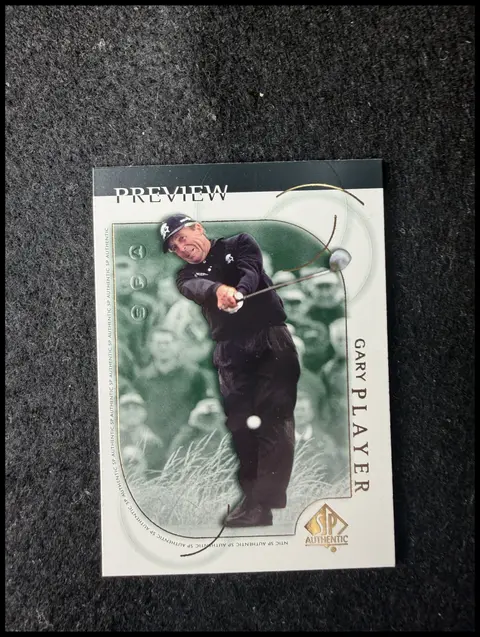
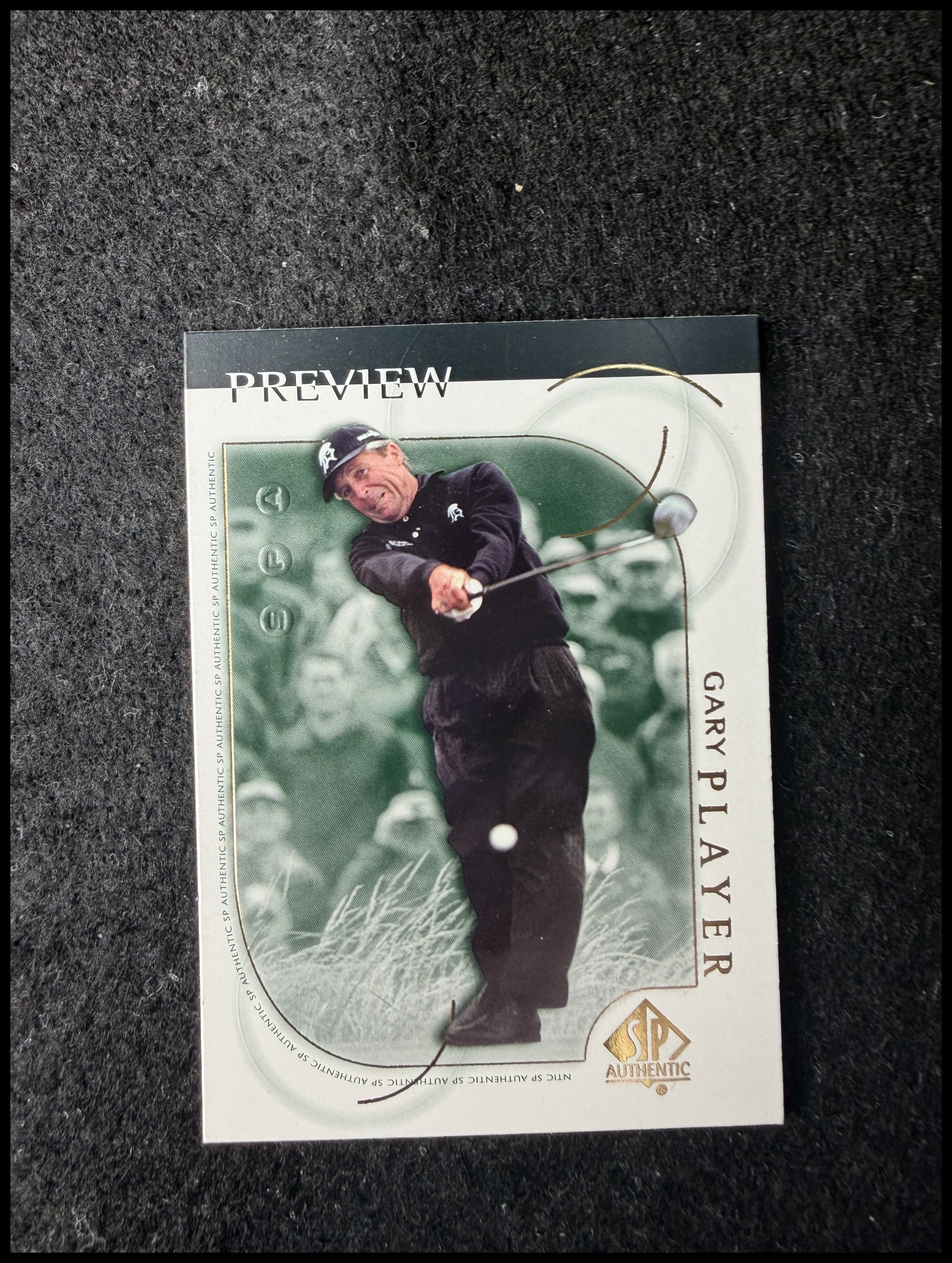
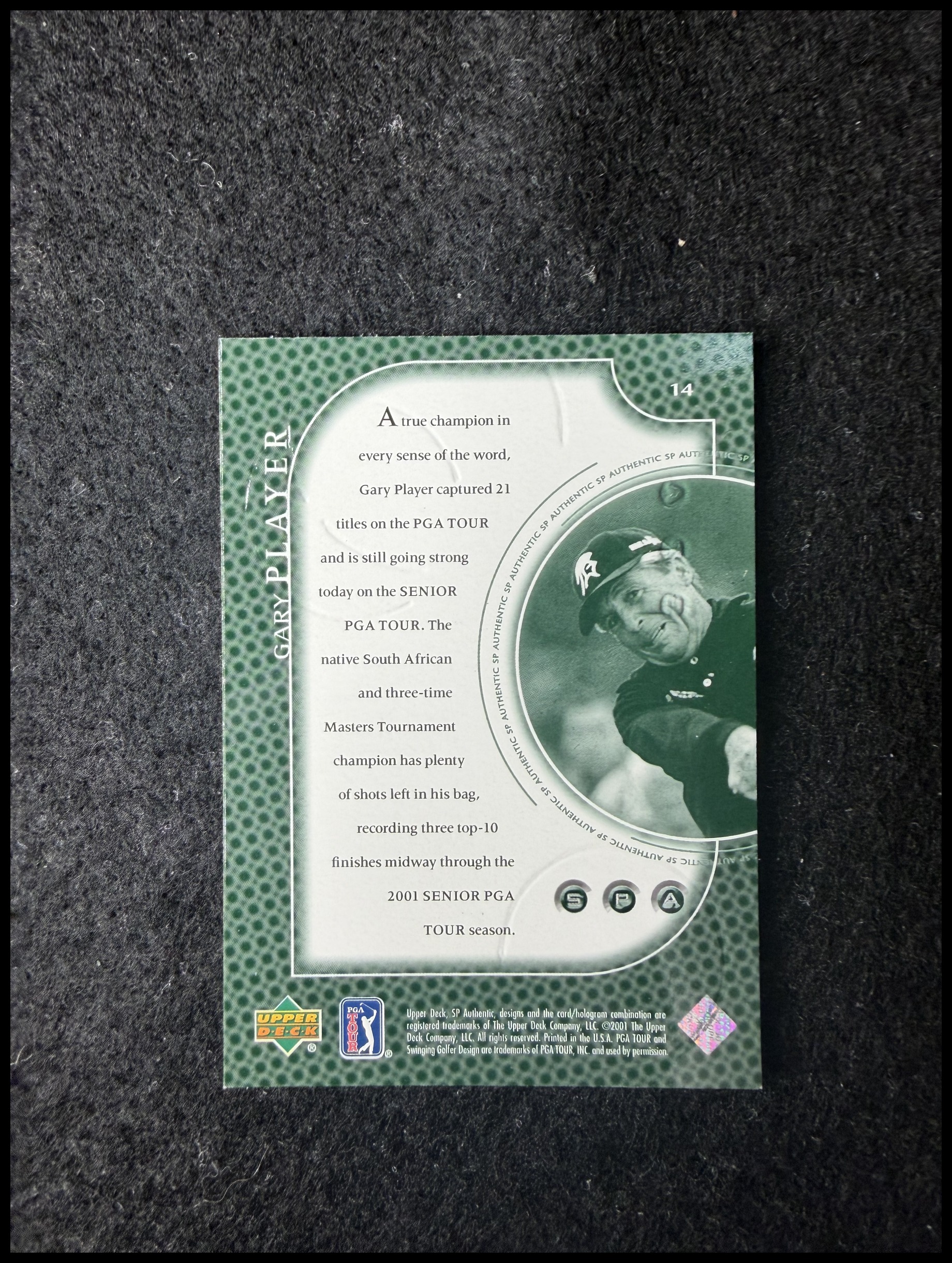
This card was first released in the 2001 Upper Deck Golf set, a retail/hobby golf release distributed in packs of 5 cards (24 packs per box, 12 boxes per case). It appears as card #14 in the base player checklist, and the set also included multiple sub-sets within the 200-card checklist.[1][4][6]
- Card #14 is a base set Gary Player card from the 2001 Upper Deck Golf checklist.[1][4][6]
- The 2001 Upper Deck Golf set is a 200-card issue with several sub-sets, which generally places base player cards in the common category rather than as short prints.[4]
- Gary Player debuted as a professional rookie in 1953 and remains one of the most recognizable figures in golf-card collecting.[3]
Rarity and print run
- Tier
- Common
- Print run
- Very High
- First printed in
- 2001 Upper Deck Golf
- Demand
- Low
- Supply
- Abundant
- Base-card checklist position in a large 200-card set
- No evidence of short-print status for the standard #14 card
- High print availability relative to modern scarce inserts and parallels
Collector notes
Condition. Check for sharp corners, clean edges, and centered front/back alignment. Common flaws on these early-2000s glossy golf cards include surface scratches, print lines, slight whitening at corners, and edge wear from pack handling. Because it is a common base-card issue, mint copies are usually plentiful but gem-mint examples are still worth separating.
Storage. Store in a penny sleeve and rigid top loader or card saver for higher-grade copies. Keep the card in a cool, dry, low-light environment to reduce warping, surface scuffing, and corner wear. Avoid loose binder storage if preserving grade potential.
Authenticity. Authentic copies should match the standard 2-1/2 by 3-1/2 inch Upper Deck format and consistent 2001 printing style. Fakes are uncommon for a common base golf card, so the main checks are print quality, correct logo placement, and authentic stock/gloss rather than elaborate counterfeit markers. If slabbed, verify the certification number and grader consistency.
Sources: nslists.com, youtube.com, collectibles.com, psacard.com, sportscardspro.com