Market outlook
Stable Outlook 7/10
The market for 1972 Topps commons is stable, with top-grade copies holding value due to limited supply and enduring collector interest in vintage baseball cards[1].
Next months. Prices for graded 9/10 copies will remain stable with slight upward pressure if demand for vintage cards increases[1].
Long term. 1–3 year outlook suggests steady appreciation for high-grade copies, particularly graded 10, as supply continues to dwindle and interest in the 1970s vintage market grows[1].
History
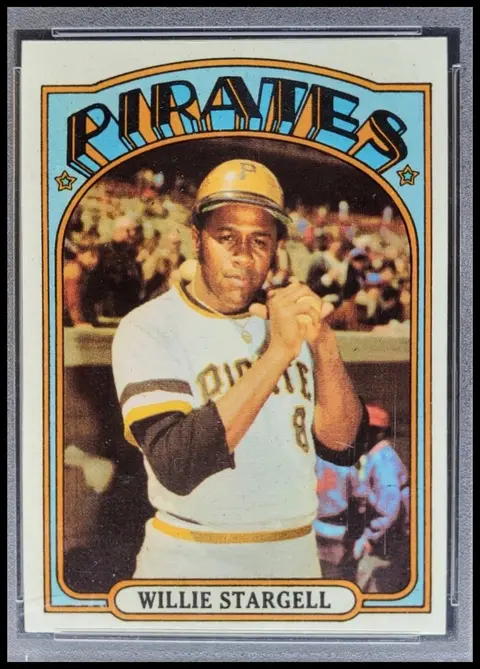
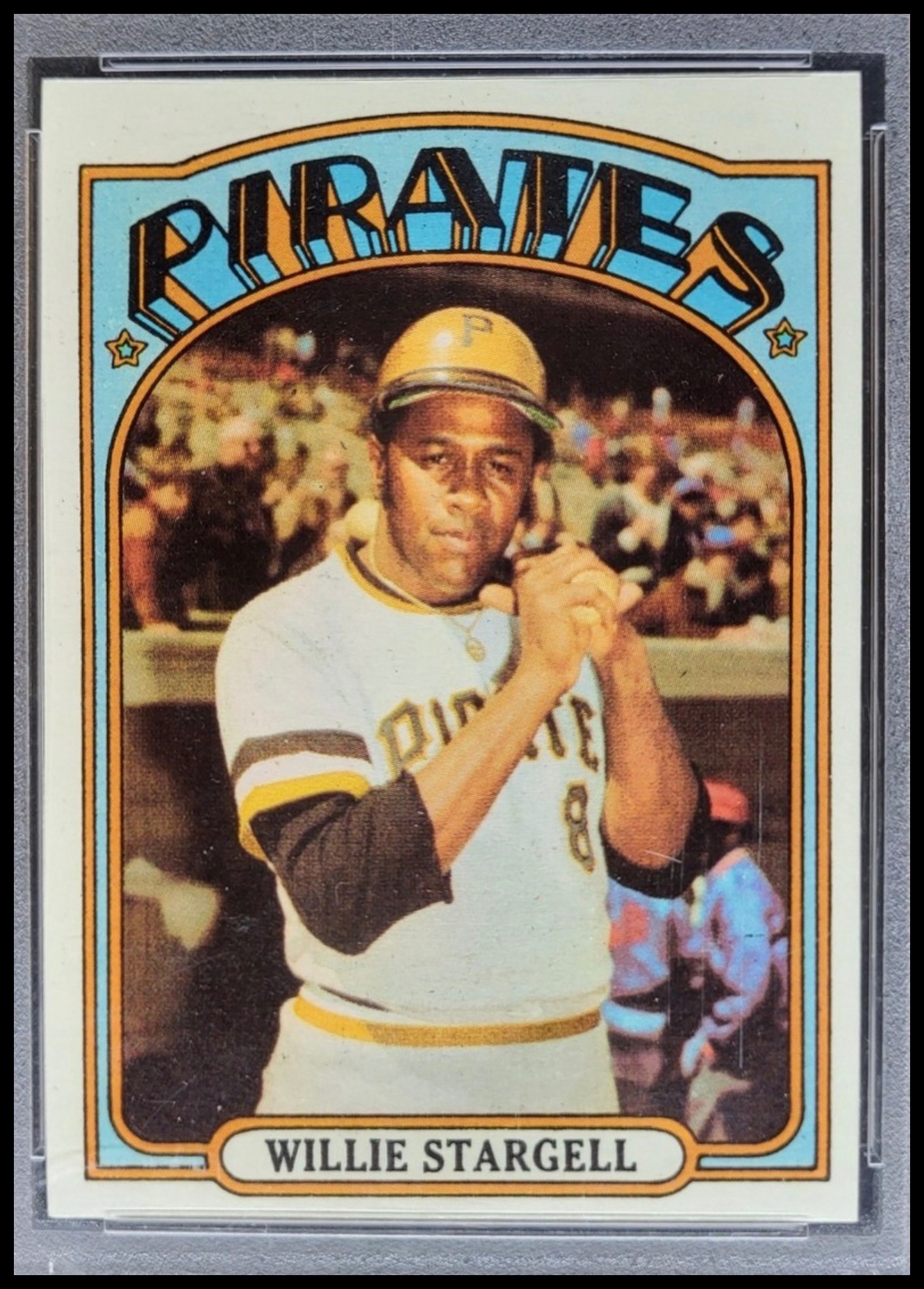
Willie Stargell was a legendary power hitter for the Pittsburgh Pirates, nicknamed 'Pops,' who played 21 seasons (1962–1982) in Major League Baseball. He was a seven-time All-Star, won two World Series titles (including the 1979 MVP and Pitcher Award), and retired as the Pirates' all-time leader in home runs (475) and RBIs. His iconic 1972 card captures him during his prime before his 1979 championship peak[1].
This card was first released in the United States in 1972 as part of the 1972 Topps Baseball set, distributed nationally by Topps Chewing Gum Inc.
- Stargell #447 is a common card from the 1972 Topps set, one of the most popular vintage baseball sets[1]
- A graded 10 graded copy of this card sold for $3,827.54, demonstrating high value for top-grade common cards[1]
- The card features Stargell in his Pittsburgh Pirates uniform during his early prime years
Rarity and print run
- Tier
- Common
- Print run
- Very High
- First printed in
- 1972 Topps Baseball
- Demand
- High
- Supply
- Low
- Originally printed in very high quantities as a common card
- High-grade (graded 9/10) copies are scarce due to aging and condition issues common in 1972 Topps cards[1]
- Stargell's Hall of Fame status increases collector demand for even common cards
Collector notes
Condition. Key flaws include centering issues (common in 1972 Topps), corner wear, surface scratches, and print defects. The card's white borders are prone to discoloration and chipping[1].
Storage. Store in a rigid, non-acidic card sleeve or top loader, kept in a climate-controlled environment away from humidity and direct light. Use a deacidified box for long-term storage.
Authenticity. Fakes are rare for this common card, but reprints may exist. Verify by checking print quality, border whiteness, and card stock thickness. Authentic 1972 Topps cards have a distinct glossy finish and specific font styles. Professional grading (graded, graded, graded) provides the best authentication[1].