Market outlook
Stable Outlook 3/10
The card has long been anchored by extreme supply. Prices may fluctuate with broader sports card sentiment or Hall-of-Fame-era nostalgia, but there is no structural scarcity to drive sustained appreciation in common grades.
Next months. Expect mostly flat pricing, with small moves based on grade, eye appeal, and listing quality.
Long term. Likely to remain a low-value common card, with modest premium only for pristine graded 10 or unusually sharp raw examples.
History
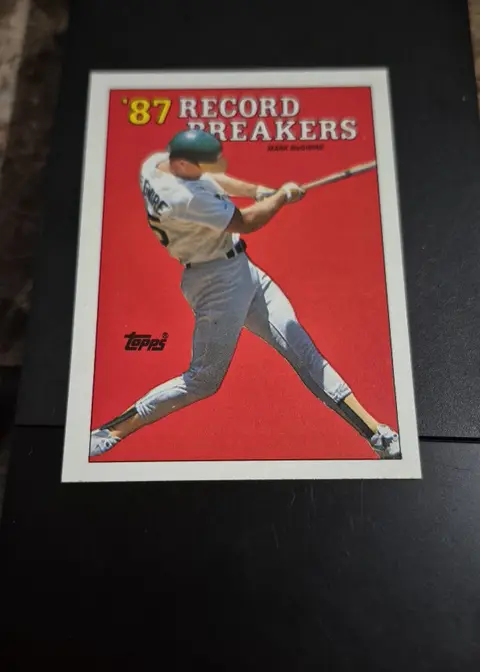
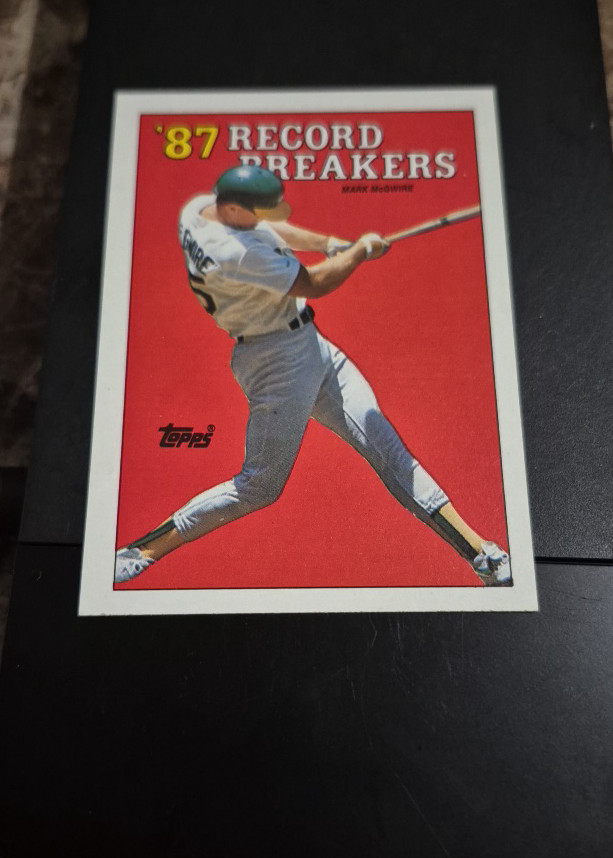
Mark McGwire is a former Major League Baseball first baseman and designated hitter, best known as one of the premier power hitters of the 1980s and 1990s. He debuted with the Oakland Athletics in 1986, won AL Rookie of the Year in 1987, and became a major hobby name because of his towering home run totals and association with the 1988 Oakland Athletics pennant-winning team and, later, the 1998 home run chase.
First released in the 1988 Topps Baseball set, distributed in the United States in 1988 through retail and hobby wax packs, rack packs, and factory/cello-style distribution typical of the era.
- This is McGwire's mainstream rookie-era Topps card in the flagship 1988 set, but his true rookie cards are from 1987 issues.
- The card is from the late-1980s 'junk wax' period, meaning it was printed in very large quantities and remains highly available.
- Unlike some recognized variations in the 1988 Topps McGwire issue, the standard card is a common base card with modest value in most grades.
Collector notes
Condition. Check centering first, as 1980s Topps cards often suffer from left-right and top-bottom centering issues. Also inspect sharp corners, edge chipping, surface gloss, print snow, wax staining, and roller marks. Factory print defects are common, but grading standards still penalize obvious wear, especially corner rounding and surface scratches.
Storage. Store in a penny sleeve and rigid top loader or semi-rigid holder for raw copies. Keep cards in a cool, dry, dark environment away from sunlight and humidity. Avoid rubber bands, loose boxes, and PVC plastics. For higher-grade copies, consider immediate submission to a third-party grading service if centering and surface look strong.
Authenticity. Authentic 1988 Topps cards should show period-correct card stock, printing, and gloss consistent with Topps issues from the late 1980s. Reprints usually look too crisp, too white, or have modern printing patterns. Compare the back text, border color, card stock thickness, and registration to known authentic examples. Because the card is common, counterfeit motivation is low, but reprints and altered copies can still appear in mixed lots.