Market outlook
Rising Outlook 7/10
Demand for Gengar remains consistently strong, and premium Japanese SAR chase cards often appreciate after early post-release volatility once supply stabilizes. If the set remains popular and graded population stays limited at gem-mint level, the card can continue to strengthen.
Next months. Likely to remain volatile but supported, with good-condition raw and graded 10 copies holding premium pricing.
Long term. Over 1-3 years, the card has a reasonable chance to appreciate steadily if collector interest in Mega Evolution-era premium cards persists and grading populations do not surge too sharply.
History
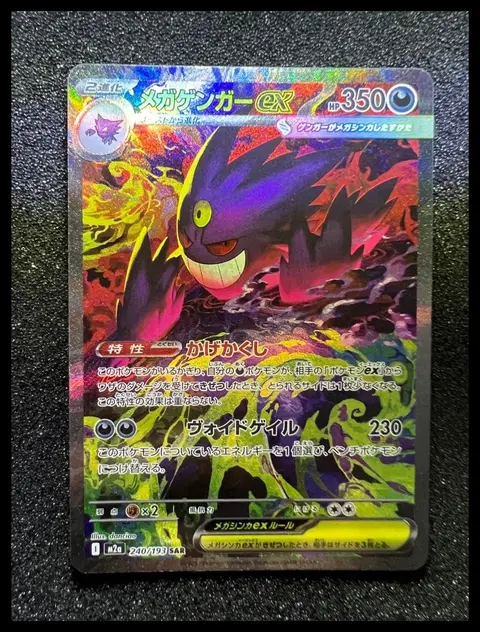
Mega Gengar ex features Gengar, the iconic Ghost/Poison-type Pokémon introduced in Generation I as the final evolution of Gastly and Haunter. Gengar is one of the franchise’s most enduring fan-favorite Pokémon, known for its mischievous personality, sinister grin, and strong competitive presence. As a Mega Evolution card, this version represents Gengar’s powered-up form, a concept associated with heightened power and dramatic artwork in the Pokémon TCG. The character has long held special appeal in collectible cards because Gengar artworks often lean into spooky, high-impact, and highly stylized illustration themes.
First released in Japanese in the 2025 high-class pack set MEGA Dream ex (M2a), card number 240/193, as a Special Art Rare (SAR) full-art variant. Based on the set’s release data, the initial release date was November 28, 2025 in Japan.
- This is the Special Art Rare version of Mega Gengar ex, the chase-card style rarity in the set.
- The card is numbered 240/193, indicating it is a secret-style pull beyond the main numbered set list.
- Market listings and price guides place it among the most valuable cards in MEGA Dream ex, reflecting strong collector demand for Gengar and SAR artwork.
Rarity and print run
- Tier
- Secret Rare
- Print run
- High
- First printed in
- MEGA Dream ex
- Demand
- Very High
- Supply
- Low
- Special Art Rare chase slot in a high-class Japanese set
- Secret-style numbering beyond the main card list
- Popular character with strong collector demand
- High-grade copies are harder to find due to texture, centering, and surface sensitivity
Collector notes
Condition. Check for edge whitening, corner fraying, surface scratching on the glossy full-art finish, print lines, roller marks, and centering issues. Japanese SAR cards can show visible texture wear or surface damage under angled light. Because the card is a high-rarity pull, even minor edge or foil issues can materially affect grade.
Storage. Use penny sleeves immediately, then place in a rigid top loader or semi-rigid card holder for long-term protection. Store in a cool, dry environment away from sunlight and humidity. For graded-eligible copies, avoid repeated handling and keep the card in an inner sleeve plus card saver to minimize surface wear.
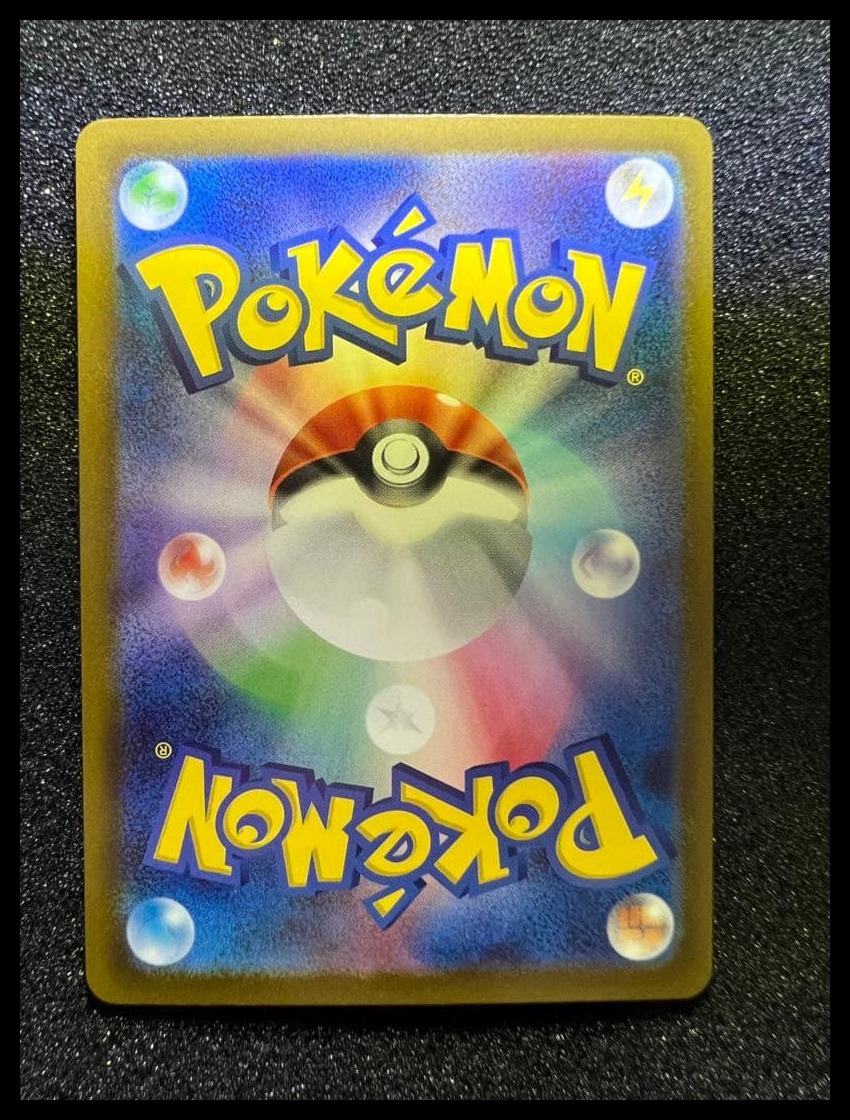
Authenticity. Verify Japanese print quality, correct set branding, number 240/193, texture, and font sharpness. Counterfeits may have dull texture, incorrect saturation, poor cropping, weak holo pattern, or mismatched back coloration. Compare against verified product images and graded/graded/graded reference scans when possible. Because the card is a high-value chase card, slabbed copies from reputable graders or purchase history from trusted sellers reduce risk.
Sources: cardshq.com, sportscardinvestor.com, pricecharting.com, pokebeach.com, tcgplayer.com