Market outlook
Stable Outlook 3/10
Market interest is driven more by player recognition and set completion than by scarcity. With abundant supply and no premium parallel or autograph element, pricing is likely to remain low and steady.
Next months. Expect prices to remain near current low-comps unless a graded-population or registry-driven pocket of demand emerges.
Long term. Over 1-3 years, the card should remain stable to slightly rising in top grades, but raw copies will likely stay inexpensive due to plentiful supply.
History
Raymond Floyd is an American professional golfer born in 1942, known for a long PGA Tour career, multiple major championship wins, and Hall of Fame status. In golf-card checklists, he is typically treated as one of the veteran legends/ambassadors of the sport rather than a rookie-era player, which gives the card historical value tied to his career accomplishments and place among iconic golfers.
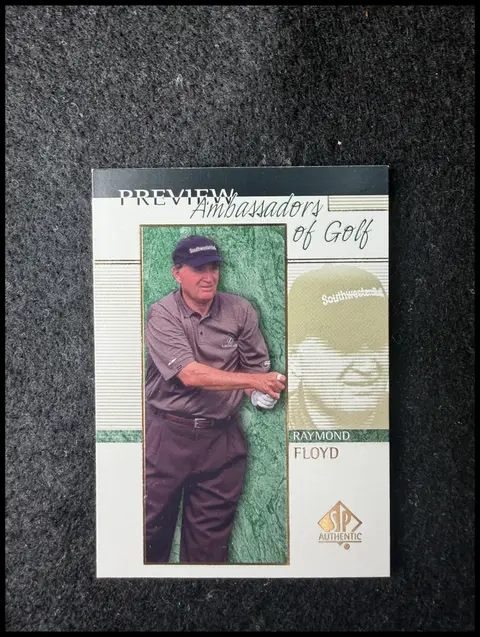
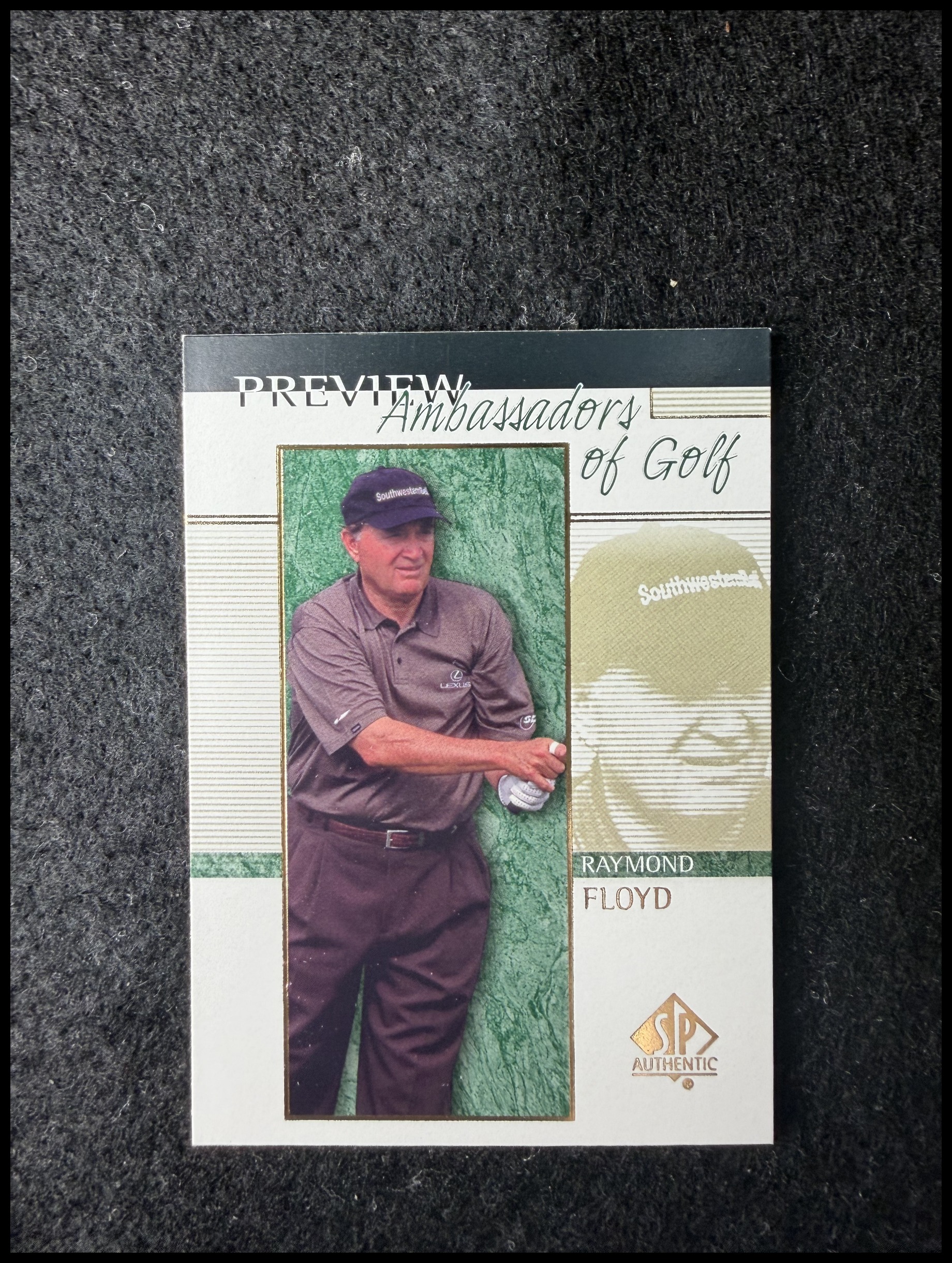
First released in 2001 as part of Upper Deck Golf, card number 56. Beckett’s 2001 Upper Deck Golf checklist places Raymond Floyd in the base set sequence, and market listings identify the card as part of the 2001 Upper Deck SP Authentic Preview / Ambassadors of Golf subset context for this number.[1][3][7]
- 2001 Upper Deck Golf was the debut Upper Deck golf product and included major names such as Tiger Woods, Arnold Palmer, John Daly, and other PGA stars.[1]
- Card number 56 is associated with Raymond Floyd in the 2001 Upper Deck Golf checklist and is also described in marketplace listings as an SP Authentic Preview / Ambassadors of Golf card.[1][3][7]
- This card is part of a larger 2001 golf release that is widely associated with Tiger Woods-era collector demand, which can indirectly support interest in veteran player cards from the set.[1][2]
Rarity and print run
- Tier
- Common
- Print run
- High
- First printed in
- 2001 Upper Deck Golf
- Demand
- Low
- Supply
- Abundant
- Appears to be a base-set card rather than a serial-numbered insert or autograph.
- 2001 Upper Deck Golf was a mainstream mass-market release.
- Veteran player base cards generally have lower scarcity than rookies or premium inserts.
Collector notes
Condition. Check centering, sharp corners, edge chipping, and surface wear, especially whitening along borders and any print-line or scuff damage from pack handling. Base cards from modern-era Upper Deck releases are often more vulnerable to surface scratches and corner wear than older thicker stock cards.
Storage. Store in a penny sleeve and rigid top loader or semi-rigid holder, keep away from moisture and heat, and use a team bag or sealed storage box for added protection. For graded-value tracking, avoid cleaning or pressing the card and handle only by the edges.
Authenticity. Authenticity issues are usually limited because this is a mass-produced base card, but collectors should compare the print quality, stock finish, and back text to verified examples. Suspicious signs include blurry text, incorrect color tone, off-size trimming, or glossy finish differences that suggest a counterfeit or reprint.