Market outlook
Stable Outlook 7/10
The card has enduring name recognition and steady set-builder demand, but the enormous original supply limits sharp long-term appreciation in lower grades. High-grade examples can perform better due to graded 9/10 scarcity relative to raw supply and registry demand.
Next months. Expect mostly stable pricing with small fluctuations based on grading supply, marketplace activity, and player-news cycles.
Long term. Over 1-3 years, raw and low-grade copies should remain broadly flat, while graded 9/10 examples may show gradual appreciation if high-grade supply stays tight and vintage 1980s interest remains strong.
History
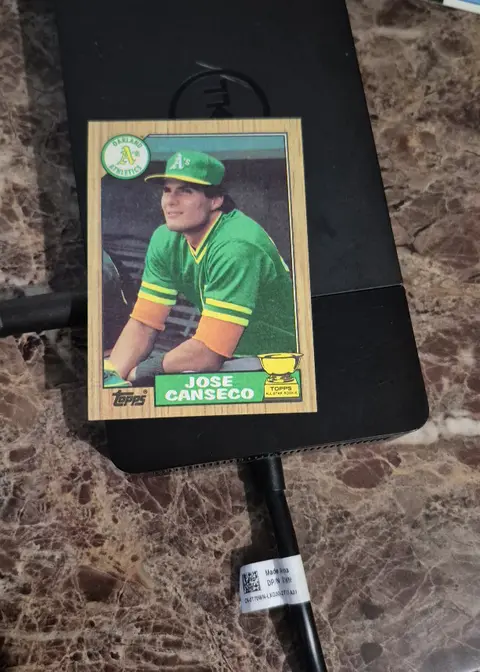
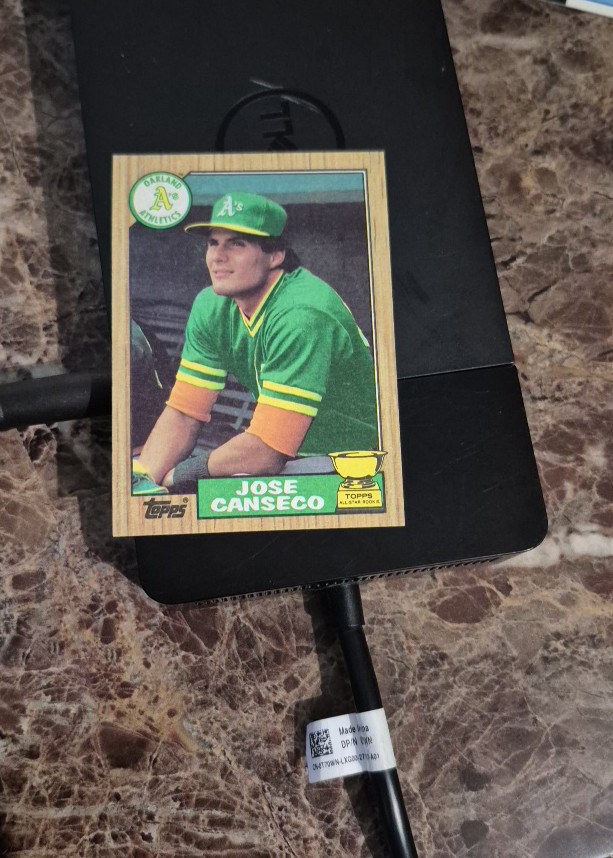
Jose Canseco is a Cuban-born former Major League Baseball slugger who became one of the defining power hitters of the late 1980s. Signed by the Oakland Athletics, he rose rapidly from prospect to superstar, winning 1986 AL Rookie of the Year and becoming the first MLB player to hit 40 home runs and steal 40 bases in a single season (1988). His prominence with the A's, along with his role in the 1989 World Series championship and later notoriety from his tell-all book and steroid-era revelations, makes him one of baseball’s most recognizable and polarizing figures. On cardboard, his 1987 Topps issue captures him at the peak of his early star trajectory as an All-Star Rookie Cup selection.
The card was first printed and distributed as part of the 1987 Topps Baseball set, released in 1987 in the United States as standard retail and hobby wax packs, rack packs, and boxes through Topps' normal nationwide distribution channels.
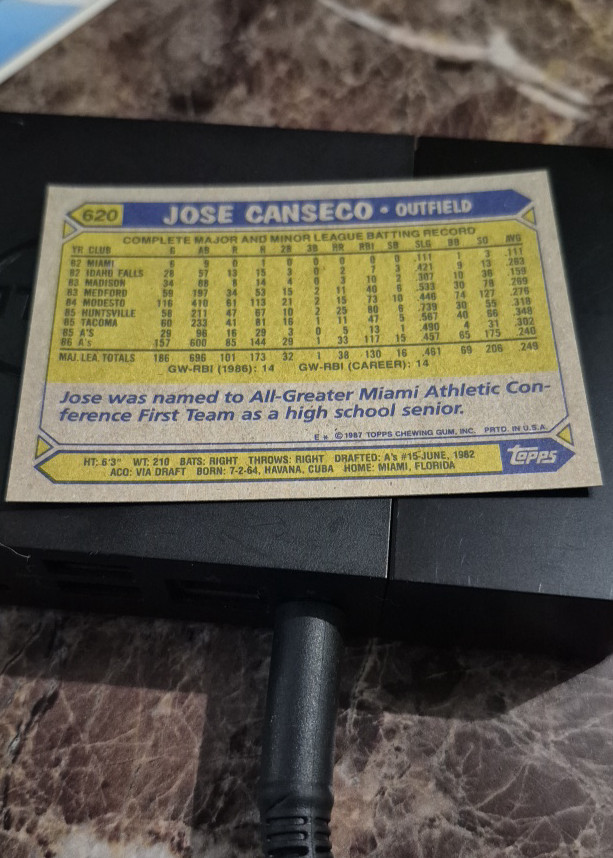
- Card #620 is a key mainstream Jose Canseco card and is widely treated as his primary 1987 flagship card.
- It features the All-Star Rookie Cup, highlighting his 1986 Rookie of the Year season and early-career status.
- The 1987 Topps set is mass-produced and widely available, so value is driven more by grade and demand than true scarcity.
Collector notes
Condition. Check centering carefully, as 1987 Topps cards are often left-right and top-bottom off-center. Common flaws include soft corners, edge chipping, surface print snow, wax stains, print dots, and roller marks. The black-bordered design elements are not as edge-sensitive as some later sets, but visible whitening and corner wear still reduce grade quickly. Look closely at the glossy front surface for scratches and at the back for tilt, ink smudges, and miscuts.
Storage. Store in penny sleeves and rigid top loaders or card savers for raw copies; use semi-rigids for submission. Keep cards in a cool, dry environment away from sunlight and humidity. For high-grade copies, use acid-free materials and avoid loose stacking or handling without clean hands or gloves. graded/graded/graded slabs provide the best long-term protection for valuable examples.
Authenticity. Authentic 1987 Topps cards should show consistent Topps printing characteristics, correct stock feel, and era-appropriate gloss and dot patterns. Reprints usually have sharper-than-expected print, different paper stock, or modern color saturation. For this card, compare front and back typography, card stock thickness, and alignment against verified examples. Graded examples from graded, graded, graded, or graded are the safest route for higher-value copies, especially if the card is near mint or better. Be cautious with alleged 'error' versions or novelty listings unless the variation is documented by a trusted grading or price-tracking source.