Market outlook
Stable Outlook 8/10
The card has already established itself as a flagship modern chase, which tends to keep prices resilient. However, because it is a modern card with broad supply in the market, upside is usually gradual rather than explosive unless renewed nostalgia, grading demand, or strong set-wide interest pushes it higher.
Next months. Likely to trade in a relatively tight range unless broader Pokémon market momentum increases.
Long term. Should remain a strong blue-chip modern chase card, with the best upside in gem-mint graded copies and well-centered raw examples.
History
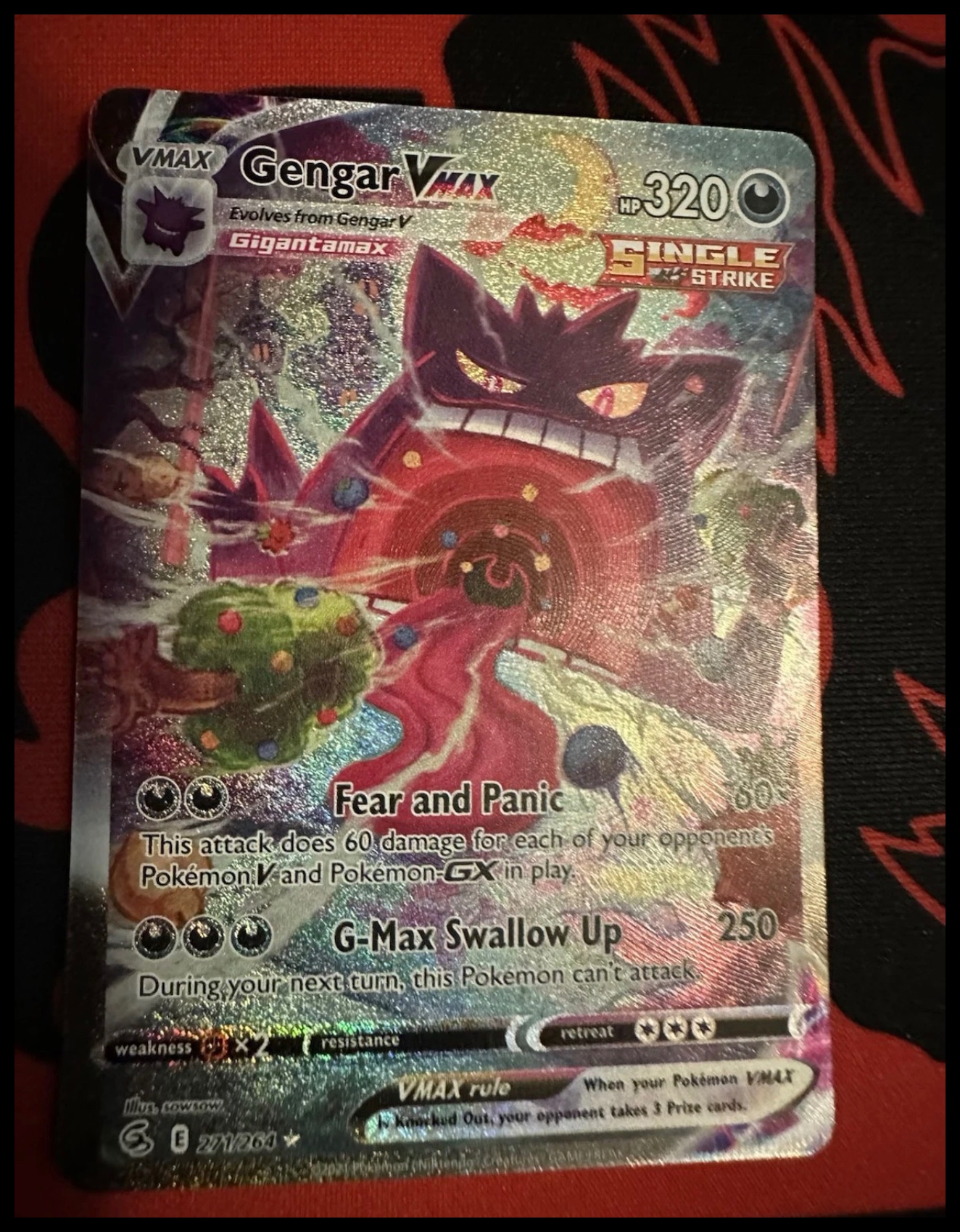
Gengar is a classic Ghost/Poison-type Pokémon introduced in the original 1996 Pokémon games as the final evolution of Gastly and Haunter. It is one of the franchise’s most recognizable original-generation Pokémon and has remained popular because of its mischievous, spooky design and strong presence across games, animation, and merchandise. The Fusion Strike alternate art depicts Gengar in a playful, story-driven scene rather than a standard battle pose, which helped make it one of the most sought-after cards from the Sword & Shield era.[2][3]
This card was first released in 2021 as part of the English-language Sword & Shield—Fusion Strike expansion, where it appears as card 271/264, a Secret Rare alternate art version.[1][2][3]
- It is one of the chase cards of Fusion Strike and is widely treated as the set’s flagship alternate art.[2][5]
- It is numbered 271/264, meaning it is a Secret Rare beyond the set’s base numbering range.[2][3]
- Market tracking services and price guides consistently show it as the highest-value or among the highest-value cards in the set.[2][5][7]
Rarity and print run
- Tier
- Secret Rare
- Print run
- High
- First printed in
- Sword & Shield—Fusion Strike
- Demand
- Very High
- Supply
- Low
- It is an alternate art Secret Rare, a premium chase slot in the set.
- Pull rates for alternate art chase cards are generally low compared with regular holos and V cards.
- High collector demand concentrates demand around a relatively small pool of pristine copies.
Collector notes
Condition. Check for centering, corner whitening, edge chipping, surface scratches, and print lines, especially on the dark background and textured holographic areas. Alternate art cards can show visible wear on corners and edges quickly, and graded value is highly sensitive to centering and surface clarity.
Storage. Store in a penny sleeve and rigid top loader or semi-rigid holder, and avoid friction from repeated handling. For long-term protection, keep the card in a cool, dry environment away from direct light and humidity; if grading, use an inner sleeve and semi-rigid holder preferred by grading companies.
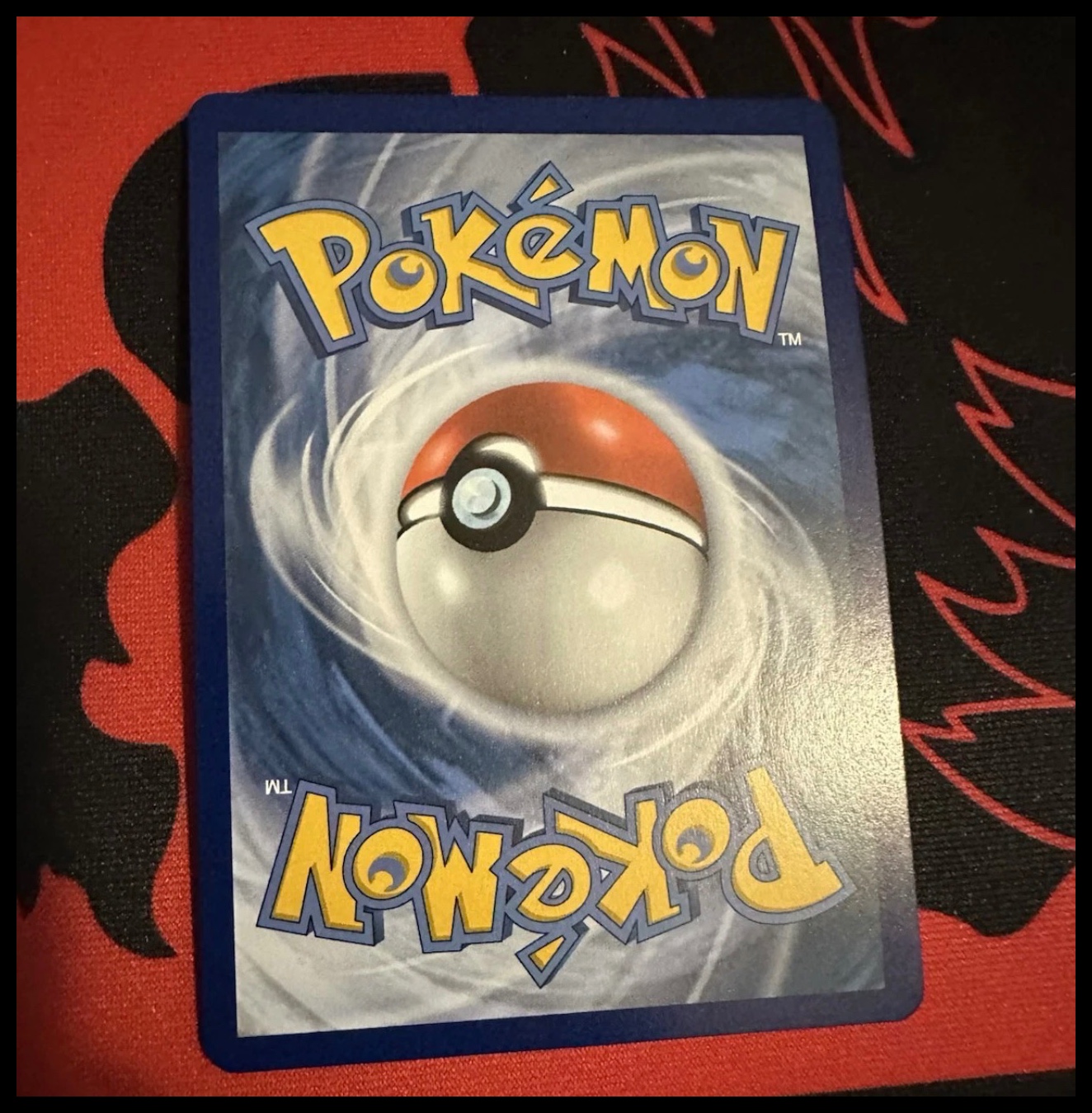
Authenticity. Authentic copies should have crisp texture, correct font weight, and proper holographic patterning consistent with Pokémon TCG alternate art foils. Fakes may show blurry text, off-color printing, incorrect texture, or a flat-looking surface; compare the card to known authentic scans and verify weight, cut quality, and holo behavior under angled light.
Sources: cardladder.com, bleedingcool.com, blueumbreon.com, sportscardinvestor.com, tcgplayer.com