Market outlook
Stable Outlook 7/10
The card remains one of the defining late-1980s football rookies, but abundant supply keeps raw prices steady. High-grade examples should continue to outperform raw copies because collectors consistently chase condition and registry quality.
Next months. Likely stable with small fluctuations in raw prices and continued strength for high-grade examples.
Long term. Expected to remain a blue-chip nostalgic rookie card with gradual appreciation in top grades and steady collector demand over 1-3 years.
History
Bo Jackson is Vincent Edward Jackson, a two-sport American athlete who became one of the most famous sports figures of the late 1980s and early 1990s. He starred as a running back for the Los Angeles Raiders and as an outfielder for the Kansas City Royals, gaining legendary status as the first athlete widely recognized as an elite professional in both MLB and the NFL; Topps Ripped notes that his 1988 Topps Football card is considered his only football rookie card and that his rare combination of size, speed, and power made him a cultural icon.
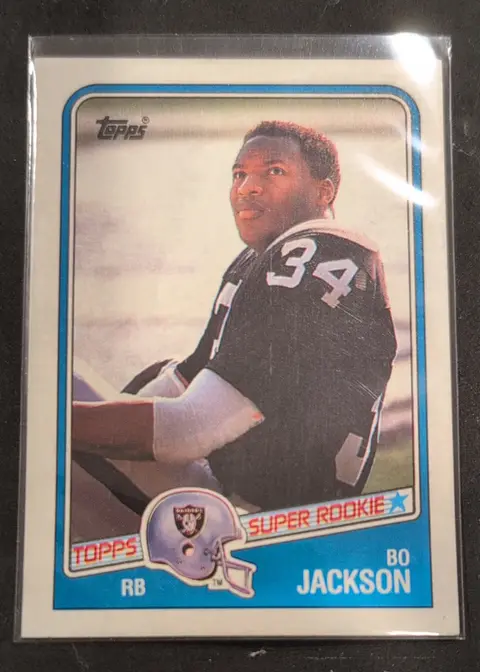
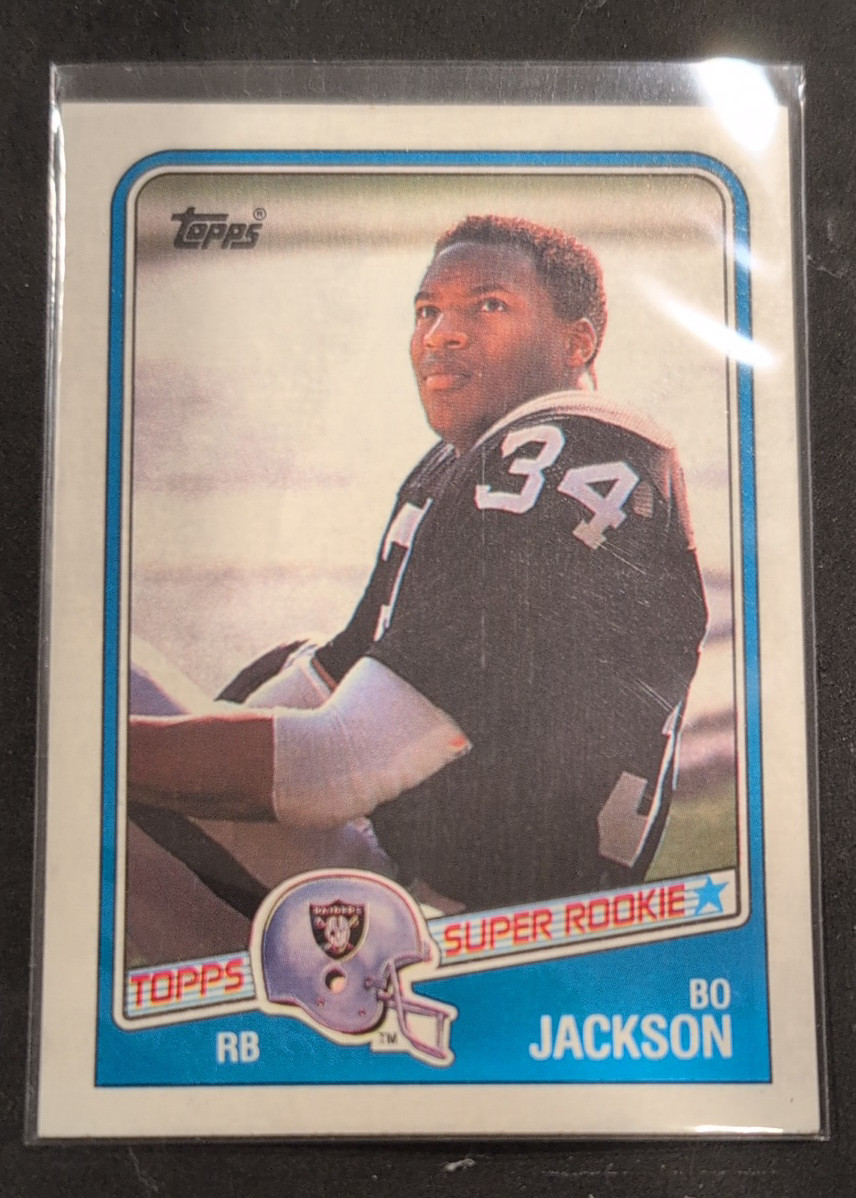
1988 Topps Football was first released in 1988 in the United States as part of Topps’ standard NFL card product for the season, and Bo Jackson #327 appeared in that base set as his rookie card.
- Card #327 is widely treated as Bo Jackson’s football rookie card and is one of the most recognizable cards from the 1988 Topps Football set.
- The set has 396 base cards, and Bo Jackson appears as a Raiders player in the famous Super Rookie box-bottom subset as well as the base checklist.
- graded CardFacts identifies the card as a key rookie issue and shows strong high-grade demand, with graded 10 examples carrying premium values.
Collector notes
Condition. Check centering carefully, especially left-right and top-bottom, along with sharp corners, clean edges, and an uncreased surface. Common flaws include print snow, rough edges from handling, mild corner whitening, surface scratches, and off-centering, all of which significantly affect value because the card is plentiful but condition-sensitive.
Storage. Store in a penny sleeve and rigid top loader or semi-rigid holder, keep away from moisture and heat, and avoid direct sunlight. For higher-grade copies, use an archival card saver for submission and keep the card flat to prevent edge and corner wear.
Authenticity. Counterfeits are less common than with modern high-value cards, but reprints and altered copies can appear online. Verify correct 1988 Topps card stock, sharp but period-correct printing, proper alignment, and consistent gloss; authenticated graded examples from graded, graded, or graded are the safest purchase route. Be cautious with autographed copies unless the signature is certified by a major authenticator.