Market outlook
Rising Outlook 8/10
The card benefits from long-standing status as a foundational basketball rookie, limited high-grade supply, and continued growth in vintage basketball collecting. Top-tier examples usually outperform the broader market over time, even if lower grades move more steadily.
Next months. Likely stable to modestly rising, with sharp gains more probable in elite grades than in lower-grade raw copies.
Long term. Expected to continue appreciating over 1-3 years, especially graded 8 and above, assuming no major market downturn.
History
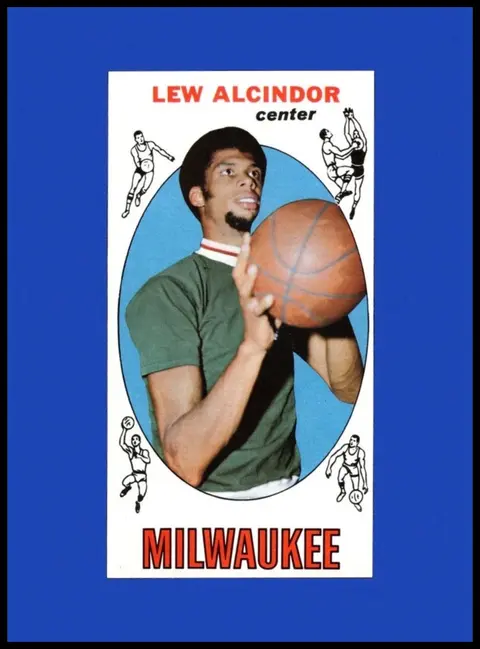
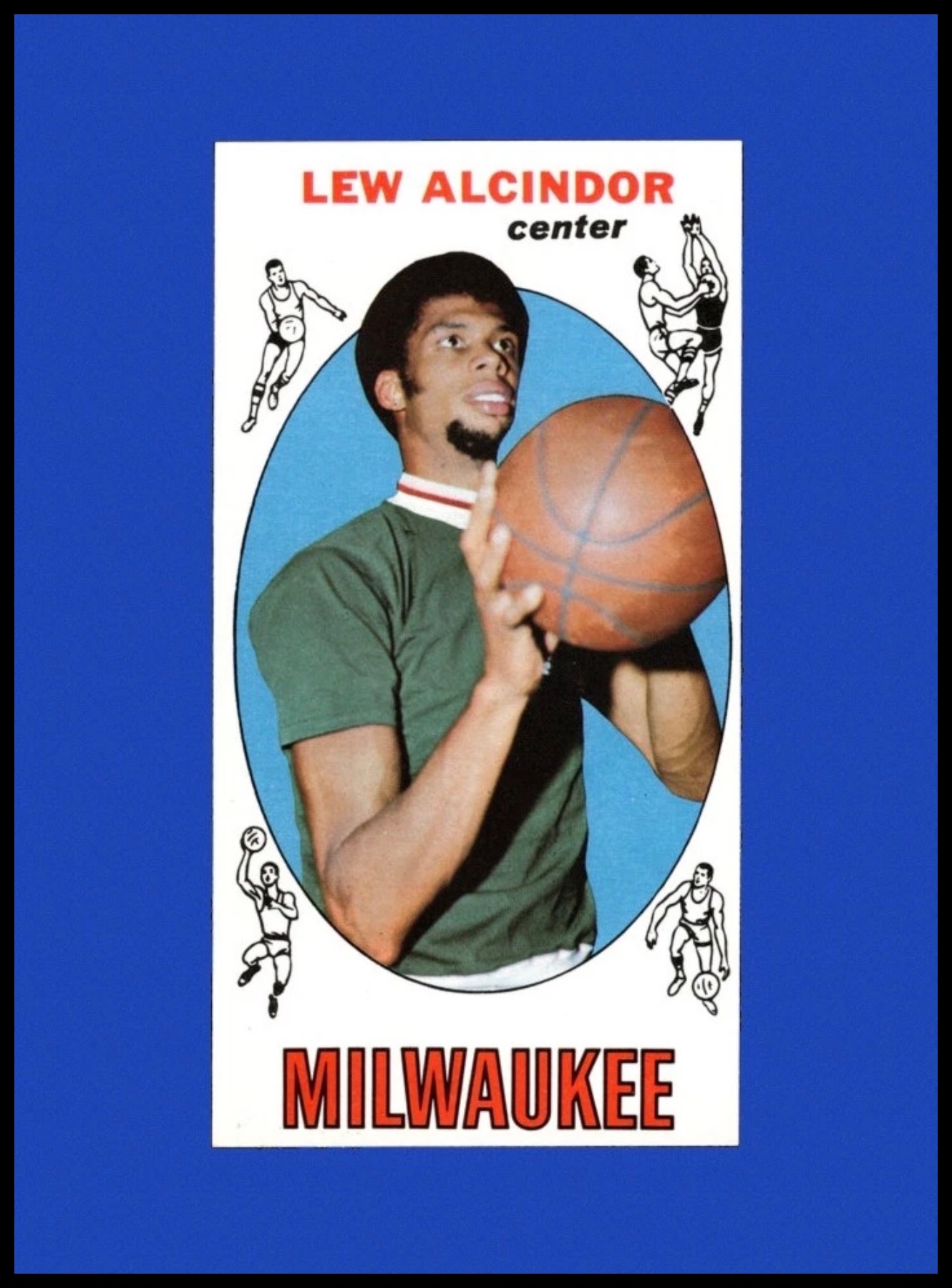
Lew Alcindor is the original name of Kareem Abdul-Jabbar, one of the greatest basketball players in history. Born Ferdinand Lewis Alcindor Jr., he rose to prominence at UCLA, where he led the Bruins to multiple national championships and became a dominant force as a center. He was selected as the first overall pick in the 1969 NBA Draft by the Milwaukee Bucks. This card is historically significant because it captures him at the start of his professional career, before he changed his name to Kareem Abdul-Jabbar in 1971.
The card was first issued in 1969 as part of the 1969 Topps Basketball set, released in wax packs in the United States through Topps' standard 1969 basketball distribution.
- This is widely recognized as Lew Alcindor/Kareem Abdul-Jabbar’s rookie card and one of the most important basketball cards ever produced.
- It is the key card in the 1969 Topps Basketball set and one of the most heavily collected postwar basketball cards.
- High-grade examples are extremely scarce, with graded 10 examples nearly impossible to find and commanding six-figure prices.
Collector notes
Condition. Centering is the biggest factor, followed by corner wear, edge chipping, surface print defects, and staining. The 1969 Topps basketball issue is a tall-boy format, so cards are especially prone to corner softness, edge wear, and handling damage. Look closely for wax staining, print snow, tilt, and any natural factory rough edges versus true damage.
Storage. Use penny sleeves and rigid holders immediately after handling. Because the card is tall and thin, store it in a card saver or graded slab-sized protective holder that supports the full card height. Keep it in a cool, dry, low-UV environment with stable humidity to reduce warping, edge damage, and surface degradation.
Authenticity. Authentic cards should match the 1969 Topps design, stock, size, and printing characteristics. Watch for modern reprints, altered corners, recoloring, and trimmed examples. Compare font, image sharpness, back text layout, and paper stock against known authentic examples. For high-value copies, third-party grading from graded, graded, or graded is strongly recommended.