Market outlook
Stable Outlook 7/10
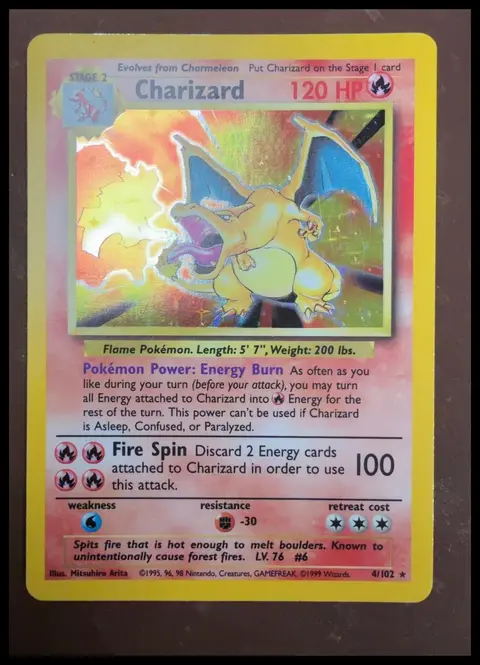
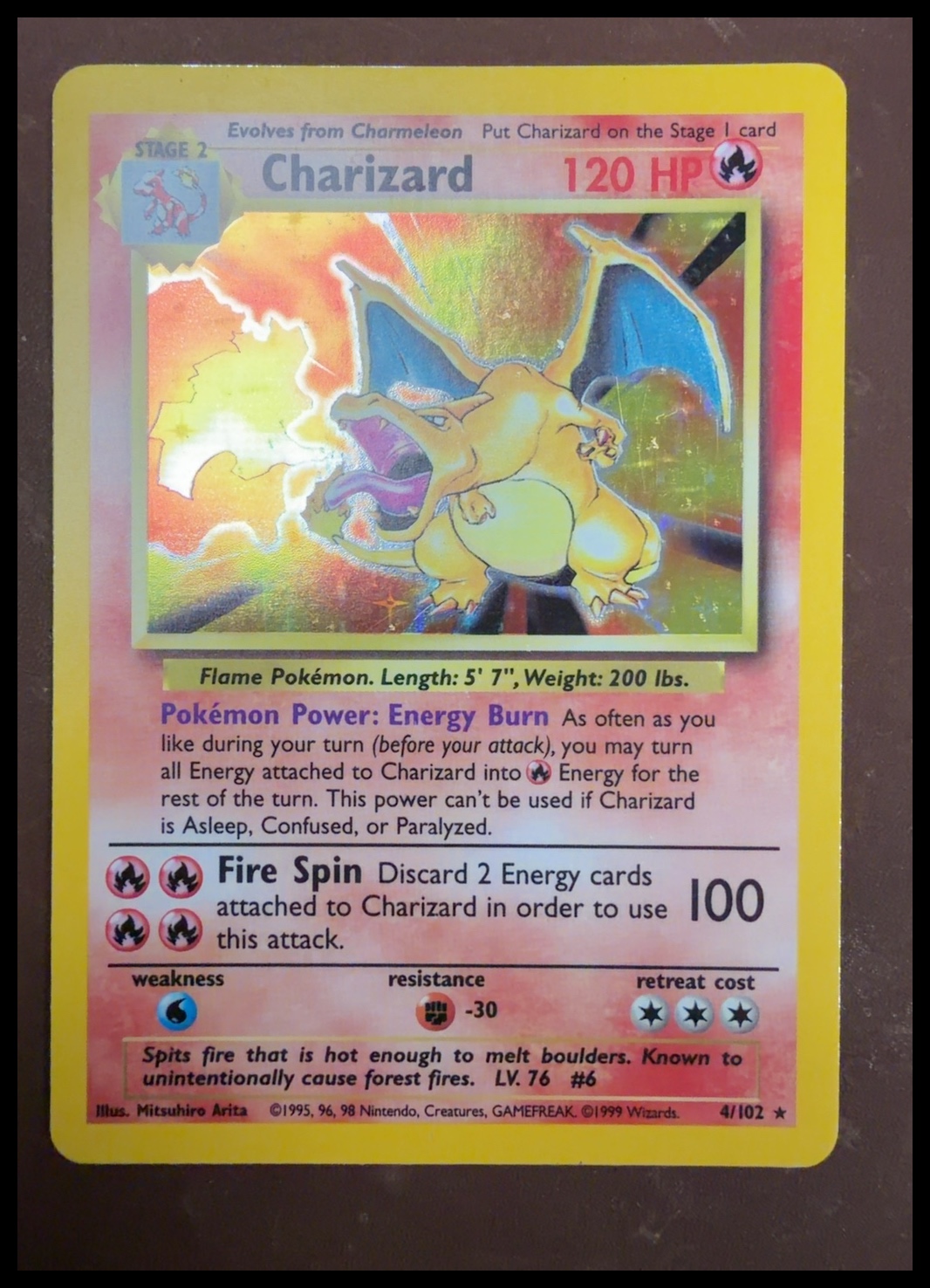
The Unlimited Base Set Charizard is an iconic, liquid vintage card with sustained demand, but its very large original print volume limits scarcity-driven rapid appreciation. Prices tend to track broader Pokémon nostalgia cycles, grade premiums, and overall collectibles-market sentiment.
Next months. Likely to remain range-bound with periodic spikes for high-grade or especially attractive examples, while lower grades stay comparatively accessible.
Long term. Should remain a cornerstone vintage Pokémon card with gradual appreciation in strong grades, but likely to underperform scarcer Charizard print variants in percentage terms over the next 1-3 years.
History
Charizard is the final evolved form of Charmander in the original Pokémon video game and animated franchise, introduced in the first generation as a powerful Fire/Flying-type dragon-like Pokémon. In the TCG, Charizard became the flagship chase card of the original English Base Set and is widely regarded as one of the most iconic and recognizable trading cards in the hobby.
First released in the English Pokémon Base Set in 1999 as card #4/102, printed by Wizards of the Coast for the North American/English international market. The Base Set Charizard holo became one of the defining cards of the early Pokémon boom.
- This is the Unlimited Base Set holo Charizard, not the First Edition or Shadowless version; those versions are distinct and typically more valuable.
- The card’s value is highly condition-sensitive because holographic scratches, edge whitening, centering, and print defects dramatically affect grade and price.
- Charizard Base Set 4/102 remains one of the most collected Pokémon cards in the world and has become a benchmark card for vintage Pokémon grading and authentication.
Collector notes
Condition. Check holofoil scratching, edge whitening, corner wear, surface dents, print lines, and centering. Common flaws include holo scratches from sleeve friction, whitening on the red borders, and back-surface scuffs. Even small defects can materially reduce grade and market value.
Storage. Store in a penny sleeve inside a rigid top-loader or semi-rigid holder for raw copies, and use a graded slab for high-grade or valuable examples. Keep away from humidity, heat, sunlight, and frequent handling. Use clean hands or gloves and avoid friction against the holo surface.
Authenticity. Compare card stock, holo pattern, font sharpness, color saturation, and card dimensions against known authentic examples. Counterfeits often have blurry text, incorrect holo pattern alignment, weak back coloration, or inconsistent card texture. For higher-value copies, professional grading or third-party authentication is strongly recommended.