Market outlook
Stable Outlook 7/10
Judge remains one of the most collected active-era stars, but base Chrome rookies usually move with player performance, grading population, and broader hobby sentiment rather than true scarcity. Recent pricing data shows active trading but also short-term softness in raw-market pricing.[3]
Next months. Likely to trade in a relatively narrow range unless Judge has a major performance milestone, postseason run, or record-related news that lifts demand.
Long term. Over 1-3 years, the card should remain a blue-chip modern rookie of a Hall-of-Fame-caliber player, with gradual appreciation most likely in high-grade copies rather than raw examples.
History
Aaron Judge is an American professional baseball outfielder for the New York Yankees and one of the defining sluggers of his era. He rose from a multi-sport California standout to a first-round Yankees draft pick in 2013, made his MLB debut in 2016, and became a major collecting figure after winning the 2017 AL Rookie of the Year award and later setting the American League single-season home run record in 2022. His hobby significance comes from combining elite power, a massive fan base, and strong rookie-card demand in flagship and premium Topps issues.[3][6]
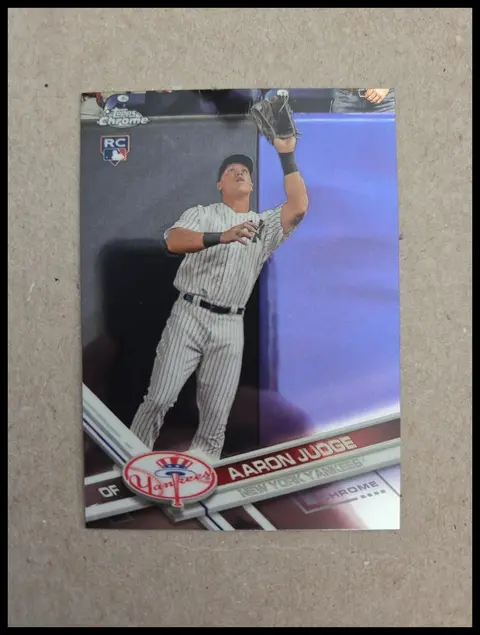
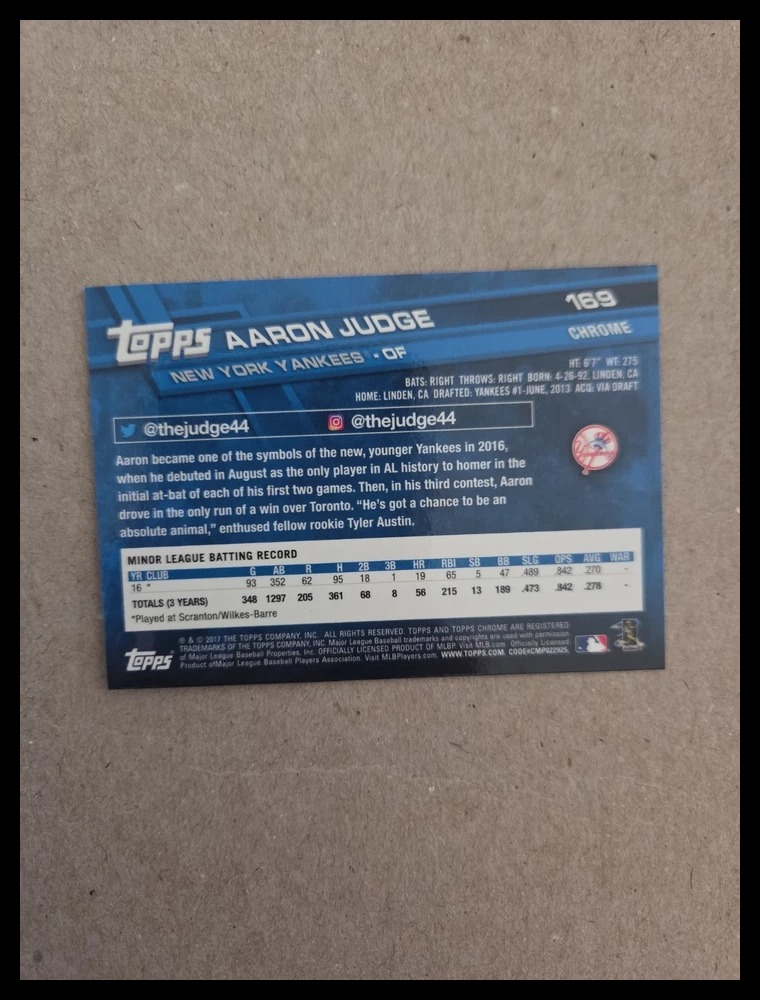
The card was first released in 2017 as part of Topps Chrome baseball, a chromium-stock product distributed through hobby and retail channels in the 2017 release cycle. The specific card is Aaron Judge #169, his base rookie card in the Topps Chrome set.[1][3][6]
- This is Aaron Judge's base rookie card in 2017 Topps Chrome, card number 169.[1][3][6]
- Sports Card Investor reports the raw card last sold for about $143.50 on 2026-06-06, indicating active modern-market liquidity.[3]
- Topps Chrome Judge rookies also include parallel variants such as refractors and rare negative refractors, which are more valuable than the base version.[2][4]
Rarity and print run
- Tier
- Common
- Print run
- Very High
- First printed in
- 2017 Topps Chrome
- Demand
- High
- Supply
- High
- Base-card format rather than a numbered parallel
- Part of a widely distributed modern Topps Chrome release
- Many copies were submitted for grading, keeping availability high
Collector notes
Condition. Check centering, sharp corners, clean edges, and surface scratches, since Topps Chrome cards commonly show print lines, refractor scuffs, and fingerprints. Focus especially on chrome surface scratches under strong light and on centering front and back because graded 10 value is highly sensitive to those factors.[1][2][6]
Storage. Store in a penny sleeve and rigid top loader or semi-rigid holder, keep the card dry and away from heat and sunlight, and avoid handling the chrome surface directly. For higher-value copies, use a team bag or graded slab and maintain stable humidity to reduce risk of surface haze or edge wear.
Authenticity. Verify the card number 169, the Topps Chrome chromium finish, correct 2017 design elements, and sharp, factory-printed text and borders. Because the card is widely collected and frequently graded, compare the surface sheen, microtext, and back print quality against authenticated examples; suspiciously soft print, off-color borders, or missing chrome characteristics can indicate counterfeit or altered cards.[1][6]
Sources: psacard.com, sportscardspro.com, sportscardinvestor.com, facebook.com, hobbyscan.com