Market outlook
Stable Outlook 4/10
Consistent low-end pricing with no significant 30-day changes; abundant supply caps upside despite Pokémon nostalgia.[1][5]
Next months. Stable low prices $5-50 raw/graded; no major events driving demand.
Long term. Stable to slight decline as supply persists; potential minor lift from Mewtwo media releases.
History
Mewtwo is a legendary Psychic-type Pokémon created artificially by scientists from the DNA of the ancient Pokémon Mew. It is one of the most iconic and powerful Pokémon in the franchise, first appearing as the main antagonist in Pokémon Red/Blue and the anime film Pokémon: The First Movie, symbolizing themes of creation, power, and rebellion against humanity.
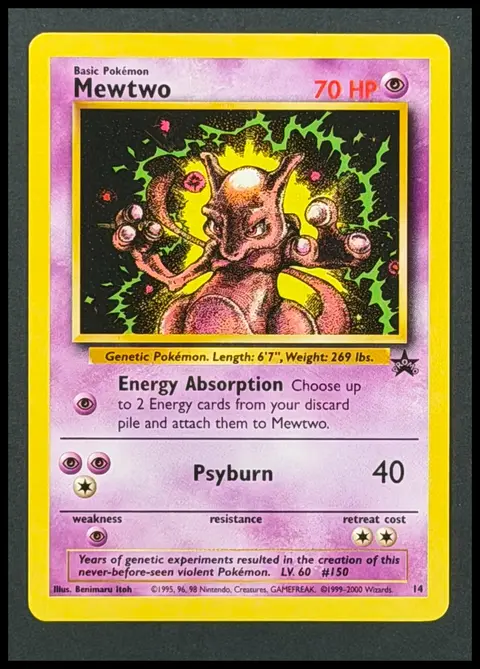
First released in April 2000 through Nintendo Power magazine as part of Wizards Black Star Promos; also distributed in Japan via JR East Pokémon Stamp Rally 2000 (August 1-20, 2000).[3]
- This Non-Holo promo features unique artwork by Magic: The Gathering illustrator Christopher Rush.[3]
- Card #14 has abilities Energy Absorption (attach up to 2 Energy from discard) and Psyburn attack.[6]
- Distinct from #12 variant which was Nintendo Power specific; #14 is more common promo.[1][5]
Rarity and print run
- Tier
- Promo
- Print run
- Medium
- First printed in
- Wizards Black Star Promos
- Demand
- Low
- Supply
- Medium
- Magazine/promo distribution led to higher circulation than ultra-rares[5]
- Reprinted in Legendary Collection diluting exclusivity[3]
- Non-holo variant less desirable than holo counterparts
Collector notes
Condition. Check for centering issues, edge wear, surface scratches on non-holo foil, and print defects common in early 2000 promos; avoid cards with Nintendo Power magazine creases or handling marks.
Storage. Store in semi-rigid holders or top-loaders with sleeves in cool, dry environment away from sunlight to prevent foil oxidation; use card savers for raw copies.
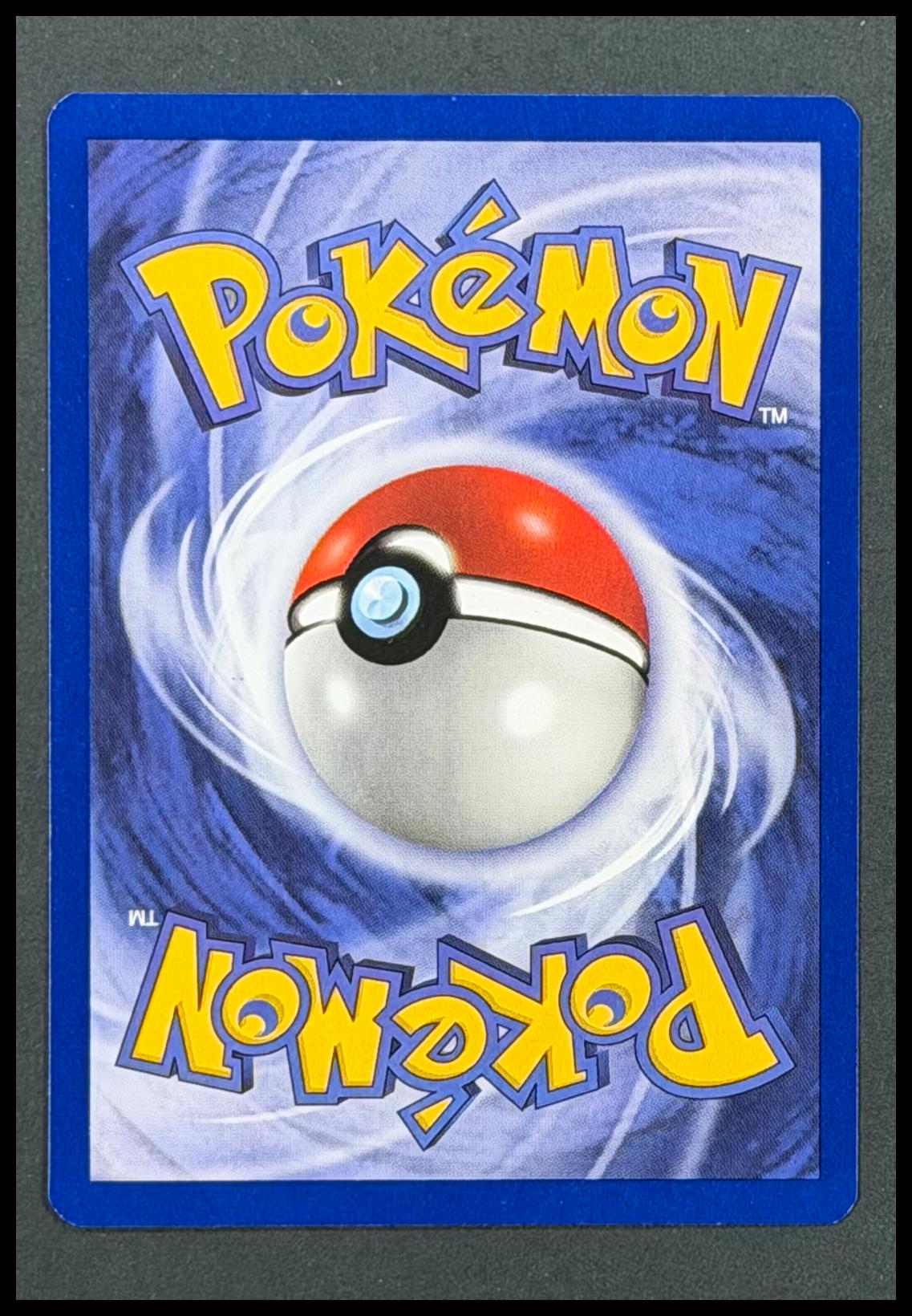
Authenticity. Verify black star promo symbol, sharp text on abilities, and Wizards of the Coast copyright; fakes often have blurry holo patterns or incorrect font weights—compare to official scans; Japanese prints may have subtle language differences.
Sources: sportscardinvestor.com, radiantchaincollectibles.com, bulbapedia.bulbagarden.net, cardmarket.com, pikawiz.com