Market outlook
Rising Outlook 7/10
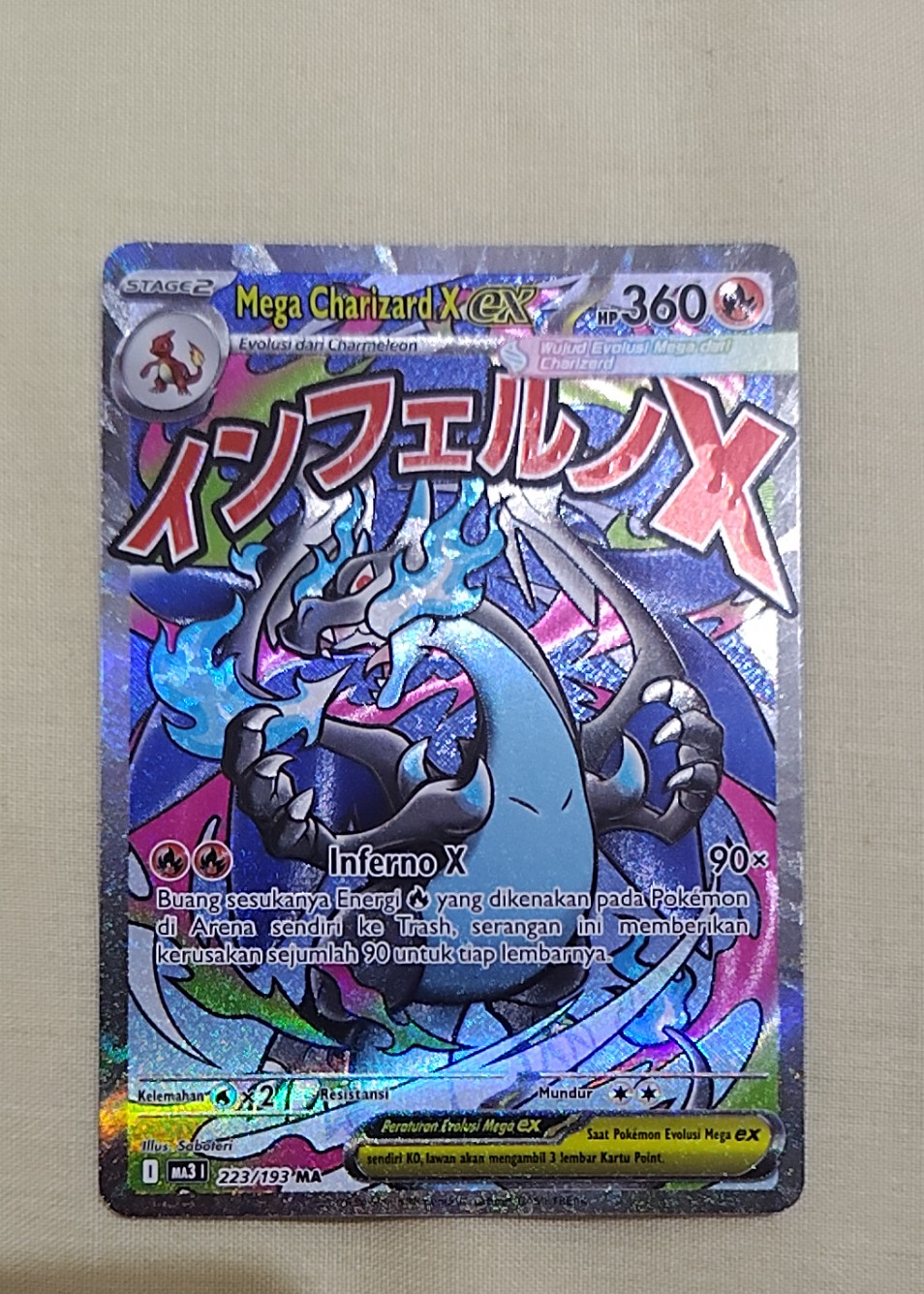
The trend is rising due to increased collector interest in Mega Evolutions, the card's iconic status, and recent high sales at $778-$1,200. Full-art Ultra Rare status and secret rare numbering also drive demand[1][8].
Next months. Next 3-6 months prediction: Prices will likely continue rising to $900-$1,400 for graded 10 copies due to sustained collector interest and upcoming set releases.
Long term. 1-3 year prediction: Prices may stabilize at $1,000-$1,500 for graded 10 copies, with potential for $1,800+ if Mega Charizard X gains renewed mainstream popularity or new game releases feature it prominently.
History
Mega Charizard X is the result of Mega Evolving Charizard with the X-Mega Stone, a special evolutionary process introduced in Pokémon X and Y. It transforms into a black, dragon-like Pokémon with orange flames, gaining the Dragon type while retaining Fire. This form represents the ultimate fusion of Charizard's primal power and draconic evolution, making it one of the most iconic and popular Mega Evolutions in the franchise[4].
This specific card variant (Mega Charizard X ex Full Art Ultra Rare) was first released in 2024 in the Pokémon PAF EN set (likely a promotional or regional English set), though earlier versions of Mega Charizard X appeared in the XY: Evolutions set (2016) and the Japanese Inferno X set (2024)[1][3].
- The card features full-art Ultra Rare printing with stunning TAG presentation, making it a collector's dream due to its aesthetic appeal[4]
- Mega Charizard X ex is the most expensive Charizard in the Phantasmal Flames set, even though it's not the rarest [5]
- The card has been pulled from random old 2016 XY packs, confirming its existence across multiple sets and years[8]
Rarity and print run
- Tier
- Ultra Rare
- Print run
- Medium
- First printed in
- PAF EN (2024)
- Demand
- High
- Supply
- Medium
- Full-art Ultra Rare printing with secret rare numbering (223/193) makes it harder to find than standard Ultra Rare cards[1]
- The card has been pulled from random old packs, confirming limited availability across multiple sets[8]
- graded 10 graded copies are rare due to the difficulty of achieving perfect condition on full-art surfaces[2]
Collector notes
Condition. Key things to check include centering, edge wear, surface scratches, and corner dents. Common flaws include micro-scratches on the full-art surface, slight off-centering, and whitening on edges. graded 10 graded copies are perfect with no visible flaws[2].
Storage. Best practices include storing the card in a rigid top loader with a soft sleeve, keeping it in a cool, dry environment away from direct sunlight, and using a display case or binder for long-term protection. Avoid plastic bags that can cause moisture buildup.
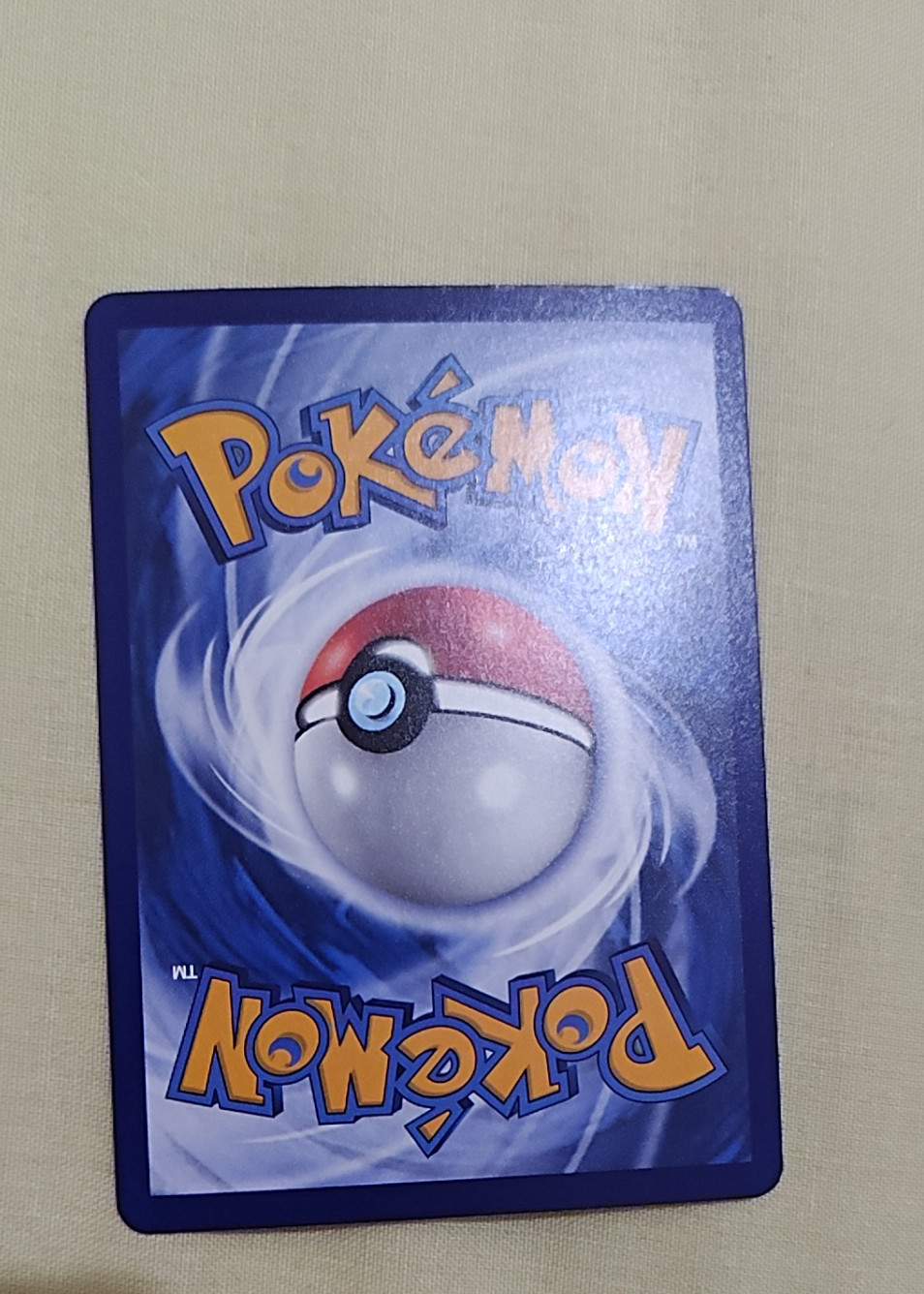
Authenticity. To spot fakes, check for proper holographic patterns, correct font usage, and accurate color saturation. Reprints often have duller colors or incorrect text placement. Authentication tips include verifying the card's set number (223/193 is unusual; likely a Secret Rare variant) and comparing with known authentic examples[8]. graded 10 slabs are the gold standard for verification[2].
Sources: tokopedia.com, facebook.com, pricecharting.com, instagram.com, tcgplayer.com