Market outlook
Stable Outlook 6/10
The card is a steady blue-chip player card for a Hall of Fame level superstar, but the base issue is so abundant that raw prices tend to remain low and stable. Strong copies and graded 10s can move with broader vintage/modern star card demand, but supply keeps the overall market from rising sharply.
Next months. Expect raw prices to remain modest with occasional spikes for unusually clean copies. High-grade examples should continue to command a premium, but broad market growth is likely limited.
Long term. Over 1-3 years, the card should remain a stable collector staple rather than a major appreciation play. The best upside remains in gem-mint and premium-variant copies, while ordinary raw cards should track close to current low-end market levels.
History
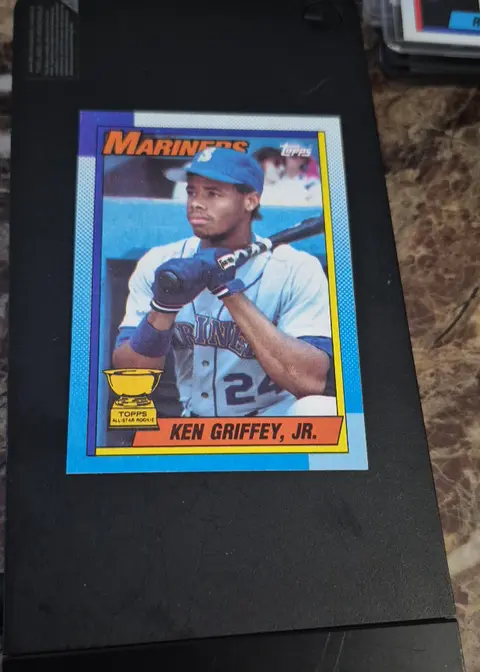
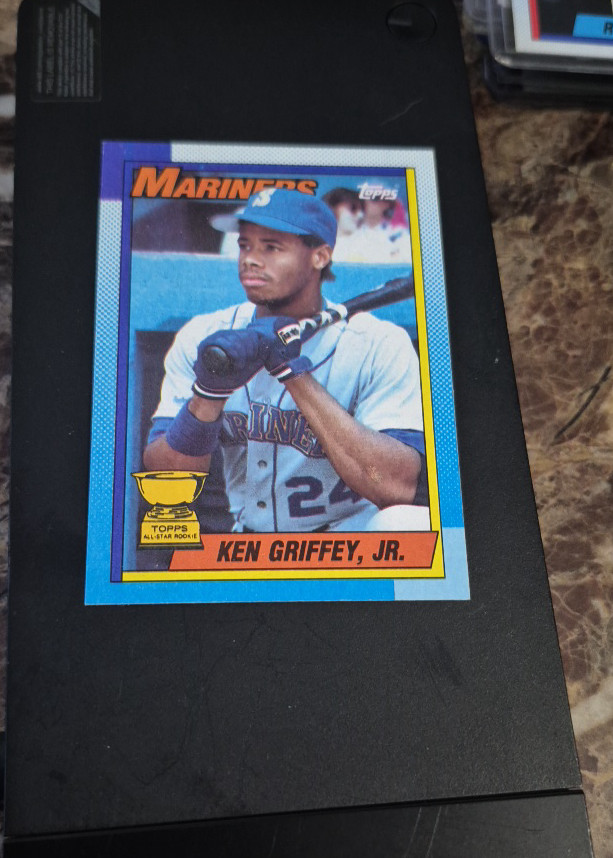
Ken Griffey Jr. is one of the most iconic baseball players of the modern era. The son of former Major League outfielder Ken Griffey Sr., he entered pro baseball with extraordinary hype and quickly became a fan favorite for his smooth left-handed swing, elite defense in center field, and charismatic style. By 1990, Topps featured him as one of the sport's premier young stars and highlighted him with the All-Star Rookie trophy, reflecting his status as a rising cornerstone of the Seattle Mariners and one of baseball's most marketable players.
First released in 1990 as part of the Topps Baseball flagship set, distributed in hobby packs and retail wax/cello formats in the United States during the 1990 baseball card release cycle.
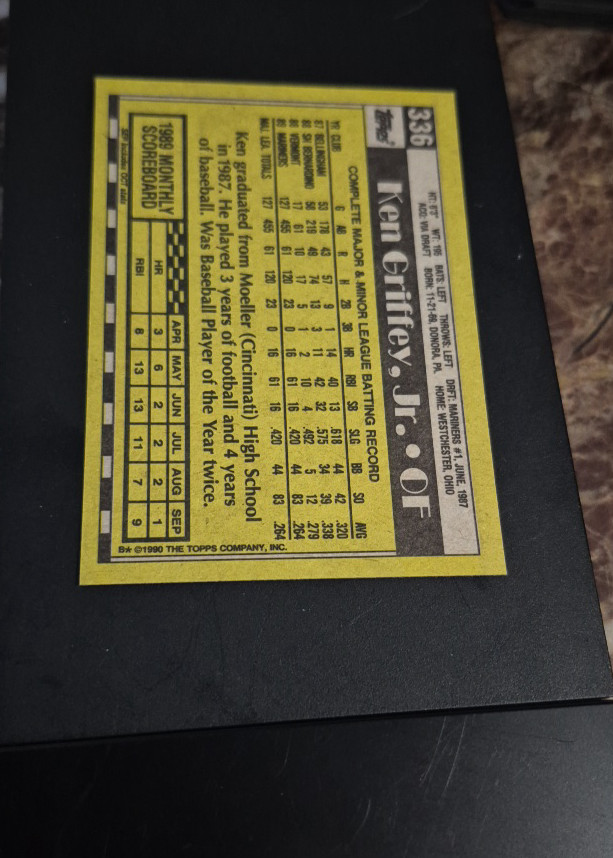
- This is one of the most recognizable Ken Griffey Jr. cards from his early career, but it is not his true rookie card; it is a second-year card from 1990 Topps.
- The card is widely collected because it combines a major Hall of Fame player with a visually appealing design and the All-Star Rookie designation.
- While the base version is common, high-grade examples are heavily pursued because the black borders and print quality of 1990 Topps make pristine copies difficult to find.
Collector notes
Condition. Check the black border for chipping, corner wear, and edge whitening, as these are the most common condition killers. Centering matters, and surface scratches, print snow, wax staining, and gum-related damage are also common. Top/bottom tilt and poor left-right centering are frequent on 1990 Topps cards. High grades are most sensitive to sharp corners, clean edges, and strong centering.
Storage. Use penny sleeves and semi-rigid holders or top loaders for protection. Store cards vertically in a cool, dry, low-light environment to reduce warping and edge degradation. Keep away from humidity and direct sunlight. If the card appears pack-fresh or high grade, consider immediate submission to a reputable grading service for encapsulation.
Authenticity. Authentic 1990 Topps cards should show the correct card stock, print texture, and period-correct gloss. Reprints are usually less sharp or have incorrect paper stock. Compare the font, logo placement, and front/back color balance to known authentic examples. For valuable high-grade copies, graded, graded, or graded authentication and grading is recommended, especially because altered corners or recolored edges can be difficult to spot without magnification.