Market outlook
Stable Outlook 5/10
The base card is a common rookie issue with low raw pricing, so it typically moves with player performance rather than rarity. Interest may rise if Shough secures playing time or produces strong NFL results, but absent that catalyst the common version should remain steady.[1][3][6]
Next months. Next 3-6 months: the base card is likely to remain low-priced and liquid, while numbered parallels and case-hit inserts may continue to command stronger premiums if collector attention persists.[1][3][4]
Long term. 1-3 year prediction: upside depends mainly on Shough’s NFL trajectory; a breakout could lift rookie-card demand, but if he remains a low-visibility player, the base common should stay near low-end rookie-card pricing.
History
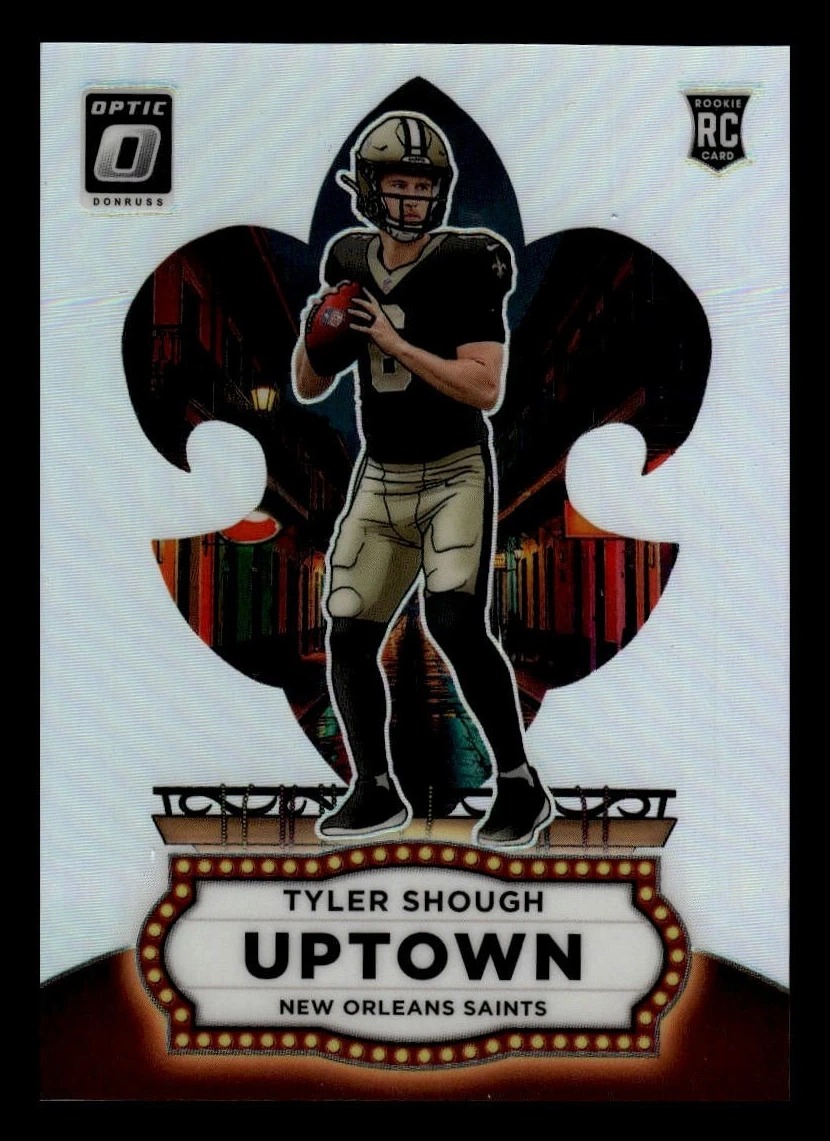
Tyler Shough is a real-life American football quarterback whose trading cards are tied to his college-to-pro career arc rather than a fictional character. He became a collectible subject because he was a notable quarterback prospect and rookie-era NFL player, and his Panini cards are part of the standard rookie-card pipeline for professional football players. The specific 2025 Donruss Optic card reflects his early NFL-card market presence and rookie collecting interest.[1][2][7]
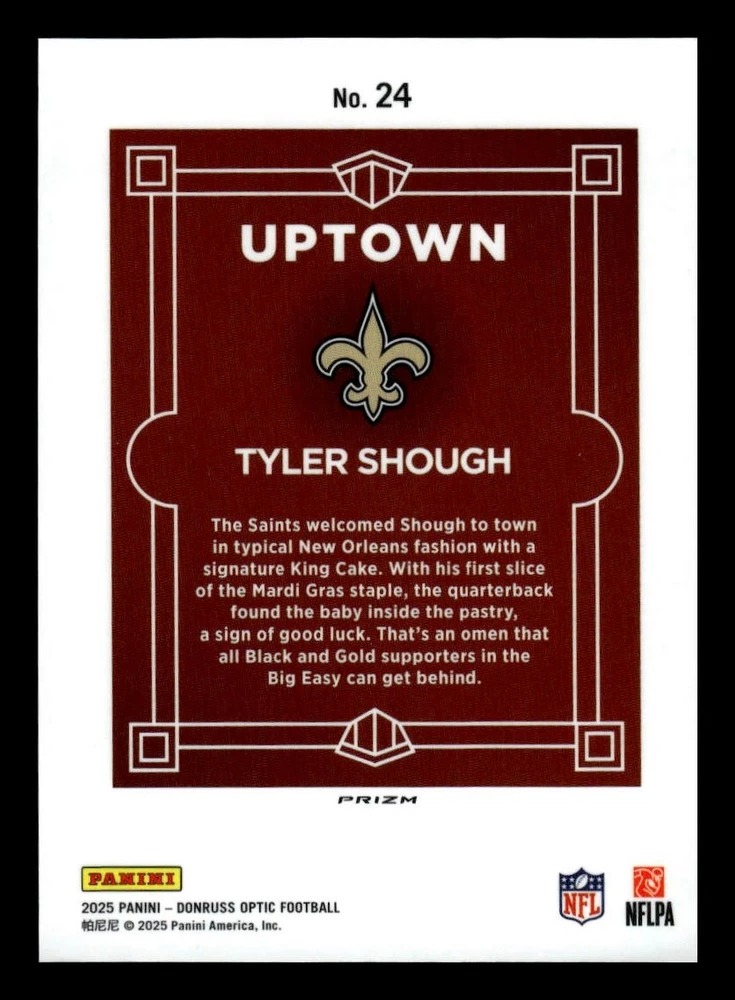
The card was first released in 2025 as part of Panini Donruss Optic Football. Market listings identify Tyler Shough #24 in 2025 Panini Donruss Optic, and other 2025 Optic Shough cards confirm the set’s 2025 release window.[1][3][4]
- Tyler Shough #24 is listed in 2025 Panini Donruss Optic as a rookie card, with the Uptown SSP version showing the same player and card number.[3]
- The base-card market listing for a Tyler Shough Donruss Optic Rated Rookie shows an asking price around $4 raw, indicating the common/base version is inexpensive compared with inserts and parallels.[1]
- A parallel/insert market for Tyler Shough in 2025 Optic exists, including Holo Prizm and Pink Velocity Prizm versions, with some serial-numbered parallels listed at materially higher prices.[4][6][7]
Collector notes
Condition. Check centering, especially left-right borders and image placement, since Optic rookies often show edge and centering sensitivity. Inspect corners for whitening, surface scratches, print lines, roller marks, and dimples; chromium Optic cards also show fingerprints and light scuffs easily. For any parallel, verify the serial numbering is sharp, evenly stamped, and not altered.
Storage. Store in penny sleeves and rigid top loaders or card savers immediately after opening. Keep the card in a cool, dry environment away from sunlight to reduce surface haze and edge wear. For higher-value parallels, use a semi-rigid holder for grading submission and avoid repeated handling without gloves.
Authenticity. Authentic Panini Optic cards should have clean chromium stock, consistent print quality, and precise foil application. Watch for counterfeit copies with blurry text, incorrect font weight, poor color saturation, off-center logos, or fake serial numbering on parallels. Compare the card to verified marketplace photos and, for expensive parallels, prefer graded examples or seller-provided high-resolution images.