Market outlook
Declining Outlook 6/10
Recent foil variant prices show 91.7% decline over 30 days (from ~$18 to $1.50), indicating initial hype settling and normalization. Standard versions remain stable around $3-$7. This pattern is typical for recent TCG releases after initial release window enthusiasm fades.
Next months. Expect continued price stabilization for standard Rare versions in the $3-$5 range. Foil variants likely to stabilize after recent volatility. Alternate Art versions may see modest appreciation due to limited supply relative to standard printings.
Long term. Standard versions unlikely to appreciate significantly given high print volume. Alternate Art and Parallel variants have better appreciation potential but remain subject to broader One Piece TCG market trends. Long-term value depends on set remaining in-print status and subsequent Luffy card releases.
History
Monkey D. Luffy is the protagonist of the One Piece manga/anime series created by Eiichiro Oda. He is the captain of the Straw Hat Pirates and aspires to become the Pirate King. Luffy is one of the most iconic characters in manga history, debuting in 1997, and remains the central figure driving the entire One Piece narrative across multiple decades.
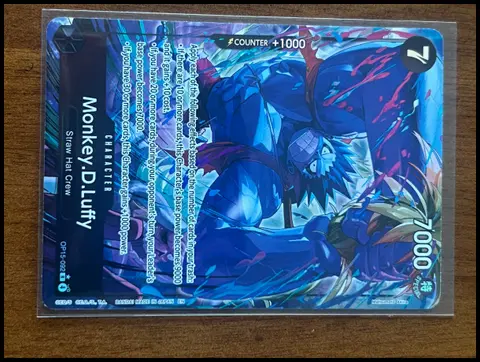
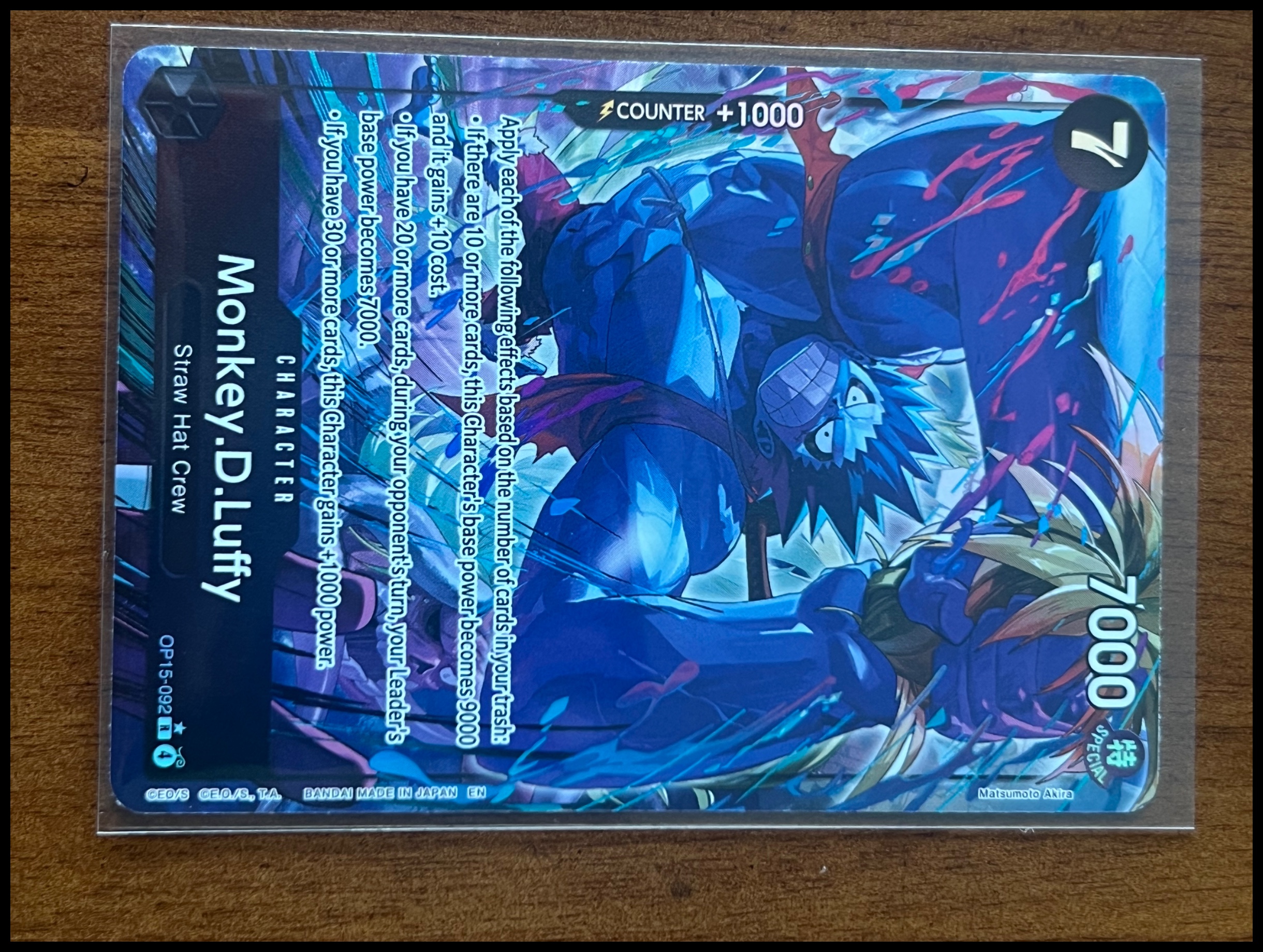
This specific card (OP15-092) from the Adventure on Kami's Island set was released in 2026 as part of the One Piece Trading Card Game English expansion.
- Luffy is a Black-colored character card with a conditional power boost mechanic
- The card gains +1000 power if the player controls 30 or more cards, rewarding deck-building strategies with large hand sizes
- This card exists in multiple variants including standard Rare and Alternate Art versions
- The character has appeared on numerous One Piece TCG cards across different sets and languages
Rarity and print run
- Tier
- Rare (standard), Ultra Rare (Alternate Art/Parallel variants)
- Print run
- High
- First printed in
- Adventure on Kami's Island (OP15)
- Demand
- High
- Supply
- High
- High print volume for standard Rare version reduces scarcity
- Alternate Art and Parallel variants significantly more limited
- Character popularity ensures consistent collector demand
- Multiple language versions fragment the collector base
Collector notes
Condition. Check for edge wear, corner creasing, and surface scratches common to modern TCG cards. Foil variants should be examined for scratches on the holographic surface. Look for centering issues and print lines. Common flaws include light play wear on edges and minor surface impressions from storage.
Storage. Store in individual sleeves within top-loaders or binders to prevent bending and damage. Keep in cool, dry conditions away from direct sunlight to prevent foil deterioration and color fading. Avoid stacking heavy objects on cards. Use archival-quality storage materials to prevent acid damage over time.
Authenticity. Verify card stock quality and weight compared to official One Piece TCG cards. Check print quality, color saturation, and font consistency. Examine the holographic pattern on foil variants for authenticity. Compare against official product images and verified sales. Purchase from reputable sellers with authentication history.