Market outlook
Stable Outlook 7/10
The card already has a premium raw market due to player demand and SSP labeling, but the available price data shows a relatively narrow early market centered around a small number of sales and listings. That usually produces short-term volatility followed by stabilization unless grading demand or major collector attention increases.
Next months. Prices are likely to remain volatile but generally supported in the near term, with raw copies likely trading in a broad range depending on condition and seller platform.
Long term. Over 1-3 years, the card should hold collectible appeal if Griffin Jr. remains one of the era-defining stars in the insert market, with best-in-class graded examples likely outperforming raw copies.
History
Ken Griffey Jr. is a Hall of Fame Major League Baseball outfielder best known for his 22-season career with the Seattle Mariners, Cincinnati Reds, and Chicago White Sox, and for becoming one of the most iconic players of the 1990s. His significance in card collecting comes from a combination of elite on-field talent, broad mainstream popularity, and a long history of collectible inserts and parallels that remain in steady demand.
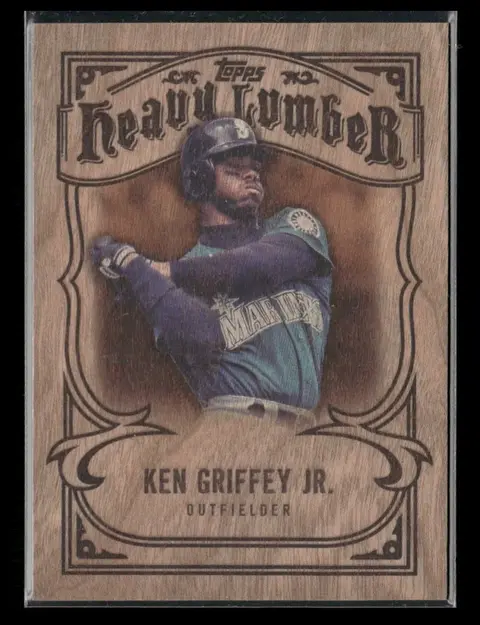
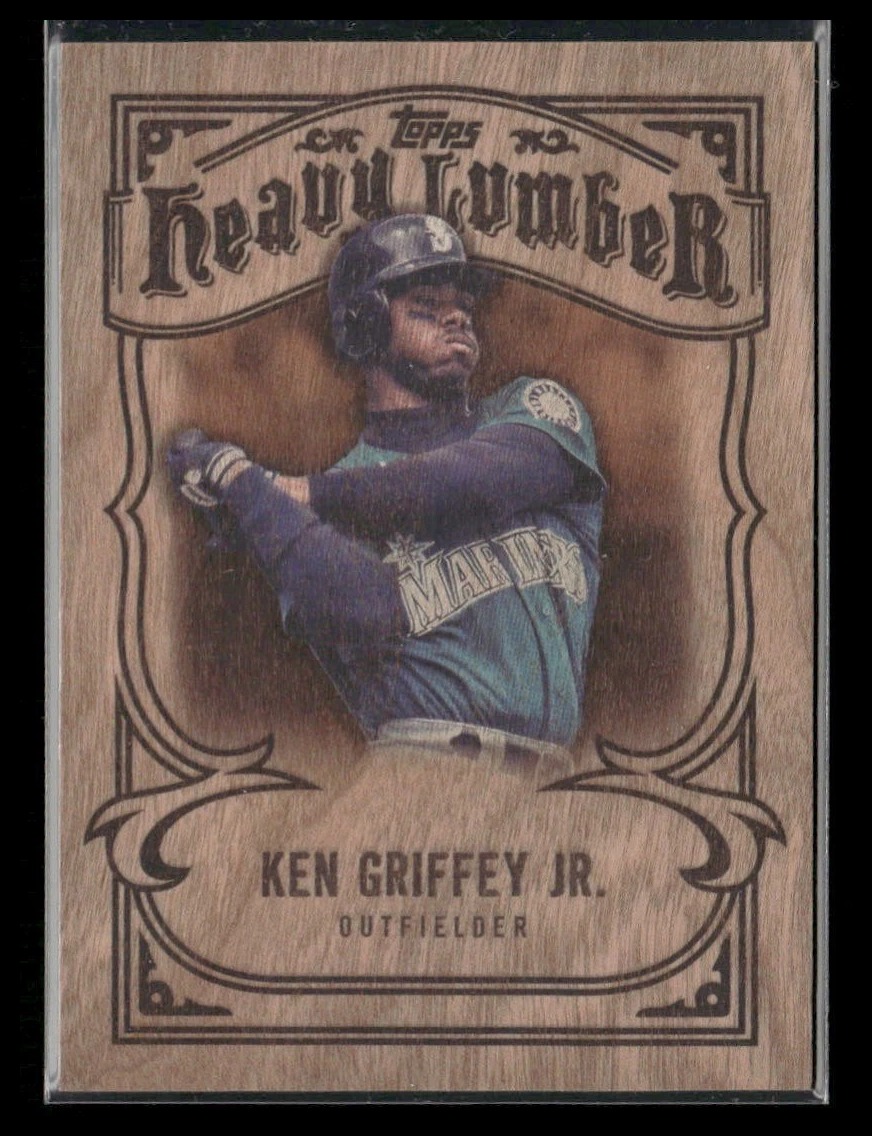
This card was first released in 2026 as part of Topps Series 1, in the Heavy Lumber insert subset, with checklist listing HL-12 Ken Griffey Jr. and the full Series 1 release scheduled for February 11, 2026.
- HL-12 is identified by market/checklist sources as a 2026 Topps Heavy Lumber Ken Griffey Jr. insert, and Sports Card Investor labels it as SSP.
- Sports Card Investor reports a raw last sale of $156.10 on 2026-04-18 and a recent raw sale around $140, indicating active short-term market movement.
- Sports Card Pro shows an ungraded price point of about $75.00, while another retail listing priced the card at $185.00, suggesting a wide range between raw market, retail ask, and sold comparables.
Collector notes
Condition. Check for corner wear, edge whitening, surface scratches, and centering, with extra attention to any foil or special-stock surface that can show print lines and scuffs easily. Insert cards also often pick up faint roller marks, minor dings, or chipping on edges from packaging and handling.
Storage. Store in a penny sleeve and rigid top loader or semi-rigid holder immediately after opening, and keep the card away from heat, humidity, and direct light. For long-term storage, use a team bag or archival sleeve to reduce dust and friction, and avoid stacking loose insert cards together.
Authenticity. Compare the font, numbering, image quality, and stock finish against verified examples from reputable marketplaces or checklist photos. Because this is a modern Topps insert, obvious warning signs include blurry printing, mismatched gloss, poor trim, incorrect back text, and inconsistent card stock thickness. When buying graded copies, verify the slab certification number and grading-company registry details against the card description.