Market outlook
Rising Outlook 9/10
The card benefits from enduring blue-chip status tied to one of soccer’s most important players, and top-grade scarcity continues to support prices. Market data shows strong separation between raw and gem-mint copies, suggesting continued upside for pristine examples.
Next months. Expect stable-to-rising pricing, with the strongest performance likely in high-grade certified copies and visually strong raw examples.
Long term. Over 1-3 years, the card is likely to remain a cornerstone Messi rookie issue, with gradual appreciation most likely for top-grade copies and authenticated examples.
History
Lionel Messi is an Argentine professional footballer widely regarded as one of the greatest players in the sport’s history. He emerged from FC Barcelona’s youth system and became the defining player of the club’s modern era, which is why early Barcelona-era issues such as Mega Cracks are highly significant to collectors. His rookie-era cards are especially important because they document the first mainstream cardboard appearances of a player whose career later included multiple Ballon d’Or awards, major club titles, and international success.
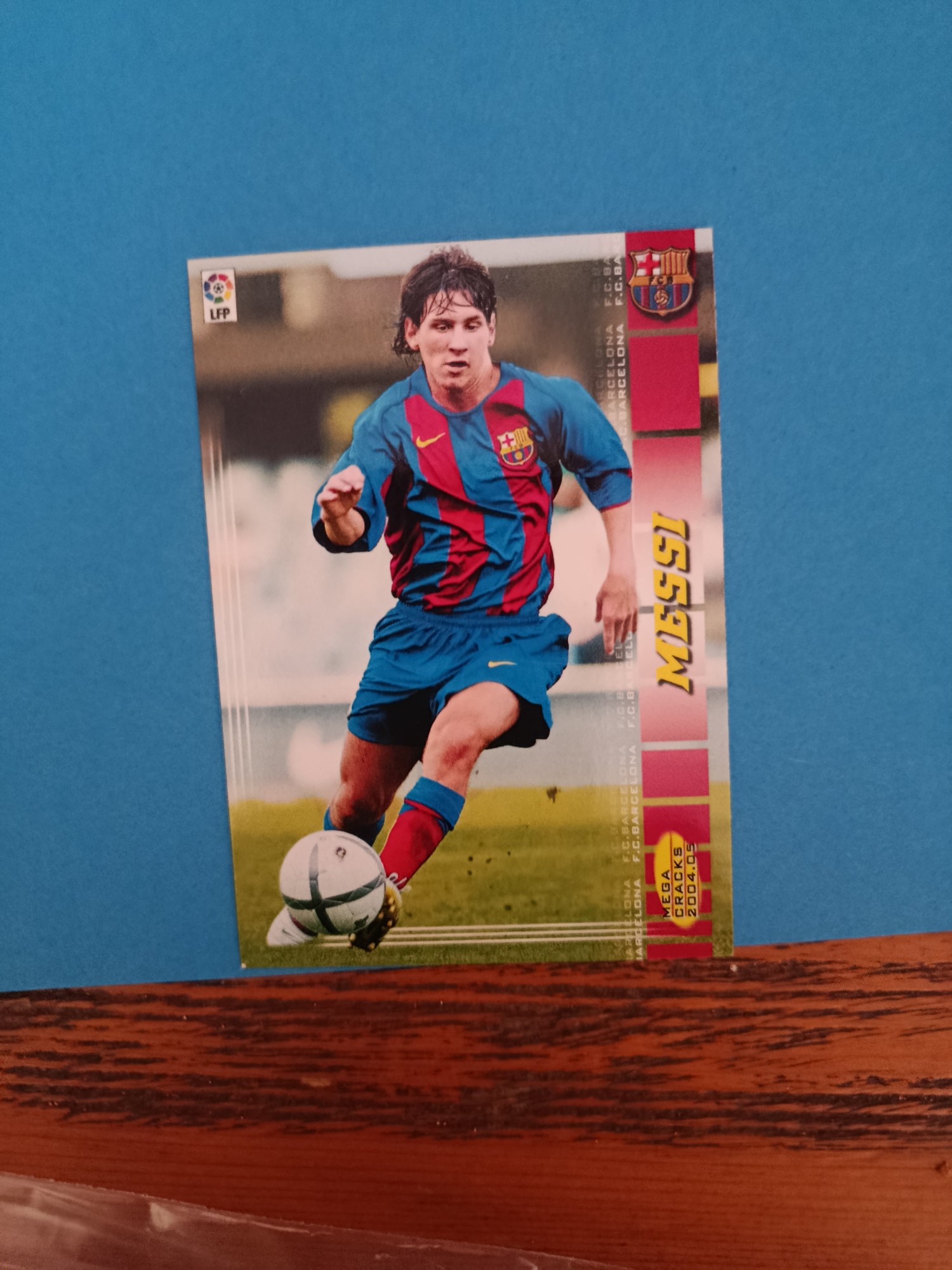
This card was first released in the 2004-05 Panini Sports Mega Cracks / MegaCracks La Liga set in Spain, with the Spanish-language Barca-Campio / Barcelona-related issue that includes Messi as a rookie-year card. The checklist and marketplace listings identify the card as 2004 Panini Sports Mega Cracks Lionel Messi #71/#71BIS, indicating the original printing occurred in the 2004 Spanish market release.
- #71BIS is widely regarded by collectors as Messi’s true rookie card, while other Mega Cracks Messi cards from the same era are also collected heavily.
- The card is a Spanish-language, Barcelona-era rookie issue and is one of the most iconic early Messi cards in the hobby.
- Market listings and price guides show large value differences by grade, with gem-mint examples trading far above raw copies.
Collector notes
Condition. Check centering, corner wear, surface scratches, edge chipping, and print defects. Because this is a paper-era soccer card from the 2004 Spanish release, sharp corners and clean surfaces matter a lot, and even small whitening or scuffing can materially affect grade. Raw copies are often affected by handling wear, and gem candidates must be especially clean on the back and front borders.
Storage. Store the card in a penny sleeve and rigid top loader or graded submission sleeve, keep it away from humidity and direct sunlight, and use clean hands or gloves when handling. For higher-value copies, a magnetic holder or graded/graded/graded slab after grading can provide the best long-term protection.
Authenticity. Compare font style, image clarity, border alignment, and paper stock to known authentic examples. Reprints or custom prints often have softer image resolution, incorrect gloss, or mismatched back design. Because this card is heavily counterfeited in the market, third-party grading and, for raw examples, close comparison to authenticated scans are strongly recommended.