Market outlook
Stable Outlook 4/10
Demand should remain steady because Grant Hill is a respected Hall of Fame player and rookie-era cards retain collector interest, but abundance keeps the card’s price ceiling limited outside top grades.
Next months. Likely to remain stable with small fluctuations driven by graded copy sales and player-specific interest.
Long term. Over 1-3 years, low-grade and raw copies should stay inexpensive, while gem-mint graded examples may slowly appreciate if demand for 1990s rookie cards continues.
History
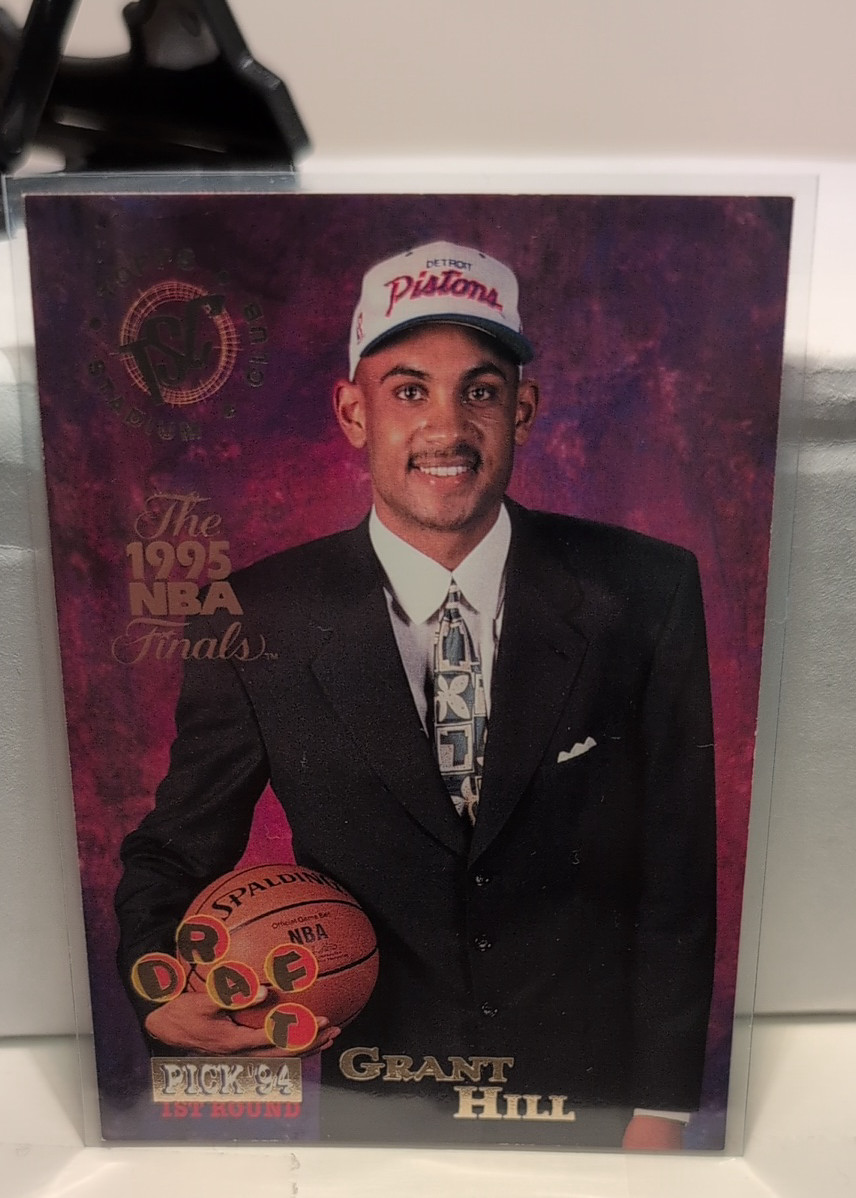
Grant Hill is a former American professional basketball player and Hall of Famer best known as a versatile forward for Duke University and the NBA’s Detroit Pistons, Orlando Magic, Phoenix Suns, and Los Angeles Clippers. He became one of the defining basketball prospects of the 1990s, and his 1994 NBA arrival made him one of the premier rookies featured across mainstream basketball card sets that year.
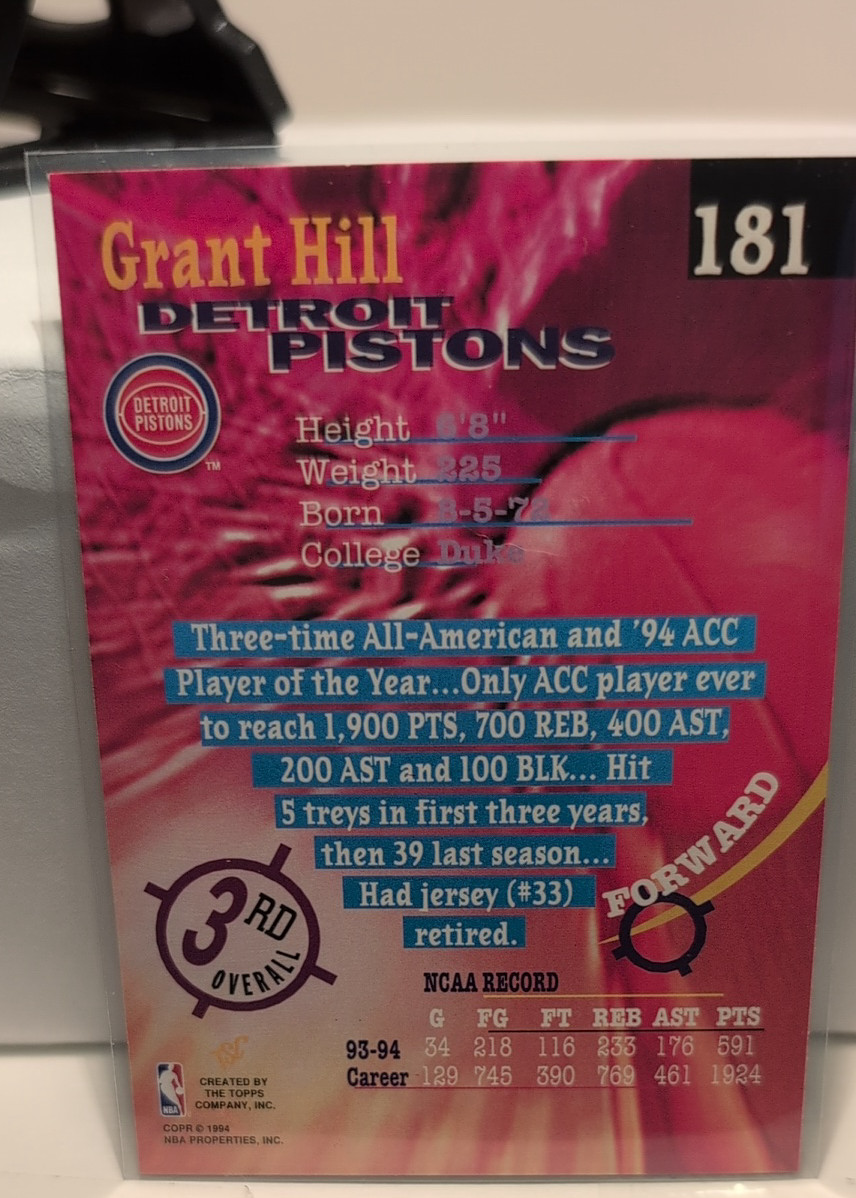
First released in 1994 as part of Topps’ 1994-95 basketball product line, which was distributed in wax/packs through hobby and retail channels. The exact card number #181 is associated with Grant Hill’s rookie-era Topps/Stadium Club issue in 1994-95 basketball releases, and the card is commonly cataloged as a rookie card from that season.
- Grant Hill’s rookie cards were among the most recognized of the 1994-95 basketball class, alongside Jason Kidd, Eddie Jones, Juwan Howard, and Glenn Robinson.
- The #181 Grant Hill card is commonly referred to as a rookie card in the 1994-95 Stadium Club/Topps Basketball family.
- Modern price guides show the card as abundant in supply, with raw copies inexpensive and graded 10 examples carrying a much larger premium.
Collector notes
Condition. Check centering, corner whitening, edge chipping, surface scratches, and print defects. Common issues on 1990s Topps/Stadium Club basketball cards include soft corners, uneven centering, and minor surface wear from pack handling.
Storage. Store in a penny sleeve and rigid top loader or semi-rigid holder, keep in a cool dry environment, and avoid direct sunlight and humidity. For higher-grade copies, use card savers or graded/graded-style submissions only after careful inspection and cleaning of loose debris.
Authenticity. Authentic copies should match the original 1994-95 printing style, cardstock, and front/back design. Watch for fuzzy print, incorrect stock feel, altered edges, or reprinted-looking gloss. Because the card is common, condition and grading quality matter more than counterfeit risk, but misidentified parallels and later reprints should still be ruled out by comparing design details to a known authentic example.