Market outlook
Stable Outlook 7/10
Prices are supported by iconic-player demand and set prestige, but the card’s long-run market is mature and heavily influenced by grade rather than short-term scarcity shocks.
Next months. Expect stable pricing with small grade-driven fluctuations, especially for graded 8 and graded 9 examples.
Long term. Likely gradual appreciation over 1-3 years, with strongest gains in top-graded copies and well-centered examples.
History
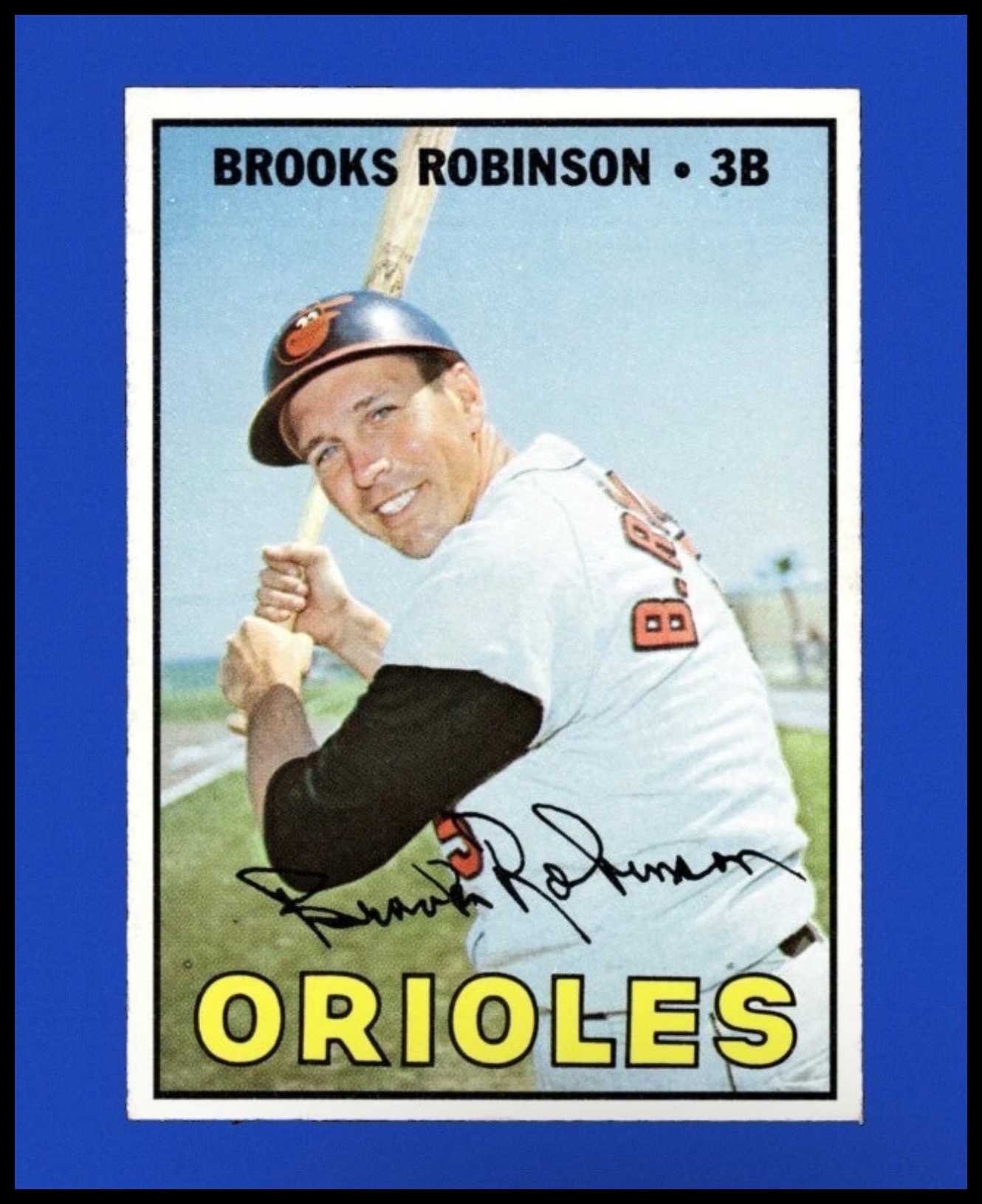
Brooks Robinson was a Hall of Fame third baseman for the Baltimore Orioles, widely known as 'Mr. Oriole' for his entire major-league career spent with Baltimore. The 1967 Topps card captures him during the peak of his reputation as one of baseball’s premier defensive players and one of the most respected stars of the 1960s.
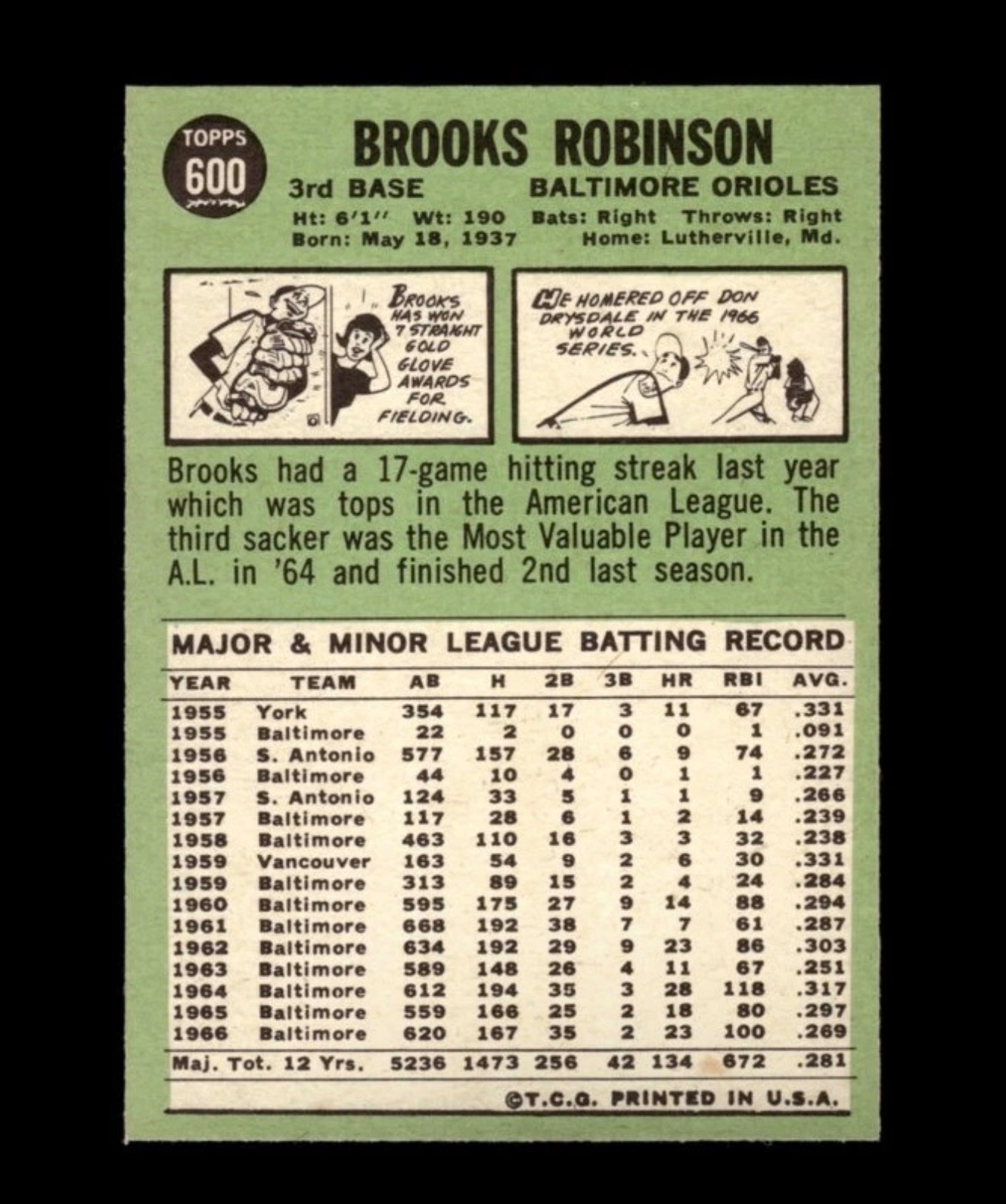
First released in 1967 as part of the Topps Baseball set, card #600, distributed in the United States through Topps’ standard wax packs and vending/cello products for that year’s multi-series release.
- Card #600 sits at the end of the 1967 Topps high-number run, which is widely considered scarcer than earlier series.
- Brooks Robinson's 1967 Topps #600 is regarded as one of the most desirable cards in the set and a key Brooks Robinson collectible.
- The card has strong long-term collector demand because Robinson is a Hall of Famer and the 1967 Topps design is one of the era’s most admired issues.
Collector notes
Condition. Check centering carefully, as 1960s Topps issues often show off-center fronts and backs. Common flaws include rough or chipped corners, wax staining, print snow, surface scratches, light creasing, and edge wear from handling high-series cards.
Storage. Store in a penny sleeve and a rigid top loader or semi-rigid holder, keep away from humidity and direct sunlight, and use archival materials. For better copies, slab grading can help preserve condition and marketability.
Authenticity. Authentic 1967 Topps cards should show period-correct stock, printing texture, and back layout consistent with the set. Watch for modern reprints with overly sharp color, incorrect gloss, or paper stock that feels too smooth; compare font, registration, and dimensions against confirmed originals.