Market outlook
Stable Outlook 5/10
The base card is widely available, so prices are anchored by abundance. Demand remains supported by Bonds’ iconic player status and by registry/investor interest in gem-mint graded copies, but there is no strong scarcity catalyst for the standard issue.
Next months. Raw prices should remain inexpensive and stable; graded 9 and graded 10 examples may fluctuate based on grading-market sentiment and recent sales.
Long term. Over 1-3 years, the card is likely to remain a stable, liquid vintage-modern star card with gradual appreciation in top grades, while raw copies stay low-value due to supply.
History
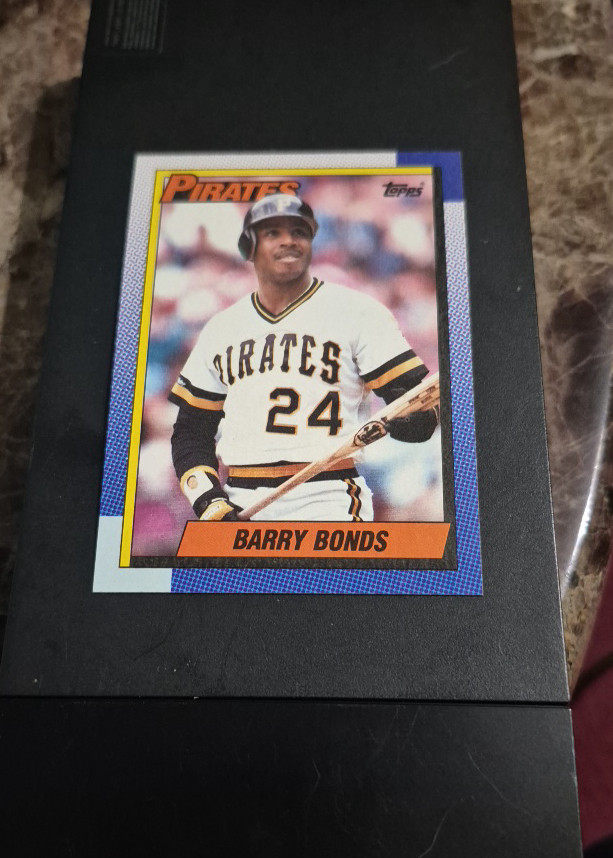
Barry Bonds is one of baseball’s most famous and statistically dominant players, debuting in Major League Baseball with the Pittsburgh Pirates in 1986 and later becoming the sport’s all-time home run leader. By 1990, Bonds was already a star outfielder and former MVP caliber player, making his 1990 Topps card a mainstream early-career issue from the period when collectors were tracking his rise from elite young talent to future Hall of Famer.
This card was first released in 1990 as part of the standard 1990 Topps Baseball flagship set, distributed widely through hobby shops, card stores, and retail packs across the United States during the 1990 baseball card release cycle.
- This is Barry Bonds’ standard 1990 Topps flagship card, not a rookie card.
- Because it comes from the mass-produced 1990 Topps base set, raw copies are very common, but high-grade examples can still command strong prices.
- The 1990 Topps Barry Bonds card is a popular entry-level Bonds collectible and is often compared with his Topps Tiffany parallel, which is scarcer and more valuable.
Collector notes
Condition. Centering is important, especially left-right and top-bottom. Check the black-bordered photo area for edge chipping, corner whitening, wax staining, and surface print defects. The 1990 Topps design is generally forgiving, but common flaws include slight tilt, off-center cuts, and handling wear from bulk storage. Grading value rises sharply in graded 9 and graded 10, so corners and centering matter more than on raw commons.
Storage. Store in a penny sleeve and semi-rigid holder or top loader, then keep in a cool, dry environment away from sunlight and humidity. Because the card is from a heavily printed era, preserving sharp corners and clean surfaces is the priority. For higher-grade copies, use card saver holders for submissions and avoid repeated handling.
Authenticity. Authentic copies should match the standard 1990 Topps stock, print quality, and reverse layout. Fakes are uncommon for the base card because of its low raw value, but watch for altered corners, trimmed edges, or poorly reproduced print dots on high-grade submissions. For graded examples, verify slab serial numbers and card photos against the grading company database when available.