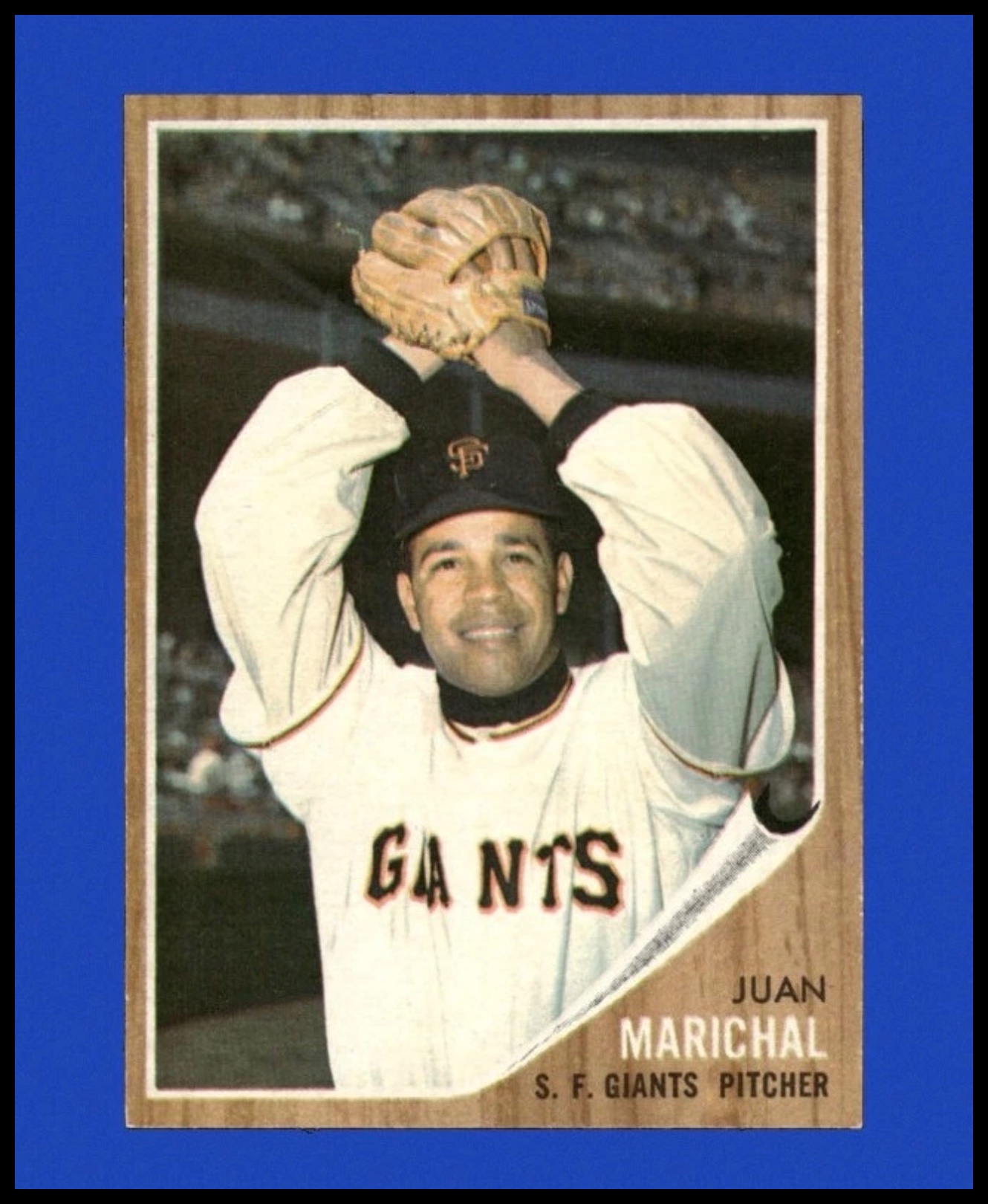
Market outlook
Stable Outlook 7/10
The card benefits from consistent Hall of Fame demand and vintage Topps collector interest, but it is not a scarce or newly rediscovered issue, so prices are more likely to move gradually than sharply.[2][4][5]
Next months. Likely to remain steady with modest movement tied to overall vintage baseball market demand.
Long term. Likely gradual appreciation over 1-3 years, with the strongest gains concentrated in certified high-grade examples.
History
Juan Antonio Marichal Sanchez, born October 20, 1937 in Laguna Verde, Dominican Republic, became one of the most dominant pitchers of his era and was known for his extremely high leg kick and distinctive delivery. He starred primarily for the San Francisco Giants, became a Hall of Famer, and remains one of the most important Latin American players in MLB history.[5]
This card was first released in the 1962 Topps Baseball set, issued in the United States by Topps as card number 505.[1][5]
- This is one of Marichal’s recognized early Topps cards and is a key vintage issue for collectors who want an affordable Hall of Fame-era card.[1][6]
- Marichal’s 1962 Topps #505 is widely tracked in modern price guides and remains actively traded in the hobby.[2][4]
- Topps 1962 is part of a major early-1960s run for Marichal, who also appears in other 1962 baseball issues such as Post Cereal.[1]
Collector notes
Condition. Check centering carefully, since vintage Topps cards often suffer from off-center borders. Also inspect corners, edge wear, surface print loss, wax stains, and color fading; on this issue, the bright background and white borders can make small defects very visible.
Storage. Store in a penny sleeve and a rigid top loader or semi-rigid holder, keep it in a cool dry environment, and avoid sunlight and humidity. For long-term preservation, use acid-free materials and minimal handling by the edges.
Authenticity. Verify the card stock, printing sharpness, and vintage aging consistent with an original 1962 Topps issue. Reprints often show cleaner-than-expected surfaces, different paper feel, or softened print details; compare font style, border dimensions, and image clarity against known authentic examples.