Market outlook
Rising Outlook 8/10
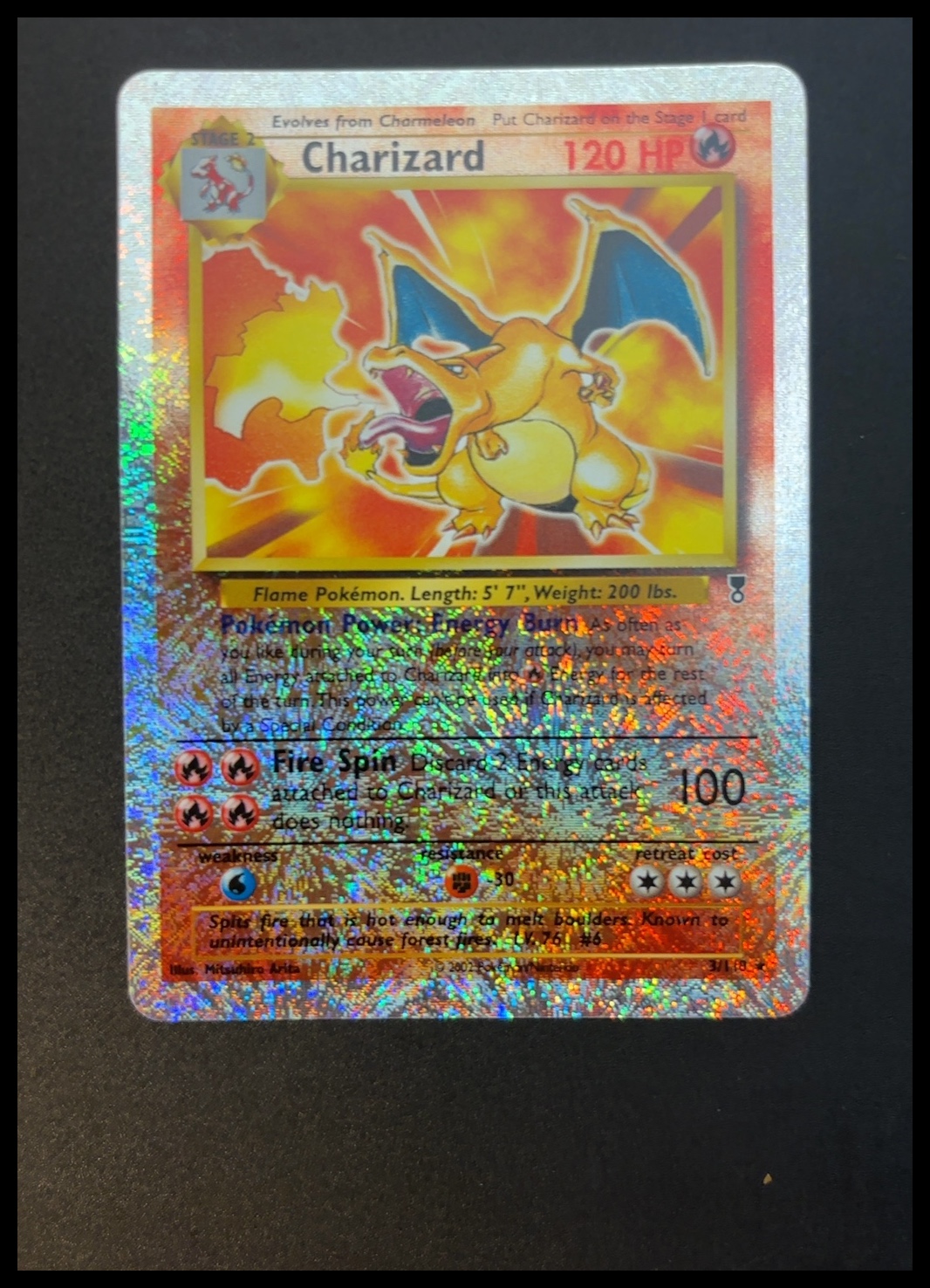
Charizard cards generally benefit from evergreen demand, and Legendary Collection remains a desirable reprint-era set for collectors. Recent sales data shows continued liquidity at multiple grade levels, suggesting an active market rather than one driven only by sporadic hype.
Next months. Likely to remain firm to slightly higher, with well-centered high-grade copies outperforming lower grades.
Long term. Expected to trend upward gradually over 1-3 years, especially if broader Pokémon vintage demand stays strong and top-pop graded copies remain limited.
History
Charizard is a classic Pokémon originating from the first-generation Pokémon franchise created by Game Freak, Nintendo, and The Pokémon Company. It evolves from Charmeleon and is the final evolution of Charmander, representing a powerful Fire/Flying-type dragon-like creature that became one of the franchise’s most iconic and enduring mascots. Its popularity comes from its strong competitive presence in the games, dramatic design, and major prominence across anime, trading cards, and merchandise.
This Charizard card was first released in the English Pokémon TCG set Legendary Collection in 2002. The card is numbered 3/118 and was distributed as part of the set’s original print run for the North American market, with holo and reverse holo treatments associated with the set’s collector-focused design.
- Legendary Collection is best known for reprinting earlier iconic cards, making Charizard 3/118 a nostalgic chase card rather than a brand-new artwork debut.
- Market data shows strong demand, with recent sales ranging from about $310 for graded 7 to $6,000 for graded 10 in late May 2026.
- The card is widely collected in both holo and reverse holo forms, with the holo version generally commanding the stronger premium in the market.
Rarity and print run
- Tier
- Rare
- Print run
- Medium
- First printed in
- Legendary Collection
- Demand
- Very High
- Supply
- Medium
- Holo rare from a popular Charizard line
- Collector demand is amplified by Legendary Collection nostalgia
- High-grade copies are scarce because holo scratching and edge wear are common
Collector notes
Condition. Check centering, edge wear, corner whitening, surface scratches, print lines, and holofoil scuffs. Legendary Collection holos are especially sensitive to scratching and visible wear on dark or reflective surfaces, and grading value can change sharply between graded/graded/graded subgrades.
Storage. Store in an inner sleeve plus a semi-rigid or top-loader, keep away from humidity and direct light, and avoid friction that can damage the holofoil. For high-grade copies, use archival-safe sleeves and rigid protection during handling and shipping.
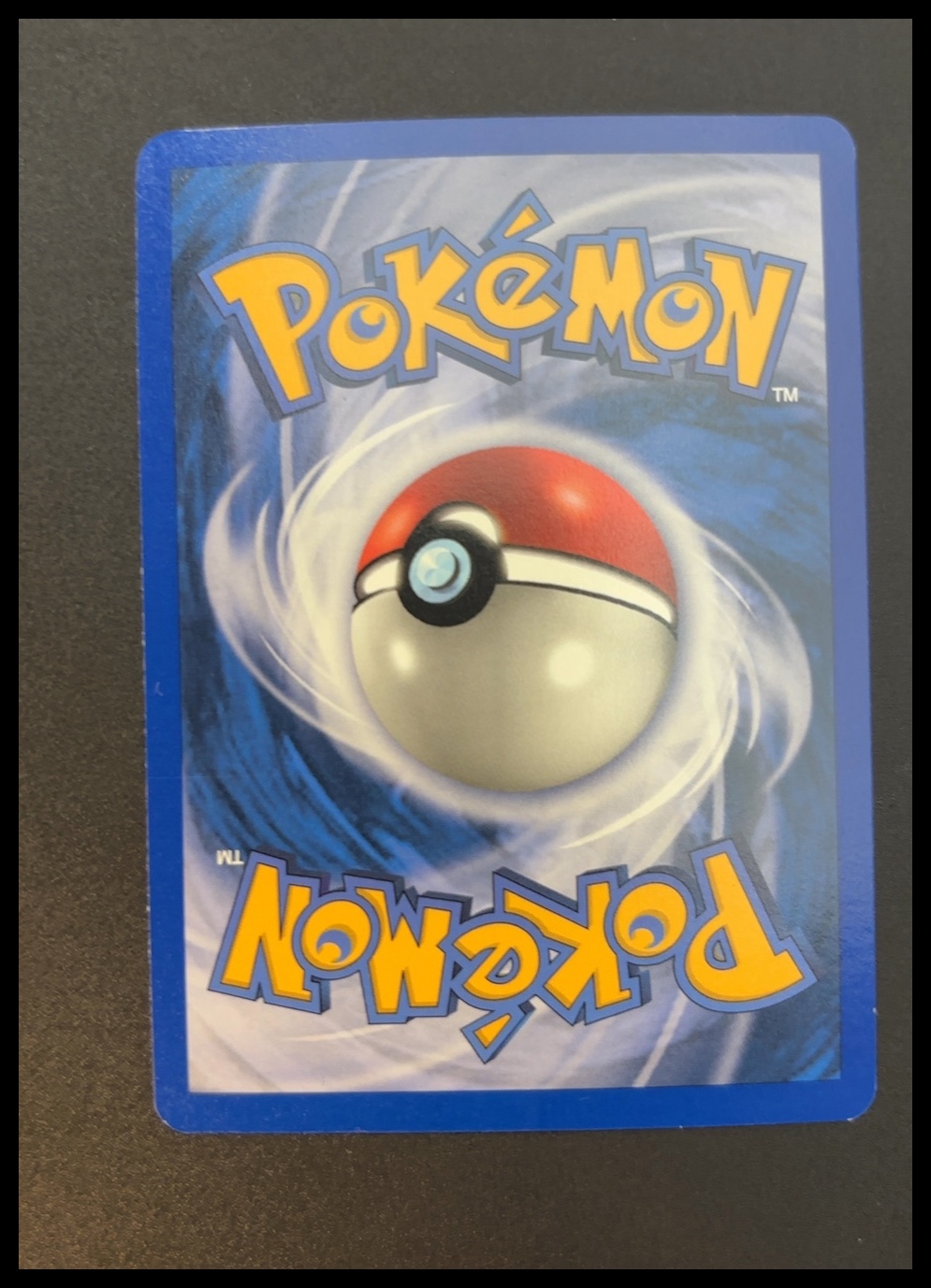
Authenticity. Verify the correct Legendary Collection card numbering, holo pattern, font, and print quality. Counterfeits often show blurry text, incorrect foil texture, off-color borders, poor cut alignment, or inconsistent backs. Compare the card to authenticated reference images and prefer graded copies or third-party authentication for expensive examples.
Sources: tcgplayer.com, cardladder.com, psacard.com, pricecharting.com, pokedata.io