Market outlook
Stable Outlook 7/10
Prices stable with minor fluctuations; recent sales show no 30-day change, supported by consistent collector interest in Charizard but tempered by reprint status[1][3].
Next months. Stable with potential minor uptick from holiday sales
Long term. Stable to rising for high-grade copies due to nostalgia
History
Charizard is a Fire/Flying-type Pokémon, the final evolution of Charmander, introduced in the original Pokémon Red and Green games in 1996 in Japan. As the mascot of the franchise alongside Pikachu, it symbolizes power and is iconic for its dragon-like design, fiery tail, and mega evolutions in later generations, appearing prominently in anime, manga, and merchandise.
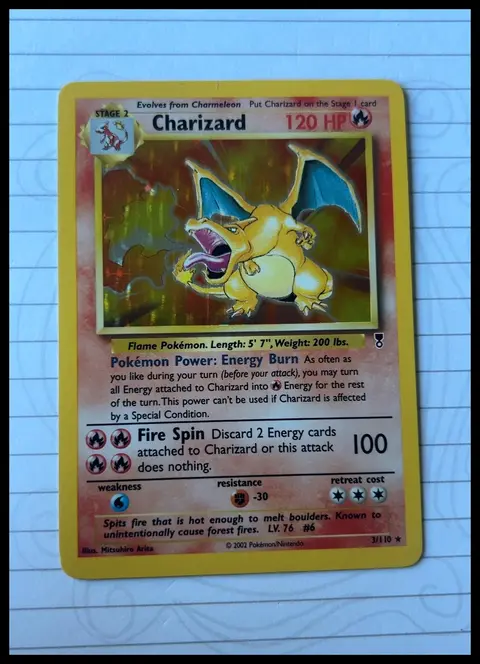
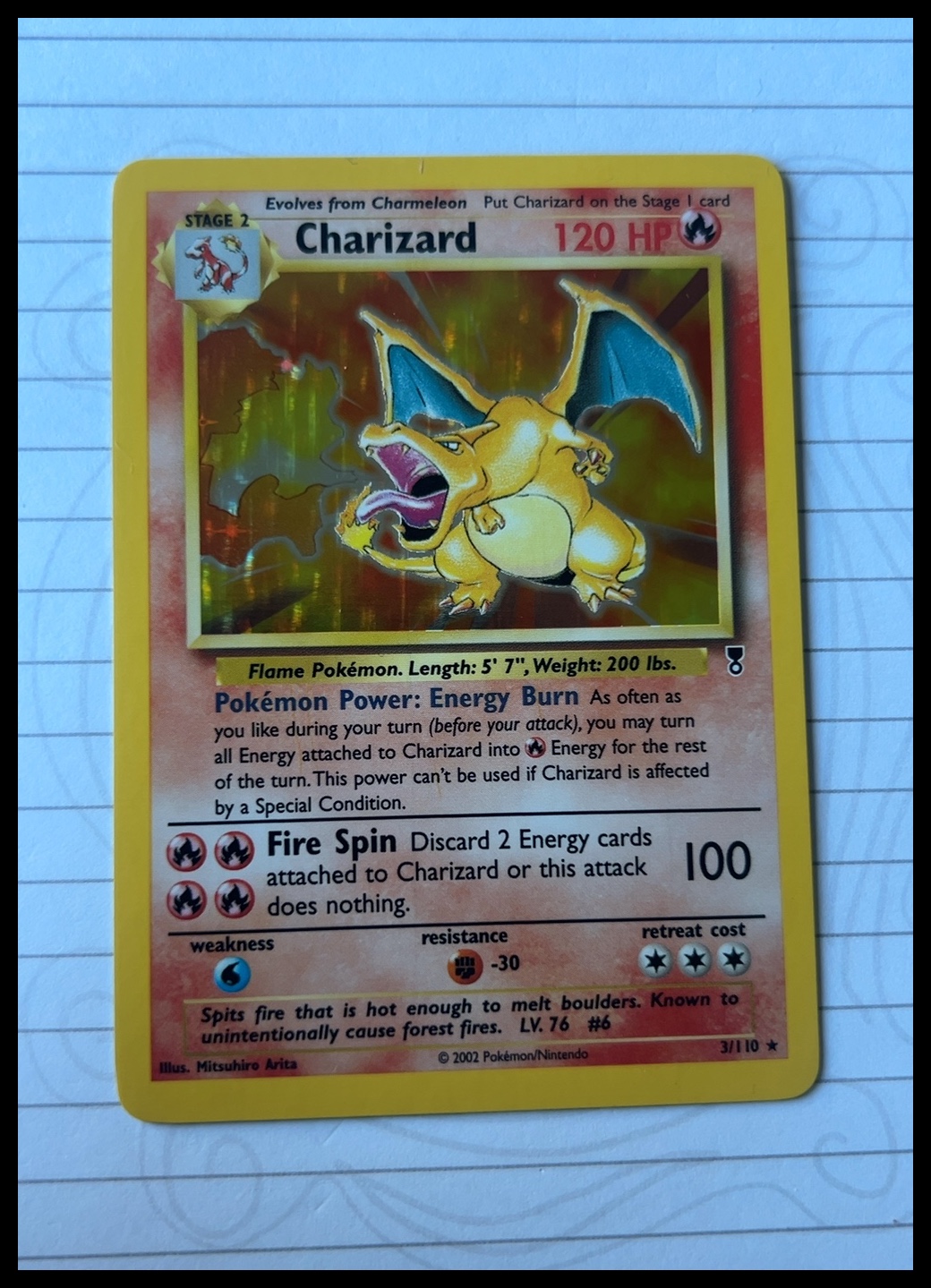
First printed in the Legendary Collection set, released on May 24, 2002, by Wizards of the Coast in the United States[3].
- This card reprints the Base Set Charizard artwork by Mitsuhiro Arita, one of the most recognized in Pokémon TCG history.
- Legendary Collection was a reprint-focused set celebrating early Pokémon cards with reverse holo variants.
- Numbered 3/110, it is a Rare Holo foil card from the set's main series[3][4].
Rarity and print run
- Tier
- Rare
- Print run
- Medium
- First printed in
- Legendary Collection (2002)
- Demand
- High
- Supply
- Medium
- Part of a reprint set with wider distribution than original Base Set
- Holo variant but not ultra scarce like 1st edition
- Reverse holo variant adds minor premium but abundant compared to error cards
Collector notes
Condition. Check for centering issues on holo pattern, edge whitening from play wear, surface scratches on foil, and print lines or dimples common in WOTC-era cards; avoid cards with tail flame fading or creases.
Storage. Store in semi-rigid holders or top-loaders with sleeves in cool, dry conditions away from sunlight to prevent foil oxidation; use card savers for ungraded copies.
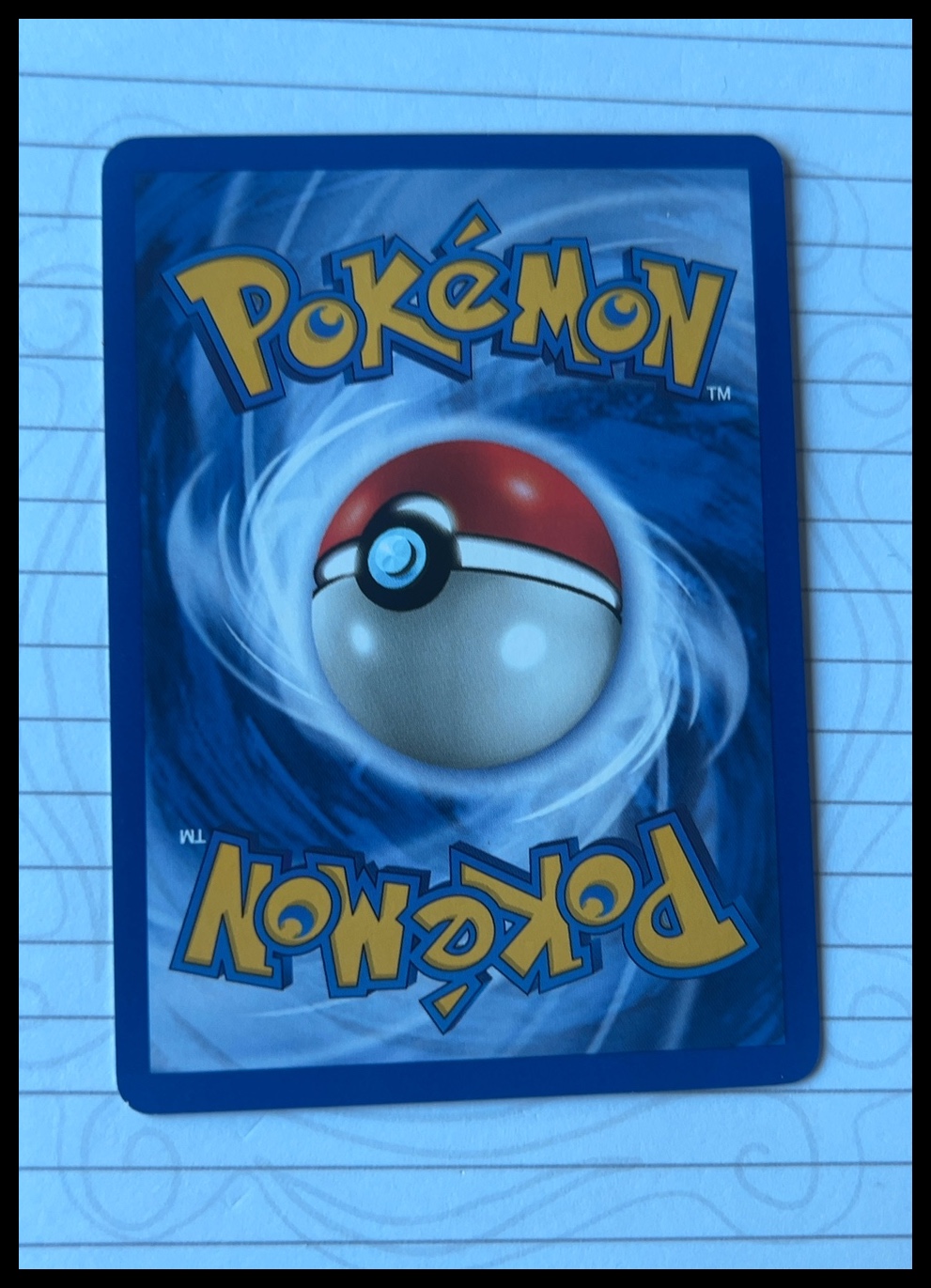
Authenticity. Verify black market symbol and Wizards of the Coast copyright on back; check holo pattern alignment and font sharpness—fakes often have blurry artwork or incorrect dot patterns; use graded/graded population reports for graded verification.
Sources: sportscardinvestor.com, cardladder.com, pricecharting.com, tcgplayer.com, pokedata.io