Market outlook
Stable Outlook 3/10
The card is a low-value common base issue with broad supply, so pricing usually follows overall interest in John Daly and golf-card collecting rather than scarcity-driven momentum.
Next months. Expect prices to remain stable, with only small fluctuations based on condition and platform visibility.
Long term. Over 1-3 years, the card is likely to remain a low-dollar collectible unless renewed John Daly popularity or set-specific interest increases demand.
History
John Daly is an American professional golfer known for his long-driving power, aggressive playing style, and unconventional public persona. He rose to national prominence after winning the 1991 PGA Championship as a relative outsider, which made him one of golf's most recognizable and marketable figures. His significance in trading cards comes from being a fan-favorite PGA star of the 1990s and early 2000s, with strong name recognition, collector appeal, and a substantial autograph/card market that reflects his popularity rather than Hall of Fame-tier scarcity.
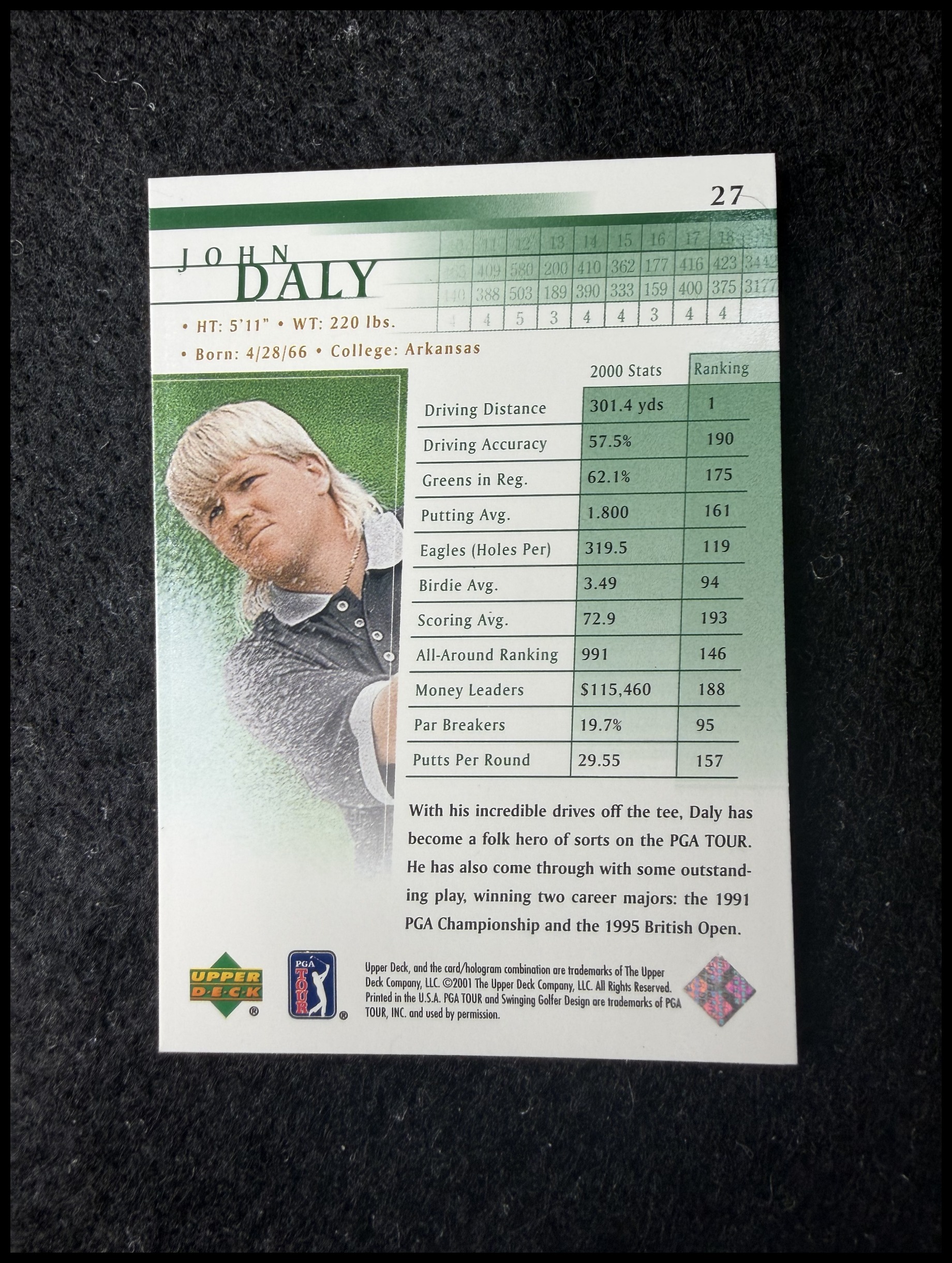
This card was first released in 2001 as card number 27 in the base set of Upper Deck Golf, a 200-card release distributed in hobby packs and boxes by Upper Deck.
- 2001 Upper Deck Golf is a 200-card base set, and John Daly #27 is part of that main checklist.
- Beckett notes the set includes John Daly among the major PGA names, alongside Tiger Woods, Arnold Palmer, and Fred Couples.
- John Daly #27 is a common base card with a relatively low raw market value, but it remains desirable as a recognizable golfer card from an important early-2000s golf product.
Collector notes
Condition. Check for centering, corner whitening, surface scratches, edge chipping, and print defects such as roller lines or faint surface scuffs. Base golf cards from this era are often found with minor pack wear, so sharp corners and clean surfaces matter most for graded value.
Storage. Store in a penny sleeve and rigid top loader or semi-rigid holder, keep away from heat, moisture, and direct sunlight, and avoid overhandling the glossy surface. For higher-grade copies, use archival sleeves and maintain stable humidity to reduce warping and edge damage.
Authenticity. Authenticating this card is usually straightforward because it is a standard base issue from a major manufacturer. Check that the stock, printing quality, font sharpness, and card dimensions match known 2001 Upper Deck examples, and be cautious of reprints that may show off-color printing, blurry text, or overly glossy modern stock.